|
|
||||||||
Interventions from neighbours have not brought Somalia the promised peace.
|
Saturday, May 10, 2014
Opinion Somalia: African solutions for African problems?

WHY DID HILLARY CLINTON DEFEND BOKO HARAM?
 Boko Haram, the Islamic terrorist organization in Nigeria, is in the news because it kidnapped more than 200 teenage girls and now threatens to sell them into slavery. (That’s what a real war on women looks like.) This is just the latest of many outrages committed by Boko Haram, which is guilty of many acts of mass murder. But it has now come out that for two years, Hillary Clinton blocked efforts to add Boko Haram to the State Department’s list of terrorist organizations.
This wasn’t just an episode of bureaucratic indifference. The Justice Department, the FBI, the CIA and many in Congress lobbied the State Department to list Boko Haram, but Clinton stood firm in defense of the Nigerian terrorists. Now, with the kidnapping outrage in the news, Hillary is tweeting away on behalf of the Nigerian girls. (THAT will do a lot of good!) But where was she in 2011 and 2012?
Risch and seven other GOP senators introduced legislation in early 2013 that would have forced Clinton to designate the group or explain why she thought it was a bad idea. The State Department lobbied against the legislation at the time, according to internal State Department emails obtained by The Daily Beast.In the House, leading intelligence-minded lawmakers wrote letter after letter to Clinton urging her to designate Boko Haram as terrorists. The effort in the House was led by then-Homeland Security Committee Chairman Peter King and Patrick Meehan, chairman of the Subcommittee on Counterterrorism and Intelligence.Meehan and his Democratic counterpart Jackie Speier put out a lengthy report in 2011 laying out the evidentiary basis for naming Boko Haram a terrorist organization, including the group’s ties to al Qaeda in the Islamic Maghreb and to Somalia’s al-Shabab terrorist organization.
But Hillary Clinton was unmoved.
Over the last day or two, debate has raged over whether adding Boko Haram to the State Department’s terror organization list would have made much difference. (It finally happened in 2013, after Hillary’s resignation.) But the more interesting question is why Hillary was so resistant to labeling Boko Haram a terrorist group, which they obviously were.
Her defenders have said that it was inappropriate to put Boko Haram on the list because they are a regional group that hasn’t acted against American interests. But that explanation holds no water. You can read the terrorist list here; there are a number of groups on it, like the Irish terrorists, who haven’t attacked American interests. Democrats have also suggested that Hillary didn’t want to name Boko Haram because doing so would add to the group’s prestige among fellow terrorists. But this is a ludicrous claim; if it made any sense, we should abolish the list entirely. (The point of the list, of course, is to authorize intelligence activities and efforts to choke off funding.)
In my view, Hillary’s actions are something of a mystery. Andy McCarthy argues that Hillary’s position was the logical corollary of her ideology:
Mrs. Clinton, like the Obama administration more broadly, believes that appeasing Islamists — avoiding actions that might give them offense, slamming Americans who provoke them — promotes peace and stability. (See Egypt for a good example of how well this approach is working.) Furthermore, if you are claiming to have “decimated” al-Qaeda, as the Obama administration was claiming to have done in the run-up to the 2012 election, the last thing you want to do is add jihadists to the terror list….So that’s the plan: pretend terrorists and Islamists are unconnected, miniaturize terrorists, and appease Islamists with the Left’s policy preferences. It’s the plan that convinces you not to put Boko Haram on the terrorist list — that way, you can pretend that the jihadists are not really that important while telling the Islamists, “See? We’re going to treat them like a local criminal gang — the fact that they’re Muslims citing scripture in support of their murder, mayhem, kidnapping and misogyny is irrelevant. No ‘war on Islam’ on our watch.”
Andrew has much more, all of which I agree with. But I am not sure that it explains Hillary’s sticking up for Boko Haram. Bear in mind that there is a more notorious instance of the Clinton State Department’s myopia: it long refused to add the Taliban to its terrorist list, too:
A new State Department report designating terrorist organizations [in August 2010] notably excludes one group: the Taliban. The U.S. has been fighting a war in Afghanistan for almost a decade aimed at “defeating the Taliban,” Taliban members repeatedly have threatened and killed American citizens and lawmakers have increased pressure on State to add the Taliban to the list.Earlier this summer, a group of congressional Democrats sent a letter to Secretary of State Hillary Clinton urging her to begin the process of categorizing the Taliban as a terrorist group. In June, Sens. Charles Schumer and Kristen Gillibrand of New York and Frank Lautenberg and Robert Menendez of New Jersey proposed legislation that would immediately add the Taliban to the terrorist list.Yet the State Department’s report (due on April 30 but released last week), did not include the Taliban with groups such as al-Qaida, Hamas and the Real Irish Republican Army (RIRA). …The MEK continues to be included on the list, while the Taliban has not appeared once. And the seemingly arbitrary decision on the part of the State Department has confused even the most experienced foreign affairs experts.
It confuses me, too. I find it hard to avoid the conclusion that the Obama/Clinton foreign policy is shot through with pure perversity. The Taliban, not a terrorist group? Boko Haram, not a terrorist group? There is no coherent explanation for such decisions. They can only be the fruit of an emotional, anti-American, and frankly disturbed attitude toward the world.
Maybe when she runs for president, someone will ask Hillary to explain why she didn’t think that either the Taliban or Boko Haram was a terrorist organization. Her answer can only be interesting.
Karabakh President sends congratulations on Triple Holiday

Artsakh (Nagorno-Karabakh) President Bako Sahakyan issued a congratulatory address on the Victory Day, the Day of the Nagorno-Karabakh Republic Defense Army and the Liberation of Shushi.
The text of his address is below.
Dear compatriots,
Dear veterans of the Great Patriotic and Artsakh Liberation Wars,
On behalf of the Artsakh Republic authorities and myself, I cordially congratulate you on the Victory Holiday, the Day of the Nagorno-Karabakh Republic Defense Army and the Liberation of Shushi.
May 9 is among the most memorable holidays in the Armenian history, which symbolizes patriotism intrinsic to our national character and courage, self-sacrifice and feat, unshakable will and resoluteness to rebel and win against foreign yoke. It goes back deep into history and manifested itself during the Great Patriotic War when our fathers and grandfathers together with different nations fought against the Nazi Germany to save the world from the clutches of Nazism. The new generation continued their heroic lesson defending the native land and annealing victories in the Artsakh Liberation Wars.
The formation of the Defense Army and the liberation of Shushi became crucial achievements that have laid the ground for all of our future successes. Along with our brothers and sisters from Armenia and the Diaspora, we managed not only to win the hard and cruel war imposed on us, but also to build a steadily flourishing and developing country thus continuing the unfinished mission of the brave sons of the Armenian people who perished for Motherland, perpetuating their memory.
Dear compatriots,
I once again congratulate all of us on this glorious Triple
Masuuliyiintii Wargeyska Haatuf oo Xabsiga loo Taxaabay


Dhanka Kale Guddoomiyaha Wargeyska Haatuf Yuusuf Cabdi
Gaboobe iyo Tifatiraha Wargeyska Haatuf Axmed Cige ayaa iyaguna eedahaasi loo
soo jeediyey iska Difaacay.
Dacwadan oo Socotay Muddo ka Baddan 5 Sacadood oo
xidhiidh ah ayaa Markii La dhegeystay dooda Wasiirada ee ay dhammaatay Dacwadii
maantu ayaa Waxa Rumaan Loodiray Guddoomiyaha Wargeyska Haatuf Yuusuf Cabdi
Gaboobe iyo Tifatiraha Wargeyska Haatuf Axmed Cige.
Source: waaheen.com
WAR DEGDEG AH: Maxkamadda Racfaanka Gobolka Banaadir Oo Baafineysa Mulkiilaha TV-ga Universal Axmed Abuubakar
Maxkamadda Racfaanka Gobolka Banaadir ayaa bafinaysa Madaxa Telefisinka Unversal, Axmed Abuubakar Mubaarak, in uu muddo bil ah ku yimaado maxkamadda horteeda

Ilaa iyo 3 sano waxaa socotey dacwad ka dhan ah Milkiilaha Tv-ga Universal, Axmed Abuubakar Mubaarak. Dacwadda ayaa ka socotey meelo badan oo kala duwan oo ah dalka dibaddiisa iyo gudahiisaba.
Maxkamadda Gobolka Banaadir oo gal dacwadeedku ka furnaa ayaa dhawr jeer looga yeeray Axmed Abuubakar Mubaarak, balse arrintaas waa uu ka dhega adayyay, waxayna dacwaddu u gudubtey Maxkamadda Racfaanka Gobolka Banaadir, oo iyaguna dhawr jeer u yeeray.
Maxkamadda ayaa sheegtay in Mubaarak uusan dhowrin Qoraalka maxkamadda ka soo baxay, lana soo xiriirin Xafiiska Garsoorka, si uu u garbaxo.
Arrintaas waxay dhalisay in Maxkamadda Racfaanka Gobolka Banaadir ay soo saarto Qoraal baafin ah oo ay ku baafinayso Axmed Abuubakar Mubaarak meel kasta oo uu joogo gudaha Soomaaliya iyo dibaddaba.
Qoraalka ayaa lagu Qoray: “Maxkamaddu waxay ku amraysaa Axmed Abuubakar in uu maxkamadda Racfaanka Gobolka Banaadir ku horyimaado muddo 30 maalmood oo ka bilaabanaysa 04/05/2014 kuna eg 06/06/2014, iyadoo la faray Axmed Abuubakar in uu dhawro yeerista loo yeeray.”
Baafinta waxaa ku saxiixan Guddoomiyaha Maxkamadda Racfaanka Gobolka Banaadir Dr. Xasan Maxamed Cali (Wariiri).

Bigg Nass Recognize Somaliland (Official Video) (+playlist)
Published on May 6, 2013
Recognize Somaliland is the 2nd single release song from the upcoming Album "The New Decade" by Bigg Nass. This nasheed song is a non-profit song and is specially dedicated to support the recognition of Somaliland.
Recognize Somaliland is the 2nd single release song from the upcoming Album "The New Decade" by Bigg Nass. This nasheed song is a non-profit song and is specially dedicated to support the recognition of Somaliland.
Friday, May 9, 2014
'Cybersecurity' begins with integrity, not surveillance
As the debate goes on, I realise that even if continuous surveillance worked to catch terrorists, I would still oppose it
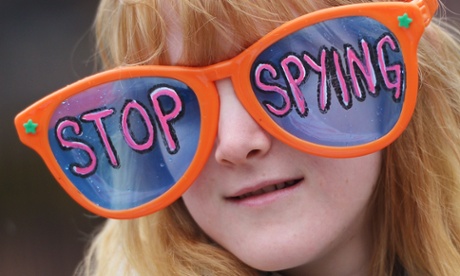
If you've been following the surveillance debate, you may have noticed that it is actually two debates: first, it is a debate about whether mass surveillance works; and second, it is a debate about whether mass surveillance is a good idea, whether or not it works.
I've made arguments in both of these debates. On the question of whether it works, I'm among those who point out that the spies who have spent billions putting whole populations under surveillance can't point to any dividends from that massive investment. Since the debate over mass spying began in 2006(with the whistleblower Mark Klein's disclosure that the NSA had gotten access to AT&T's main fibre-optic trunks), American spies have made a lot of grandiose claims about the plots they've foiled through mass surveillance. But when pressed, even their top officials admit that the entire mass-spying regimehas caught exactly one "bad guy" – and that was an American who was thinking of wiring some money to al-Shabaab in Somalia.
So the argument that mass spying isn't worth it because it just doesn't work very well is an attractive one. When the official National Commission on Terrorist Attacks Upon the United States tabled its report on the 9/11 attacks, it was clear on the relationship of surveillance to the 9/11 attacks. Specifically, the 9/11 commission concluded that the problem wasn't a shortage of intelligence, but rather a lack of coherence and coordination among spy agencies, so that the warning signs were missed. In other words, the comparatively minuscule surveillance regime pre-9/11 was more than sufficient to catch the 9/11 plotters, and the drops of useful intel were lost in the the pre-9/11 trickle. What hope do we have of finding the next drops, now that the trickle is a neverending flood?
Even if surveillance worked…
But the more I think about this, the more I realise it's not the argument I want to make. The longer the surveillance debate goes on, the more I realise that even if mass, total, continuous surveillance worked to catch terrorists, I would still oppose it.
The Washington Post journalist Barton Gellman and I presented an introductory session at SXSW before Edward Snowden's appearance, and he made a thought-provoking comparison between surveillance and torture. Some of the opponents of torture argue against it on the ground that torture produces low-quality intelligence. If you torture someone long enough, you can probably get him to admit to anything, but that's exactly why evidence from torture isn't useful.
But Gellman pointed out that there are circumstances in which torture almost certainly would work. If you have a locked safe – or a locked phone – and you want to get the combination out of someone, all you need is some wire-cutters, a branding iron, some pliers, and a howling void where your conscience should be.
The "instrumental" argument against torture – that it doesn't work – invites the conclusion that on those occasions where torture would work, there's nothing wrong with using it. But the primary reason not to torture isn't its efficacy or lack thereof: it's that torture is barbaric. It is immoral. It is wrong. It rots societies from the inside out.
And so it is with mass surveillance. As the exiled WikiLeaks volunteer Jacob Appelbaum said to me this week in Berlin, "Surveillance makes you say 'yes' when your conscience says 'no.'"
The space to think things through
That is, when you are continuously surveilled, when your every word – even your private conversations, even your personal journals – are subject to continuous monitoring, you never have the space in which to think things through. If you doubt a piece of popular wisdom and want to hash it out, your ability to carry on that discussion is limited the knowledge that your testing of the day's received ideas is on the record forever and may be held against you.
One thing that parenting has taught me is that surveillance and experimentation are hard to reconcile. My daughter is learning, and learning often consists of making mistakes constructively. There are times when she is working right at the limits of her abilities – drawing or dancing or writing or singing or building – and she catches me watching her and gets this look of mingled embarrassment and exasperation, and then she changes back to some task where she has more mastery. No one – not even a small child – likes to look foolish in front of other people.
Putting whole populations – the whole human species – under continuous, total surveillance is a profoundly immoral act, no matter whether it works or not. There no longer is a meaningful distinction between the digital world and the physical world. Your public transit rides, your love notes, your working notes and your letters home from your journeys are now part of the global mesh of electronic communications. The inability to live and love, to experiment and err, without oversight, is wrong because it's wrong, not because it doesn't catch bad guys.
Everyone from Orwell to Trotsky recognised that control over information means control over society. On the eve of the November Revolution, Trotsky ordered the Red Guard to seize control over the post and telegraph offices. I mentioned this to Jacob Appelbaum, who also works on many spy-resistant information security tools, like Tor (The Onion Router, a privacy and anonymity tool for browsing the web), and he said, "A revolutionary act today is making sure that no one can ever seize control over the network."
If the NSA and GCHQ want to effect "cybersecurity", then let them help us with the project of building a network that allows us to maintain the integrity of our private lives. Cybersecurity should be about securing the people of the United Kingdom, not making the state secure from us.
Face of terror: The man behind Boko Haram
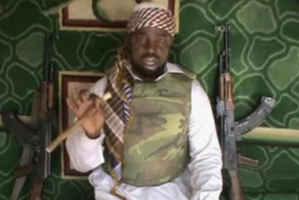
The insurgency waged by Boko Haram's leader Abubakar Muhammad Shekau, who claimed the kidnapping of more than 200 Nigerian schoolgirls, has grown so ruthless that even former Islamist allies have cut ties.
Born in a village in Nigeria's northeastern Yobe state on the border with Niger, Shekau had a traditional Islamic education in neighbouring Borno state, where Boko Haram was founded more than a decade ago by the cleric Mohammed Yusuf.
After meeting Yusuf, Shekau joined his movement made up largely of radical youths who believed that the prevalence of Western education and values were to blame for many of Nigeria's problems, including egregious corruption and crippling poverty.
 Video
VideoBoko Haram, which loosely translates as "Western education is forbidden", is a nickname that the Islamists have disowned, referring to themselves as Jama'tu Ahlis Sunna Lidda'awati wal-Jihad (People Committed to the Propagation of the Prophet's Teachings and Jihad).
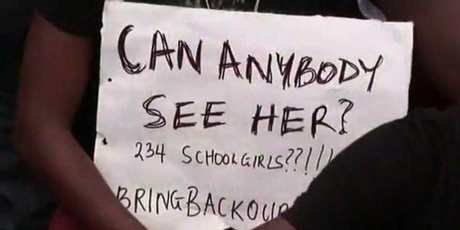
Awareness and condemnation of Shekau spread across the globe this week after he released a video boasting about the April 14 mass abduction in Chibok, Borno state, in which he threatened to sell the hostages as "slaves".
 Video
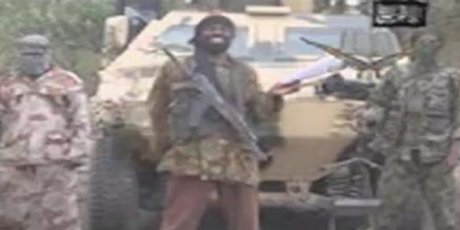
VideoBut for Nigerians, the chilling video was consistent with an Islamist leader who is believed to have masterminded waves of horrific attacks since he took charge of Boko Haram several months after Yusuf was killed by Nigerian police in 2009.
"With Shekau at the helm," the International Crisis Group (ICG) said in a report last month, "Boko Haram has grown more ruthless, violent and destructive."
Shekau's extremism is perhaps best highlighted by the decision of Ansaru - a Boko Haram offshoot which has kidnapped foreigners and published their execution online - to cut ties.
Ansaru "distanced itself from the rest of Boko Haram because it disapproved of its indiscriminate killings and Shekau's lack of tact," the ICG report said, citing security sources and people with close ties to both militant groups.
 Video
VideoThere were significant outbursts of violence under Yusuf but the group was nominally committed to spreading sharia (Islamic law) across northern Nigeria, a goal some in the deeply conservative region support.
Yusuf's ideology and anti-corruption preachings have been largely buried by Shekau's repeated attacks on defenceless civilians, including mass kidnappings and the slaughter of scores of students in their sleep, analysts say.
Even before Yusuf's death, Shekau had accused him of "being too soft", according to the ICG, and Shekau signalled the new direction he meant to take Boko Haram roughly a year after taking charge.
Major attacks in Nigeria's capital Abuja in 2012, including a bombing at the United Nations headquarters that killed scores, raised concern that Boko Haram's new leaders had received jihadist training abroad, perhaps in Algeria or Somalia.
The specific details of those foreign links have been much debated by experts but little has been confirmed.
Since 2011, the Islamists have attacked churches, mosques, politicians, police and the military, among various other targets.
 Video
VideoThe United States has declared Shekau a global terrorist and put a $7 million (5.3 million euros) bounty on his head.
The US Justice Department lists 1965, 1969 and 1975 as possible years of the birth.
And Shekau's videos have become the primary channel through which the insurgents speak.
At times he makes threats against specific Nigerian targets.
At others he seems completely disconnected from current events, threatening world leaders who are dead, like recent warnings against ex-British prime minister Margaret Thatcher, and the late pope John Paul II.
 Video
VideoA quote from one his first video, released in 2012, has been cited by experts as perhaps providing a window into his character.
"I enjoy killing anyone that God commands me to kill the way I enjoy killing chickens and rams," Shekau said.
- AFP
Face of terror: The man behind Boko Haram
The insurgency waged by Boko Haram's leader Abubakar Muhammad Shekau, who claimed the kidnapping of more than 200 Nigerian schoolgirls, has grown so ruthless that even former Islamist allies have cut ties.
Born in a village in Nigeria's northeastern Yobe state on the border with Niger, Shekau had a traditional Islamic education in neighbouring Borno state, where Boko Haram was founded more than a decade ago by the cleric Mohammed Yusuf.
After meeting Yusuf, Shekau joined his movement made up largely of radical youths who believed that the prevalence of Western education and values were to blame for many of Nigeria's problems, including egregious corruption and crippling poverty.
VideoBoko Haram, which loosely translates as "Western education is forbidden", is a nickname that the Islamists have disowned, referring to themselves as Jama'tu Ahlis Sunna Lidda'awati wal-Jihad (People Committed to the Propagation of the Prophet's Teachings and Jihad).
Awareness and condemnation of Shekau spread across the globe this week after he released a video boasting about the April 14 mass abduction in Chibok, Borno state, in which he threatened to sell the hostages as "slaves".
VideoBut for Nigerians, the chilling video was consistent with an Islamist leader who is believed to have masterminded waves of horrific attacks since he took charge of Boko Haram several months after Yusuf was killed by Nigerian police in 2009.
"With Shekau at the helm," the International Crisis Group (ICG) said in a report last month, "Boko Haram has grown more ruthless, violent and destructive."
Shekau's extremism is perhaps best highlighted by the decision of Ansaru - a Boko Haram offshoot which has kidnapped foreigners and published their execution online - to cut ties.
Ansaru "distanced itself from the rest of Boko Haram because it disapproved of its indiscriminate killings and Shekau's lack of tact," the ICG report said, citing security sources and people with close ties to both militant groups.
VideoThere were significant outbursts of violence under Yusuf but the group was nominally committed to spreading sharia (Islamic law) across northern Nigeria, a goal some in the deeply conservative region support.
Yusuf's ideology and anti-corruption preachings have been largely buried by Shekau's repeated attacks on defenceless civilians, including mass kidnappings and the slaughter of scores of students in their sleep, analysts say.
Even before Yusuf's death, Shekau had accused him of "being too soft", according to the ICG, and Shekau signalled the new direction he meant to take Boko Haram roughly a year after taking charge.
Major attacks in Nigeria's capital Abuja in 2012, including a bombing at the United Nations headquarters that killed scores, raised concern that Boko Haram's new leaders had received jihadist training abroad, perhaps in Algeria or Somalia.
The specific details of those foreign links have been much debated by experts but little has been confirmed.
Since 2011, the Islamists have attacked churches, mosques, politicians, police and the military, among various other targets.
VideoThe United States has declared Shekau a global terrorist and put a $7 million (5.3 million euros) bounty on his head.
The US Justice Department lists 1965, 1969 and 1975 as possible years of the birth.
And Shekau's videos have become the primary channel through which the insurgents speak.
At times he makes threats against specific Nigerian targets.
At others he seems completely disconnected from current events, threatening world leaders who are dead, like recent warnings against ex-British prime minister Margaret Thatcher, and the late pope John Paul II.
VideoA quote from one his first video, released in 2012, has been cited by experts as perhaps providing a window into his character.
"I enjoy killing anyone that God commands me to kill the way I enjoy killing chickens and rams," Shekau said.
- AFP
Subscribe to:
Comments (Atom)