Search This Blog

Thursday, May 22, 2014

Aid agencies urge U.S. to ease restrictions on money transfers to Somalia


Aid agencies urge U.S. to ease restrictions on money transfers to Somalia

by Xinhua

Two international aid agencies on Wednesday called on the U.S. government to ease restrictions on money transfers to Somalia.

Adeso, an African charity and development agency, and Oxfam International expressed concern that thousands of families across the Horn of Africa nation are under threat due to the recently announced closures of money transfer companies’ bank accounts in the United States.

“Somalia is hanging once again on the precipice of a full-blown catastrophe,” said Adeso Executive Director Degan Ali in a joint statement issued in Nairobi.
“Even a minor disruption to the link between Somali communities and their friends and family abroad could push them over the edge into crisis,” said Ali.
The organizations called on the U.S. Department of Treasury and its regulatory agencies, whose regulations are responsible for the bank account closures, to ensure that Somali-Americans are able to send life sustaining money to their loved ones.

The Horn of Africa nation has no formal banking system. According to a research published in 2013 by Adeso, Oxfam and the Inter-American Dialogue, Somalia receives 1.3 billion U.S. dollars per year in remittances, which is more than all foreign aid and investment in Somalia combined.

About 40 percent of Somali families depend on remittances to meet their most basic needs, including food, health care and education, and 80 percent of the capital for start-up businesses comes from the diaspora.

The agencies warned that if the Merchants Bank account closures proceed as scheduled on June 20, between 60-80 percent of U.S. remittances to Somalia will be affected, and some companies will be forced out of business immediately.
Some of the companies have arrangements with other banks, but those banks lack Merchants Bank’s expertise in dealing with money service businesses and are even less likely to maintain the companies’ accounts under pressure from the Treasury Department and its regulatory agencies.

The agencies said while the closure of formal remittance channels would hurt Somali communities, it would benefit criminal networks that prey on informal money transfer systems that are invisible to regulators and law enforcement officials.

Egyptian Court Sentences Ousted President Mubarak to Three Years in Prison


An Egyptian court has sentenced ousted President Hosni Mubarak to three years in prison on corruption charges. Mubarak's sons, Alaa and Gamal, were additionally convicted and issued four-year jail terms. They were found guilty of embezzling $17.6 million in public funds that were designated for the maintenance of presidential palaces and using the money to renovate their private residences. They were additionally ordered to reimburse the funds they were accused of stealing. Mubarak faces a separate corruption case as well as a trial for involvement in the killing of protesters during the 2011 uprising. Activists are criticizing the imbalance in prison terms with the harsh sentences recently handed to Islamist and secular protesters.

Djibouti, Ethiopia developing new geothermal power capacities


Addis Ababa, - Djibouti and Ethiopia are developing new geothermal power capacities that are intended to enable them meet increasing demand for electricity and enhance their sustainable-energy portfolio.

The World Bank has provided details about its contractor prequalification procedure for the drilling of four full-size geothermal production wells in Djibouti, while Icelandic powerplant builder Reykjavik Geothermal says it hopes to commence its $2-billion Corbetti Geothermal Power Project in Ethiopia in July.   

The World Bank, one of the financiers of the $31-million Djibouti Geothermal Power Project, which is being developed by another Icelandic firm, Reykjavik Energy Invest, advertised the invitation for bids from qualified drilling companies to execute the project. Funds will come from a number of institutions.

The bank said the steam-well drilling program entails civil engineering preparatory works, to be funded by the African Development Bank (AfDB) at Lake Assal geothermal field.

The second component—the actual drilling of the four wells—is co-financed by Global Environment Facility, the OPEC Fund for International Development and the World Bank's International Development Association (IDA).

French financier Agence Française de DĂ©veloppement (AFD) will fund the acquisition of steel material needed during the execution of the drilling program, while the inspection and testing of reservoir flow rates will be supported by Energy Sector Management Assistance Programme.   

Technical assistance support will be provided by the AfDB for designing the drilling program and the well test protocol by a geothermal consulting company yet to be named.   

The final component would involve executing the well test protocol and ensuring third-party certification of the results of the drilling program before preparing a technical feasibility study for the geothermal power plant, “provided that the geothermal resource is suitable for power generation.”

Djama Guelleh, Djibouti’s head of electricity, said if the geothermal resource is proven to be commercially viable for large-scale power generation, “a follow-on project will be undertaken to competitively offer the geothermal resource to the international independent-power-producer market.”   

The project, to be developed under a public-private partnership, would help Djibouti cut reliance on imported electricity from neighboring Ethiopia and meet the country’s peak demand of 70 MW, of which Ethiopia meets 65%.

In Ethiopia, which gets up to 90% of its 2,000-MW installed power-generating capacity from dams, Reykjavik Geothermal said in March it will, by next July, commence the development of the $2-billion geothermal project with capacity to generate 500 MW. (construction.com)

SHEIKH HASSAN DAHIR AWAYS SPEAKS: SOMALI COUNTRY IS UNDER THE COLONY OF ETHIOPIA AND AMISOM, he said


Sheikh Hassan Dahir Aweys


Mogadishu - The former Al-Qaida Somalia cell of Al Shabaab top Commander Sheikh Hassan Dahir Aweys who has defected from Al Shabab 11 months ago has released his first audio message under the detention of Somali government saying the country in under the colony of AMISOM and Ethiopia.
In this audio message released on Tuesday, Sheikh Aweys surprisingly congratulated the 71th anniversary of the Somali Youth League, a national youth club that fought for thecountry’s Independence starting from 1943 until 1960 when Somalia gained its independence.
“I want to call the youth, it is you who have to prepare something for the people. Take your responsibility,” Sheikh Aweys said.
“There are so-called federal states in the country holding the name and identity of clans; it is Majerten’s government [Puntland], it is Isaq government [Somaliland], it is Rahanweyn government [South west], it is Ogaden government [Jubba], it is Hawiye government [FG]” Skeikh Aweys said.
Sheikh Aweys who is currently under house arrest in Mogadishu has described the leadership of Somali government and the federal states in Somalia as puppet groups serving for Addis Ababa.
He said AMISOM contributing countries are the Somalia’s enemy in tradition “they invaded to take over our land” he added.
The timing of the audio message seems to coincide with Youth Day on 15th May, which is meant to commemorate the Somali Youth League.
Speaking on his current views on Al Shabab, the Al Qaeda-linked group which he has once merged with his former Hisbul Islam function, Sheikh Aweys criticized the group’s war on the Somali people.
“Unfortunately Al Shabab has turned to Somali citizens by killing scholars, youth, elders and politicians,” he added.  “This led to negative aspect of the name of the jihad war.”
He said it was very destructive stand that Al Shabab’s leader was not willing to listen the critics against Al Shabab.

The worst places in the world to be a worker


The International Trade Union Confederation (ITUC), an alliance of regional trade confederations that advocates for labor rights around the world, debuted its Global Rights Index this week, ranking countries on a 1 (best) through 5 (worst) scale on the basis of how well workers' rights are protected.
The organization used 97 different indicators to compile its index, centered around the ability of workers to join unions, win collective bargaining rights and have access to due process and legal protections. The report evaluates labor rights in 139 countries — hence the reason for some gray areas on the map. (You can read more about the methodology here.)
The countries in darker shades of red are where these international norms are least respected or protected — vast nations like India and China with uneven, poor labor standards, for example, are ranked 5. In cases where conflict has gripped a nation and shattered what semblance of rule of law was there in the first place — say in Central African Republic, Libya or Syria — the ITUC scored them even worse at 5+.
In the report's overall survey of the state of labor in the world, the ITUC found the following:
In the past 12 months alone, governments of at least 35 countries have arrested or imprisoned workers as a tactic to resist demands for democratic rights, decent wages, safer working conditions and secure jobs. In at least 9 countries murder and disappearance of workers were used as a common practice in order to intimidate workers.
Moreover, it pointed the finger at petro-rich Persian Gulf states where a vast proportion of the labor work force are migrants, sometimes kept in a state of feudal thralldom by employers and recruitment companies that block their ability to even move elsewhere. "In countries such as Qatar or Saudi Arabia," the report reads, "the exclusion of migrant workers from collective labour rights means that effectively more than 90% of the workforce are unable to have access to their rights leading to forced labour practices in both countries supported by archaic sponsorship laws."
The report also ranks the U.S. a dismal 4, a sign of "systematic violations" — collective bargaining rights are uneven across the U.S.'s states and unions are far weaker than some of their counterparts in northern Europe. “Countries such as Denmark and Uruguay led the way through their strong labour laws, but perhaps surprisingly, the likes of Greece, the United States and Hong Kong, lagged behind,” said ITUC General Secretary Sharan Burrow in a news release. “A country’s level of development proved to be a poor indicator of whether it respected basic rights to bargain collectively, strike for decent conditions, or simply join a union at all.”

So Scotland votes yes: what then?

The complex process of dividing Scotland from the rest of the UK has barely been discussed, but there are some vital questions to consider
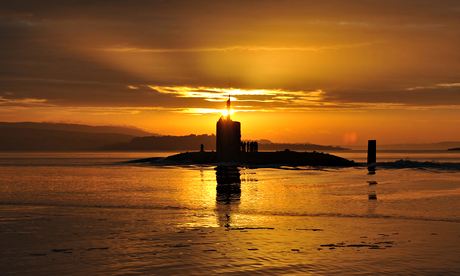
    nuclear submarine HMS Triumph on the river Clyde
    Nuclear submarine HMS Triumph. 'The immediate negotiations over severing Scotland from the UK would have to address the future of the nuclear submarine bases on the Clyde' Photograph: Ben Sutton/Royal Navy/AP


    A yes vote in September's Scottish independence referendum will trigger the complicated process of breaking up the United Kingdom. A Scottish choice for independence must be respected; that is vital if the UK is to continue to be a democracy. But respecting Scotland's choice does not mean abandoning the interests of the 60 million people who live in the rest of the UK (rUK for short). That affects the substance of any independence negotiations, but also how long the process would take, and who would take part.

    The process of achieving Scottish independence is far from easy. In reality, the process of severing Scotland from UK/rUK will go on for very many years, no matter what. The immediate negotiations would have to address a number of difficult issues, including the future of the nuclear submarine bases on the Clyde, the division of the UK national debt, the future of North Sea oil and gas and other national assets, border security, as well as how to resolve the myriad other issues that would need to be resolved in the coming months, years and perhaps decades. At that stage, Scotland would also need to resolve – probably not with UK involvement – such key issues as its currency , EU membership and its citizenship law. As important as the resolution of each separate issue would be the trade-offs between them – which would be quite important for the rUK side though more important for Scotland. And once negotiated, these large and important proposals would need to be legislated for at Westminster, and approved at Holyrood – which itself could well take nearly a year.

    On the Scottish side, Alex Salmond has been keen to talk of a cross-party "Team Scotland" of negotiators for some time . On the UK/rUK side, there is increasing recognition that it would be wrong for Scottish politicians at Westminster to take part in independence negotiations on the UK/rUK side. People in rUK need to have confidence that their negotiators have only had their interests at heart in those talks, and that means Scottish MPs and ministers cannot take part.

    Several Lib Dem ministers recognised this some time back; last week, the Lords constitution committee made the point very forcefully . As the UK government would continue to represent Scotland in many areas until independence day, this would mean creating special parallel machinery – including cabinet committees, and perhaps even meetings of cabinet without Scottish ministers – to manage negotiations and the independence process.

    But this could be complicated by timing issues. There is a tension here. There are very strong reasons to want Scotland to become independent as soon as possible. That would avoid the "constitutional limbo" that concerns the constitution committee, respect Scottish voters' choice to be independent – and also mean that rUK did not include and seek to govern a nation that had rejected the UK in such a formal manner. The prospect of the UK government being second-guessed by Scotland and unable to make policy for rUK for a protracted period would undermine democracy in rUK. A quick process would probably take around 18 months to complete, assuming a sense of urgency on both sides, though even that is rather long given the democratic imperatives. While the Scottish government's proposed period of 16 months seems rather arbitrarily chosen, it might be workable – but for the fact the 2015 UK general election falls in the middle of it.

    The general election disrupts the process hugely. As others have pointed out, the election campaign will itself consume politicians' attention at just the time progress needs to be made in independence talks , and the prospect of a change of UK government partway through makes it hard for the government to do much before the election . But there is a worse possible situation: what happens if Labour comes out of the 2015 election as narrowly the largest party? The likelihood is that such a Labour government would need Scottish MPs to make up its majority, but would lose that when Scottish MPs left parliament on independence day.

    Not only would rUK face a change of government without an election, but the party in government would not have a mandate from rUK voters for independence negotiations. This would be the West Lothian question put on steroids. It would imply, for instance, that any independence negotiations would need to involve the Conservatives (as the presumptive successor to Labour and/or holding the largest number of rUK seats) in the independence negotiations – these could not be treated as a purely executive matter, as the Lords constitution committee proposes. And it would call for a good deal of constitutional imagination and flexibility to respond to such a difficult and unusual situation.

    One way round this would be for a very rough-and-ready negotiation of independence, so that independence day was 7 May 2015, polling day. That would be horrendously difficult to accomplish, but might be the least bad of the options given the problems that Scottish independence creates otherwise.

    Wednesday, May 21, 2014

    DAAWO QAYB KALE OO SAWIRADII XUSASKII 18 MAY AH


    SAMO KU WAAR - NATIONAL ANTHEM OF SOMALILAND
    Samo ku waar, samo ku waar, saamo ku waar
    Sarreeye calanka sudhan bilay dhulkiisaa,
    Samo ku waariyoo iyo bogaadin sugan
    Hanbalyo suuban kugu salaannee saamo ku waar
    Geesiyaashii naftooda u sadqeeyay Qarannimada Somaliland
    Xuskooda dhowrsan kugu salaannee samo ku waar
    Guulside xanbaarsan soo noqoshadiisa
    Kalsooniduu mutaystayee dastuurkaa ku salaannee
    Midnimo walaalnimo goobanimoo,
    Islaanimo kugu salaanee samow samidiyo
    Samo ku waar samo ku waar saamo ku waar