Search This Blog

Wednesday, November 26, 2014

Somalia eyes oil, as new bourse sees seven firms listing in 2015 opening

There is potential for Somalia to be the next oil and gas producing country

By Duncan Miriri in Diani, Kenya 

The Somalia Stock Exchange expects seven companies in the telecoms, financial services and transport sectors to list their shares when the bourse is set up in 2015, its founder said.

Somalia's economy is slowly recovering from more than two decades of conflict, although the government is still battling an Islamist insurgency.

Amid the chaos, some businesses have thrived, including money transfer and mobile phone firms.

"These are companies built by Somalis themselves and they have the potential to grow and attract international INVESTMENThttp://cdncache1-a.akamaihd.net/items/it/img/arrow-10x10.png," Idd Mohamed, chairman of the Somalia bourse, told Reuters on Tuesday. He did not name the firms.

"The Somali companies are business-oriented. They have large amounts of cash and resources and they are willing to take this road," Mohamed said on the sidelines of a meeting of African bourse chiefs in the Kenyan coastal resort of Diani.

He said one of the biggest challenges was hiring staff after many educated Somalis fled their war-ravaged country at the height of the fighting.

But he said now the bourse was recruiting some qualified Somalis who were being trained.

The bourse is working with the Nairobi Securities Exchange in neighbouring Kenya to train STOCKBROKERShttp://cdncache1-a.akamaihd.net/items/it/img/arrow-10x10.png and staff.

The Somalia Stock Exchange has opened administrative offices in Mogadishu and other Somali centres like Kismayu, as well as in Nairobi, to help recruitment and in other related issues.

Somalis who fled abroad to escape the chaos at home send back an estimated $1.3 billion to their families every year, a lifeline to many in Somalia and helping spark a mini-construction boom in Mogadishu.

The remittances are sent using money transfer firms, such as Dahabshiil, which has an international network of outlets.

Mohamed said the new bourse was also talking to companies in the energy sector who are prospecting for natural resources in the Horn of Africa country.

"There is potential for Somalia to be the next oil and gas producing country," he said.


He said security was improving with the help of African Union peacekeeping troops, helping boost economic activity.

Saturday, November 22, 2014

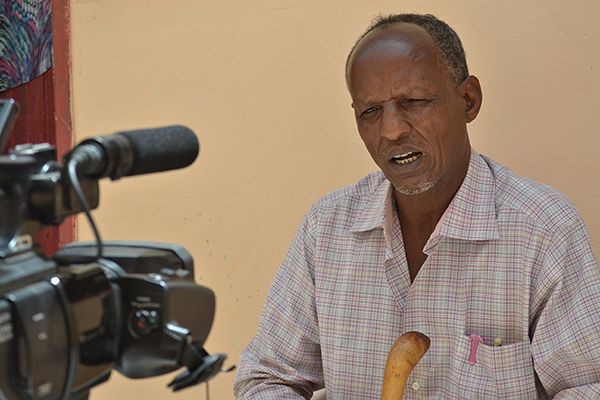
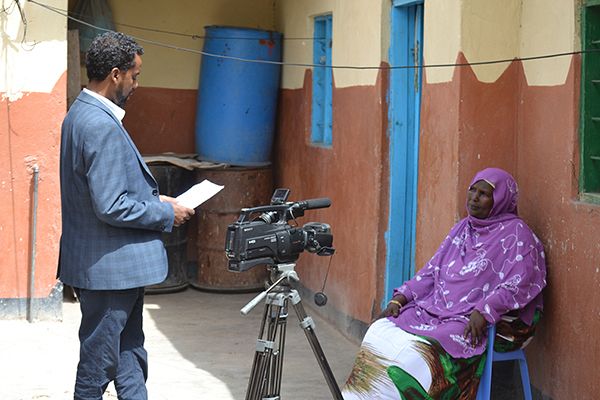
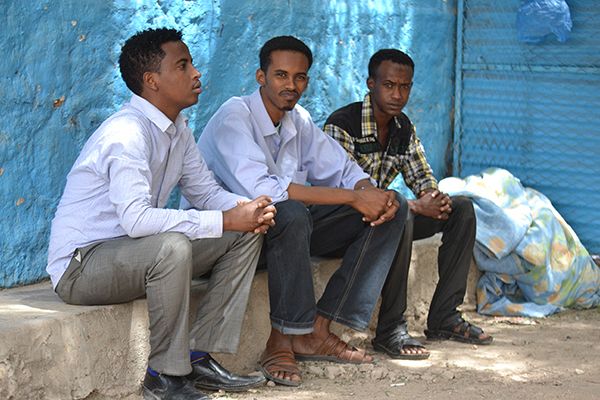
Researcher & cameraman Abdi Bidhan Dahir, freelance journalist in Hargeisa Every year, thousands of migrants risk their lives attempting to cross the Mediterranean from Africa into Europe. In Somaliland, although the region has escaped much of the conflict and chaos that plagues neighbouring Somalia, many young people are desperate to leave and find a new life elsewhere. The main reason that drives them is a lack of jobs with youth unemployment at around 80 percent. 52-year-old Warabee works at a livestock market in the capital, Hargeisa. His son Jiijile drowned in 2013 as he attempted the risky crossing from Libya to Italy. “My son wanted to improve his life and build a future. Many people earn a lot of money in Europe and many of his friends were already there,” he explained. Warabee’s son drowned trying to cross to Italy The family sold plots of land to pay smugglers to get Jiijile to Italy. Warabee says his 21-year-old son was hopeful and excited about the journey and not deterred by the horror stories of abductions, exploitation and shipwrecks that filter back. Months after his son left, Warabee received a phone call from Libya telling him his son had drowned. He says he can’t bear to talk about it. An estimated 3,200 migrants have died attempting to cross the Mediterranean this year according to the International Organisation for Migration (IOM.) The actual total will never be known, as many bodies are lost at sea. Sureer sells khat, a plant chewed as a stimulant, for a living. She is desperate for information about her daughter’s whereabouts. “I don’t know where she is now. I am worried as mother. I think about her every day,” she told euronews. Sureer is desperate for news of her daughter 18-year-old Filsan left Somaliland a year ago after the family sold their gold jewellery and borrowed money from friends to pay for her journey. Filsan travelled through Ethiopia and Sudan and arrived in Libya hoping to make the crossing to Europe. That was the last her family heard of her. « She wanted to go to Europe because she was having problems with an arranged marriage and she was hoping to improve her life. » Sureer has been told her daughter may have been smuggled to Italy but there has been no phone call or contact and she has no idea what fate she has met. She explained why her daughter decided to leave the country: “she wanted to go to Europe because of the hardship here. She was having problems with an arranged marriage and she was hoping to improve her life.” It’s estimated that tens of thousands of foreign nationals are trapped in Libya, the main departure country for Europe. The UN’s Refugee agency UNHCR says it is deeply concerned about their safety as they are vulnerable to exploitation, kidnapping and torture as they wait for smugglers to get them on a boat. Back in Hargeisa, Jiijile’s friends are struggling to come to terms with his death. They say their friend was great fun and always telling jokes. « Everybody dreams of going to Europe…but we don’t want to take the risk now. » Jiijile’s friends have changed their minds about going to Europe The news of his death has changed how they feel about attempting the perilous journey to Europe. “Everybody dreams of going to Europe.” said one friend. Another added:“we would like to too but we don’t want to take the risk now.” The government in Somaliland says it is committed to lowering the rate of youth unemployment to stem the flow of young people leaving the country. Somaliland is not officially recognised as a country, although for the last two decades it has held free elections, established a working government and its own currency, in stark contrast to its neighbour Somalia. In that time, both Eritrea and South Sudan have become countries, enabling them to access financial assistance from global institutions. Officials in Somaliland say if they could get recognition and more trade and investment from the EU they would be able to keep their young people in their homeland instead of risking their lives to knock at Europe’s door.


Produced by Naomi Lloyd

Researcher & cameraman Abdi Bidhan Dahir, freelance journalist in Hargeisa
Every year, thousands of migrants risk their lives attempting to cross the Mediterranean from Africa into Europe.
In Somaliland, although the region has escaped much of the conflict and chaos that plagues neighbouring Somalia, many young people are desperate to leave and find a new life elsewhere. The main reason that drives them is a lack of jobs with youth unemployment at around 80 percent.
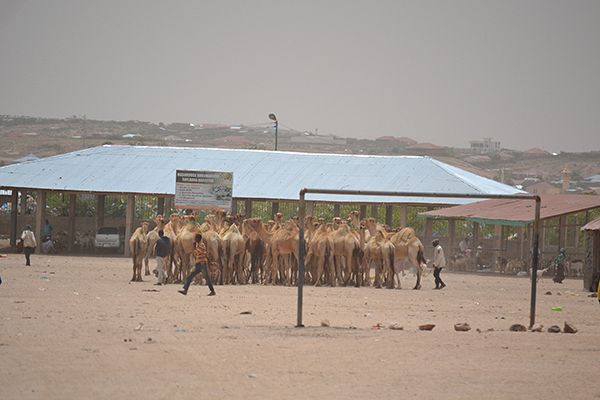
52-year-old Warabee works at a livestock market in the capital, Hargeisa. His son Jiijile drowned in 2013 as he attempted the risky crossing from Libya to Italy.
“My son wanted to improve his life and build a future. Many people earn a lot of money in Europe and many of his friends were already there,” he explained.

Warabee’s son drowned trying to cross to Italy
The family sold plots of land to pay smugglers to get Jiijile to Italy. Warabee says his 21-year-old son was hopeful and excited about the journey and not deterred by the horror stories of abductions, exploitation and shipwrecks that filter back.
Months after his son left, Warabee received a phone call from Libya telling him his son had drowned. He says he can’t bear to talk about it.
An estimated 3,200 migrants have died attempting to cross the Mediterranean this year according to the International Organisation for Migration (IOM.)  The actual total will never be known, as many bodies are lost at sea.
Sureer sells khat, a plant chewed as a stimulant, for a living. She is desperate for information about her daughter’s whereabouts.
“I don’t know where she is now. I am worried as mother. I think about her every day,” she told euronews.

Sureer is desperate for news of her daughter
18-year-old Filsan left Somaliland a year ago after the family sold their gold jewellery and borrowed money from friends to pay for her journey. Filsan travelled through Ethiopia and Sudan and arrived in Libya hoping to make the crossing to Europe. That was the last her family heard of her.
« She wanted to go to Europe because she was having problems with an arranged marriage and she was hoping to improve her life. »
Sureer has been told her daughter may have been smuggled to Italy but there has been no phone call or contact and she has no idea what fate she has met.
She explained why her daughter decided to leave the country: “she wanted to go to Europe because of the hardship here. She was having problems with an arranged marriage and she was hoping to improve her life.”
It’s estimated that tens of thousands of foreign nationals are trapped in Libya, the main departure country for Europe.
The UN’s Refugee agency UNHCR says it is deeply concerned about their safety as they are vulnerable to exploitation, kidnapping and torture as they wait for smugglers to get them on a boat.
Back in Hargeisa, Jiijile’s friends are struggling to come to terms with his death. They say their friend was great fun and always telling jokes.
« Everybody dreams of going to Europe…but we don’t want to take the risk now. »

Jiijile’s friends have changed their minds about going to Europe
The news of his death has changed how they feel about attempting the perilous journey to Europe.
“Everybody dreams of going to Europe.” said one friend. Another added:“we would like to too but we don’t want to take the risk now.”
The government in Somaliland says it is committed to lowering the rate of youth unemployment to stem the flow of young people leaving the country.
Somaliland is not officially recognised as a country, although for the last two decades it has held free elections, established a working government and its own currency, in stark contrast to its neighbour Somalia.
In that time, both Eritrea and South Sudan have become countries, enabling them to access financial assistance from global institutions.
Officials in Somaliland say if they could get recognition and more trade and investment from the EU they would be able to keep their young people in their homeland instead of risking their lives to knock at Europe’s door.


Friday, November 21, 2014

DHOOF NOOLI KULANTEE - Waayo Aragnimada Runta ah ee Nolosha Qurbaha

(Waayo Aragnimada Runta ah ee Nolosha Qurbaha)


Qalinkii Mr. Ali Ali (dadaal)


Gabadh ama nin baa sharci qof kaga iibsatay lacag u dhaxaysa $20,000 ilaa $30,000 oo doolar.

Ma u malaynaysaa in ay lacag intaa leeg markale qofkaasi hal mar heli karo? 

Qadarka Allaah waa meeshiisa, se waaqicu waa, wili xaas maaha, afka dalka aqoon buuxda uma laha iyo waxbarashadiisa ama aqoonba uma laha. Wax xirfad ahna oo lagaga shaqaysto dalakanna mahaystaan. 

Ugu yaraan hadii ay sharici sugaan waa 7 sanadood oo ugu yaraan intaas oo imtixaan mid kumbuutar mid afka ah iyo mid aqoonta dalka ah oo muwaadinnimadaada la eegayo lagaa doonayo iyo qiimaha sharciga oo lacag u dhiganta $2000-3500 bixinayso waa hadii aad sharci saxa oo aan lagaa qaadayn marka aad dalka soo galayso lagu siiyo hadiise aanad sharciya haysan oo aan lagu siin ama ka aad wadatay laguu dayn, Aqal lama siinayo lagamana bixinayo kiro, wax gunno ah oo lasiinayaana ma jirto walow hay'ado khayri ah oo dadka u dawartaa jiraan. Wax barasho ma helysid. 

Allaah ha kuu naxariisto waayo waa adi iyo nasiibkaa, dad baa ilaa imika 21 sano bilaa sharciya, qaar baa 5, 6, 10, 15 sanadoo billaa sharciya. wax barashana waa hadi ay jaamacad doonto 8 sanadood oo sanadkiiba ugu yaraan yahay hadii UK ay yimaadaan ugu yaraan $15000, hadii aad deyn ku qaadataan ribadii kuu sii saaraan waxayna bilaabmaysaa wakhtiga qofkaa qalin jabiyay shaqo bilaabo. Hadii uu qofku bilaa sharci noqdo Shaqo waa kuwa suuliyada xafiisayda ama iskulada maydha 7 cishaba hadii ay shaqastaan oo qof kaliya kaba soo qaad in qofkaasi $5000 beekhaansado sanadkii. 

Qofku hadii uu is yidhaa guurso oo Reer iyo Ubad yeelo ma isleedahay ileen lacagta intaa leeg bay ku soo kharash gareeyeene in ay heshiinayaan ma is leedahay ileen midkooda baa bilaa sharciya labka ama dhadiga mise mushkilad iyo khilaaf baa iman kara khuseeya dhinaca maalka isida badanaaba dalkan uk ka dhacda xiitaa iyaga oo labada qofba sharci dhamaystiran haystaan hadan waxa badanaaba lagu kala tagaa waa lacag la shaqaystay ama lacagta dawladu caruurta lagu siiyo. 

Tusaalahani waa tusaalaha qaabkaasa. Waxaaba imika ka sii daray ku naftoodii halaagay ee badda inta aan la gaadhinba jidh dil iyo kufsi lab iyo dhadig la dhaafayn horta sida ay ka sheekeeyaan dadka badbaaday inta dumar kufsi ka badbaaday waa faro ku tiris, ragana si loo mooraal jabiyo inta kale iyagana waa la kufsadaa sida ay sheegeen kuwa soo bad baaday wiliba kufisgu rab iyo dumarba qarsoodi maaha waa dadka hortiisa si niyadda looga dilo. 

Marka ay doonta gaadhaana inataa doonta la meel fog la geyn bay dadka dawakhiyaan wixii uurkooda ku jiray oo dhan inata ay ruxaan isku wada dul hunqaacaan wax kasta oo aysitaana laga daadiyaa ama tuuraa si doontu u cuslaan jidhdilkaa uga daran iyaga oo sakaraada qaarkoodna haraad iyo gaajo u dhinteen baa inta soo hadhay oo daashay oo doonta sagxadooda taal ama is wada dul jiifaana meel aan dhulka u dhaweyn lagu wada daadiyaa xitaa hadii ay dabaasha yaqaanaan ma dabaalan karaan waayo waa la soo jidh dilay dhowr cisho biyo iyo cunto afka may saarin marka sidaa loogu wada daadiyo ama way kuwada dhintaan ama qofqof baa ka badbaada. 

Waa halaag iyo is biimayn hadii qofku sidaa isaga oo og uu sameeyo ugu yaraan meesha u deegaanka ahina aamin in uun tahay oo uu qofkani wadada halaaga doorto kuna dhinto Aakhiro Alaan khayr uga rajeynayaa lkn waa isdil Islaamkana isdilku waa naar uun iyo qaabkaa uu isku dilay. 

Masuuliyadda ugu waynina waxay saarantahay dadka dalkaa ka taliya ee maamula min madax weyne ilaa xildhibaan xiitaa shacabka iyo ganacsatada iyo saxaafada,

Waxa kale oo aan ka baxsanayn dadka qurbaha hore u tagey ee dhulka dadka ku qaaliyeeyay, lacago hagbado ha ku dhistaan ama, mid ay shaqaysteen ama tii caydha ama mid xalaala ama xaaraanba siday doonto ha noqotee inta ay guryo ayna galayn dhistaan marka ay yimaadaana dhabta ku noolaanayn ama ka sheegayn nolosha ay ku noolyihiin in caydh iyga iyo ubadkooduba qaataan xisaabsanyihiina dadka ugu liita ee la yaso meelaha ugu xunxuna degenyihiin dadka dalka iska lihina ku caayaan sida ahaynu dadka kale ee dalkeena inala degen ku yasno ma ku cayno ee aynu nidhaahno wadankii bay nagu cidhiidhyeen. 

Cid suaal aakhiro ka baxsanaysaa ma jirtaan u malaynayaa waayo dawladda jirtaa 100% waa in ay dadkeeda sidii ay u daryeeli lahayd ka fikirto gaar ahaan dhinaca shaqo aburka halka iygu ka shaqo abuuranayaan lagana yaabo ubadkoodii iyo reerahoodiina qurbe wada joogaan Allow na astur madaxdayadana dadkooda u soojeedi iyo ganacsatadaba. 

Qoraalkani wuxuu khuseeyaa dadka dhoofka imika ku talo jira.

Nuruddin Farah’s ‘Hiding in Plain Sight’


Nuruddin Farah CreditJeffrey Wilson
By 

“Hiding in Plain Sight” begins with a threat. One evening in Mogadishu, Aar, a logistics officer for the United Nations, receives a letter in the mail. It consists of a single, misspelled word, but it’s terrifying all the same: deth! Aar wants to return to his home in Nairobi on the first flight out, but at the last minute, he decides to stop by the office to pick up photos of his children. As he steps out with the pictures in hand, Shabab militants strike the building.

A terrorist attack is a difficult place to start a novel. The writer must compete with a flood of words and images, most of them clichés. But the Somali novelist Nuruddin Farah is used to the challenges of turning fact into fiction. Over the last four decades, he has written about the homeland from which he was exiled, chronicling its contemporary history and struggles.

In his first novel, “From a Crooked Rib,” he wrote about a nomad girl who flees her family’s camp after they attempt to arrange a marriage for her with an older man. That book was followed by a trilogy, Variations on the Theme of an African Dictatorship, which explored the parallels between colonialism, patriarchy and dictatorship in Somalia, then still under Mohammed Siad Barre’s rule. Another trilogy, Blood in the Sun, examined the effect of internecine conflict, foreign aid and sexual violence on ordinary families. Though different in style from the Moroccan Tahar Ben Jelloun or the Egyptian Naguib Mahfouz, his work shares with them a preoccupation with capturing snapshots of a country in rapid transition.


“Hiding in Plain Sight” may begin with a terrorist attack, similar to the one that shook the United Nations compound in Somalia last year, but this is not a novel about violence. It is, instead, a novel about grief and love. The news of Aar’s death in Mogadishu reaches his half sister, Bella, in Rome, where she works as a photographer. Until now, Bella’s life has been free of responsibilities. Her parents are dead, and she has no children. She keeps lovers in three different countries — a model from Kenya, a sculptor from Brazil and a philosopher from Mali — but she is not attached to any of them. And her work takes her to exotic destinations around the world. But now, with Aar’s sudden death, she travels to Nairobi to take care of his teenage children, Dahaba and Salif.

Bella’s maternal instincts toward the children are strong and immediate; she wants to raise them and is prepared to leave behind her successful career and her wandering life. There are custody issues to sort out, however. The children’s mother, Valerie, who abandoned them a decade earlier, has suddenly returned and wants them back. To complicate matters, Valerie’s lover, Padmini, would like to raise the children in England and is currently mired in a dispute over property that her family owned in Uganda before Idi Amin’s expulsion of the Indian community.

Much of “Hiding in Plain Sight” is devoted to the conflict between Bella and Valerie over Aar’s children and his estate. One would think that starting life in a new city, taking responsibility for two teenagers and handling the complications of a disputed will would be enough to overwhelm anyone. 

But Bella remains steadfast. She receives legal help from Aar’s lawyer and emotional support from his friends. In addition, she seems to have a sizable fortune, which enables her to pay off people’s debts or get them out of sticky situations with the police. As a character, Bella makes the right choices at every juncture, but her strength proves to be one of the novel’s weaknesses. Her self-possession makes it impossible to care for her.

Though the story is told in the third person, usually from Bella’s perspective, it occasionally suffers from abrupt and ultimately jarring leaps into Valerie’s or Padmini’s point of view. There are also moments when the descriptions feel so distant or improbable that they break the illusion that the reader is in Bella’s mind: “She is a dark-eyed beauty with a prominent nose, heavier in the chest than she likes because of the attention it draws from men, even though she is overjoyed that she boasts the slimmest of waists for a woman her age and an African’s high buttocks. Drop-dead gorgeous, she also strikes most people as charming, well- read and intelligent.”

The rewards of reading “Hiding in Plain Sight” lie in Farah’s sensitive exploration of grief and his depiction of a family’s love for one another. The shock of Aar’s death takes a long time to unfold, and Bella’s feelings of anguish come to her unexpectedly. Farah is particularly adept at evoking the way in which the sight of a familiar face or place can trigger painful memories and how comfort can come to us from unexpected sources, just as Bella finds consolation in her love for Aar’s children.

There are moments when Bella lapses into generalizations about fellow Somalis, but shirks in horror when similar generalizations are made by foreigners. That dual feeling — pride in one’s country mixed with shame at its failures — is familiar to the immigrant, the refugee and the exile. 

It permeates this novel, which is also, in the end, a novel about displacement. Nearly all the characters have been forced to give up their homelands and live in countries that afford them physical safety and civil rights. What is hiding in plain sight, we come to learn, is their true selves.


HIDING IN PLAIN SIGHT

By Nuruddin Farah
339 pp. Riverhead Books. $27.95

Source: nytimes.com

Somalia: Let’s just forget the past?


It will be impossible to reconstruct Somalia without addressing its complex past. Yet the current definition of transitional justice appears too narrow to be beneficial, since it limits the space for local-based procedures in favour of Western concepts like the state, rule of law and democracy.


BY Marco Zoppi


I recently attended a conference where I had the chance to hear the speech of one Somali diplomat, whose identity or post is not what is important here. What he said, however, matters much more as he has indeed brought on the table many issues concerning the Federal Republic of Somalia’s future. Although his speech was preceded by a disclaimer that his opinions were not necessarily those of the Somali government he is representing abroad, it is fair to assume that many of his statements necessarily correspond to actual policies put in place by the federal government which appointed him, as media evidence seems to suggest. Starting from this conference, yet moving forward to analyze current Somali affairs, in this article I would like to engage on questions of reconciliation and (transitional) justice in Somalia: I argue that it’s a proper time to bring these elements in the debate, or rather to bring them back again in the debate, now that the federal system has been set to govern the country, but its realization is yet advancing with manifest strain and tension: in fact, we need to ask what can be held accountable for the slow implementation of the federalist project, and in doing so, it doesn’t seem reasonable to only take into account the flaws in the constitutional text, or the logic of clanpolitics, as a number of analysis have tried to do so far.

To pinpoint the core of the matter, the main concern I am confronted with is the diplomat’s affirmation regarding what to do with Somalia’s past, namely: “the past? Let’s just forget that”, while focusing all efforts to re-build a functioning state, first of all through the securitization of the territory, as he went on to suggest. But is it really the case that the Somali state can be re-built without even attempting any reconciliation among Somali population? In other words, where does the pivot of the discussion about peace and justice in Somalia lie (or should lie)? In the top-down state engineering or in the social norms regulating the harmonious relations among citizens and between them and the state? These are not rhetorical questions, and their answers call for historical as well as social analysis, as I will try to underline now.

The first point that I would like to stress is the following: if we look at the different reconciliation processes which have taken place over time since the collapse of Siad Barre’s regime, the emphasis has prevalently been on the need to resurrect the state or to gather all relevant leaders/warlords around the same table, taking for granted that they would fairly represent the vast majority of the Somalis population. This modus operandi reveals that the international community presupposed a convergence of the socio-political dynamics shaping the Somali society with the ones characterizing western countries: accordingly, they mobilized concepts such as “state institutions”; “representation”, “democracy” without even scrutinizing their factual compliance with local patterns of political behavior. Thereafter, in the face of the poor governance established by those leaders, which nourished rather a state of protracted war, the same international actors would conclude that Somali and African societies in general are hostages of corruption, nepotism, ethnic hatred and similar issues which they treat as “pathologies” that need to be cured. While there is some space to partly concur with what is said above, it is still interesting to note that western institutions were not, anyhow, the ones whose effectiveness was to be put into question in this discourse: poverty, clan rivalry, weak African leadership were to blame, and not much of this myopic way to see things has changed nowadays.

Nevertheless, there is a reality that we need to face: the solution to these exacerbated political issues is not derived from “better” governance alone or, in the case of Somalia, from the federalist structure per se; what is missing in the framework of action of the international community is, first of all, the understanding, or the willingness to understand, the role of history as well as of historical consciousness for reconciliatory processes; secondly, there has not been a serious engagement to include or at least mediate the tenets of the “social contract” of the Somalis, namely the norms which regulate at least three dynamics: the social interactions among people; the definition of citizenry (not so much in a legal way but in the sense of recognized participation in common activities); and the criteria for community membership. As many scholars have underlined, this form of indigenous governance is capable of producing remarkable levels of governance, but unfortunately it is often neglected in the state-building process, notwithstanding their relevance for the everyday life of the people who are supposed to live in that precise state. Hence, what happens is that there is a discrepancy between the rights and duties of the citizen so as described in the federal constitution (articles from 10 to 42) and the kind of “civil society” defined by Somali traditional norms. The overlapping of these two types of both public and private spheres has relevant implications, mistrust and lower loyalty towards the state. To be sure, these traditional norms are not a relic from a primordial past that must change in order to enter an alleged “modernity”.

The tradition of the Somali population, that is prevalently (especially in the north) but not exclusively pastoral is shaped, I argue, first of all in reaction to the harsh environmental conditions which have forced life to be mobile, fast, less hierarchical, more communitarian and violent because resources are scarce and unequally distributed on the territory. That’s why the Somalis developed a different way to secure themselves from risks and a different system to ensure social security, to which the clan is an essential part. The imposed top-down approaches to state-building are overlooking this aspect and, by claiming and financing the imposition of the state as the competent body to both manage risks for the population and create safety nets for the “citizens”, they also demonstrate to ignore history. They ignore, for example, that the legacies of both colonialism and Barre’s autocratic rule have left behind little trust and much suspicion towards the state among the Somalis, who are unlikely to change this attitude for the short-term period. Hence, the citizens that the state is trying to reach are not there, because a culture mediating the relation between the state and the population is missing in Somalia, and needs to be built from scratch.

But before doing that, reconciliation among citizens is required: in a society so threatened by resource scarcity, yet well equipped with traditional institutions devoted to settle disputes, the fact that reconciliation processes have been hindered has particularly plenty of social implications. Therefore, the priority given by the federalist government to security issues may not be the ideal path forward, since it would mean operating on the consequences and not on the root causes. The legitimacy of state institutions is, after all, still missing and for a good reason: it is redundant to say that the lack of legitimacy is likely to influence internal stability as well. The state, rather than a prerequisite for stability, should be conceived instead as a major achievement following the enactment of agreed-upon political practices.

The second matter I wish to deal with now is: what can Transitional Justice (TJ) bring to Somalia? Somali society is in desperate need to re-conciliate after the widespread violence connected to the civil war. Intra-clanic fights; confrontation between nomad/pastors and settled farmers; the emergence of discriminated minorities: these are some of the thorny issues of Somali past are still to be addressed in the post-1991 context. However TJ as commonly understood (including by United Nations) implies too much of state institutions or western-born concepts like the rule of law, to be a viable solution for African problems, it is argued here. In fact, if many African political crises are somehow the outgrowth of the “politics of the belly” (to quote Jean-François Bayart), namely of clientelist practices involving the state and the private sector or the broader population, the solution out of this deteriorated political situation should then come from other political bodies which enjoy people’s legitimacy, the latter built around both common definitions of what is justice as well as generalized perceptions of what is desirable and appropriate for the community’s common good.

At the moment, the state is thus not representing the ideal political body considered able to attract adequate degrees of legitimacy. That’s why the strengthening of state institutions advocated by TJ theories may not be what is firstly needed here, especially if reconciliation and the coming to terms with the past in reverse are not included at any level in the post-conflict recovery process. I intend to underline the need to develop African recipes for reconciliation which can be more responsive to population’s needs: these kinds of indigenous institutions, including the clan, can convey values which are intelligible to the population because they are born out of the local social contract: the respect of this social contract would alone ensure a satisfying degree of national safety while, on the other hand, “the creation of a national army” prioritized by Somali the federal government is not necessarily a synonym for peace-building. I am affirming this because the univocal notion of citizenship proposed by the state is hardly fitting into the reality of the constellation of clans already equipped each with its own respective definition for establishing who is a member.

So, while TJ’s truth-telling initiatives could help establishing an egalitarian approach that affords acknowledgment and dignity to all, the state framework is an inhibitor which would deliberately fragment that “all” into exclusionary definitions of citizenship and partisan factions, eventually jeopardizing the whole process. While these issues should be properly addressed, the specific provocation: “stop being slave of the tribal system and start behaving like a nation” that the diplomat directed to the Somali diaspora, is an indication of the government’s adoption of a mono-strategy to deal with the future of Somalia.

How could Transitional Justice manage the societal diversity? Just for clarity, it should be underlined that even the realization of a state-led reconciliation process based on TJ’s principles would not necessarily mean the consolidation, right away, of a national identity: Somalia is still composed of clans, and the clan is not just a political entity, but also a welfare provider for its members, as well as a security net: it performs a way more complex social role of than usually represented in international media, and it is even more efficient than the state in doing so in the Somali context: the clan makes the life of its member less insecure and problematic, yet more communitarian and more connected to kin through nets of duties and moral obligations. So, once more, reconciliation in Somalia should rather start from the full resurgence of the social contract and the traditional norms, the only ones that at the moment are able to attract the trust of the people and that are thus granted social legitimacy. The reconstruction of fragmented societies through Transitional Justice should be based on cultural forms and systems of knowledge which can be recognized by the concerned population: in the recent history of the international community engagement in Somalia, this would represent a novelty, and it would substantially change the meaning of transition itself: a transition from solely state-based approaches towards the inclusion of local social contract-based elements.

The last point of the discussion is about people. Not only institutions, whether western or Africans, count. People also matter, and people as a matter of fact make the institutions alive. How can history be just forgotten in order to leave space to new nation-building imperatives? Memories of the people are extremely important as they are actively contributing in determining current people’s life decisions; the historical consciousness is too relevant in this discourse to be left instead in the corner; better yet, the fundamental peace effort for Somalia may come exactly from those who have experienced the war and endure painful memories.

To conclude, I firstly stated that the federalist structure of Somalia is faces obstacles for its full implementation in virtue of a missing agreement on who is a citizen, and how relationships among citizens and between them and the state should be regulated. I then underlined that the inclusion of provisions contained in the Somali social contract and in the norms known as “xeer” in the current political development would increase the overall legitimacy of the process. I went on to say that, however, without reconciliation in a post-war traumatized and truth-seeking population, social cohesion is hard to be achieved. I then questioned the potential role of Transitional Justice, a point which I wish to expand now: in the case of Somalia, the current definition of TJ appears too narrow to be beneficial, since it limits the space for local-based procedures of definition of justice as well as consequent means to achieve it: it does so somehow implicitly, in the specific focus given to state, rule of law, democracy and other conceits belonging to the western political dictionary. I have claimed instead the need for a bottom-up reconciliation process in Somalia, based on the indigenous social contract or at least the integration of some of its tenets: these already include, in fact, measures for dispute settlement and are thus preconditions for a working variation model of TJ which would have more chances to be applied successfully. However, as it appears, this solution entails a direct challenge to the well-established strategies of state-building proposed by the west: the key point turns thus around the poor legitimization that Afro-based transitional justice processes would receive by international actors, notwithstanding the rather higher social recognition they would get internally. In other words, TJ as it is framed today in the general debate is at risk of creating an ideological alliance with the theories of the state, which in the African context would be nothing but detrimental, just as the past political record clearly shows. Most likely, it would reiterate the endless confrontation between the alleged “modernity” of the west, on the one hand, and the African tradition on the other, without bringing forward a valid as well as agreed-upon path to reconciliation.

* Marco Zoppi is a PhD fellow in Histories and Dynamics of Globalization at Roskilde University, Denmark. He is currently researching on the Somali diaspora in Scandinavia. He holds a MA in African Studies pursued at the University of Copenhagen. His personal interests include Geopolitics, history of Africa and colonialism. He can be contacted at: marzo@ruc.dk

Wednesday, November 19, 2014

Somaliland Goverment Position on Somalia Copenhagen Conference

Government of the Republic of Somaliland


Press statement: Copenhagen Conference
19 November 2014
The Government of the Republic of Somaliland would like to praise the Government of Denmark for hosting the Ministerial High Level Partnership Forum on the Somali Compact, which is taking place in Copenhagen on 19 and 20 November. It is an important forum to review the progress of the Somali Compact. However the Government of Somaliland will not be participating.
Instead, our focus is the Somaliland Special Arrangement, which is a unique and distinct part of the Somali Compact, with its own reporting mechanism. The 7th High Level Aid Coordination Forum, held in Hargeisa earlier this month, jointly endorsed Somaliland’s Annual Report for 2014 on the Somaliland Special Arrangement. The High Level Aid Coordination Forum is Somaliland’s platform for reviewing, planning and monitoring the implementation of the Somaliland Special Arrangement.

Somaliland would welcome the opportunity for a higher-level international platform, on a par with the Copenhagen conference, to advance the Special Arrangement. We are hopeful that the international community will consider giving this platform to Somaliland, as it has done for Somalia, in line with its own New Deal principles of “do no harm” and “conflict sensitivity”.
Somaliland also hopes that the international community will play a more active role in supporting the Dialogue process between Somalia and Somaliland, which is currently being facilitated by Turkey. Somaliland recognizes the importance of continued dialogue between Somaliland and Somalia to resolve our differences. We consider it essential for promoting future peace, stability and cooperation in the Horn of Africa region. We seek to strengthen this process, which was agreed at the London Conference on Somalia in 2012, with the international community.
The ultimate aim is for the two countries to clarify their future relations. We draw attention to the fact that one of the issues to be discussed is how Somaliland can participate in international meetings concerning, amongst other things, the Horn of Africa as a peer to Somalia.
Finally, we note our gratitude to Denmark and the UK who, as a vote of confidence, worked closely with Somaliland to establish the Somaliland Development Fund in 2012. This is the Government’s preferred funding mechanism and the perfect example of the New Deal in action. The UK and Denmark have since been joined by Norway and the Netherlands. Somaliland encourages its international partners to use the Fund for its financial development assistance.
We hope that more donors will visit Somaliland to see for themselves the progress that we have made and we look forward to welcoming their representatives to Hargeisa.
There are many lessons that can be learned from the successes and achievements Somaliland has demonstrated in effective, peaceful and sustainable bottom-up state-building over the last 23 years.
The Republic of Somaliland remains supportive of all efforts to promote peace, state building and economic development in the Horn of Africa. Somaliland has been called a beacon of hope in a troubled region, and understands that continued peace, stability and development in Somaliland is vital for its own people, the region, and the international community.
……………………………………………………………………………………………………………………………………………………………………….
Notes to Editors
For all media queries, or requests for interviews with H.E. Mohamed Bihi Yonis, Foreign Minister of the Republic of Somaliland, please contact:
• Ben Young, ben.young@portland-communications.com+44 (0) 20 7842 0113
Somaliland has been campaigning to achieve international recognition as an independent nation state since 1991. Somaliland maintains that recognition would not only bring major benefits to the people of Somaliland; it would directly serve the vital strategic interests of the international community. By accepting Somaliland’s strong legal case for recognition, the international community would enhance security, drive economic development and entrench democracy in one of the world’s most unstable regions.
For more Information please see: www.recognition.somalilandgov.com
You can follow the Government on Twitter at @SomalilandGovt

Tuesday, November 18, 2014

Kenya Opposition Demands Arrest of Electoral Body Officials


Kenyan opposition leader Raila Odinga, a three-time presidential candidate, called for the arrest of electoral agency officials suspected of taking bribes from a British company that printed voting materials.
Kenyan election-commission officials received “millions of shillings” over an unspecified two-year period from Smith & Ouzman Ltd., Odinga told reporters today in Nairobi, citing a case in London courts investigated by the U.K.’s Serious Fraud Office. The British company also printed extra ballot papers for Kenyan President Uhuru Kenyatta’s Jubilee coalition, which were used to rig elections held in March 2013, Odinga said.
Jo Cornell, an employee with Smith & Ouzman, declined to comment when contacted by phone today. No one answered the phone at the Nairobi-based headquarters of the Independent and Electoral Boundaries Commission.
Odinga has described last year’s presidential vote as flawed and his political alliance, the Coalition for Reforms and Democracy, challenged the outcome in the Supreme Court, which upheld Kenyatta’s victory. CORD is pushing for a national referendum on key issues including electoral reform.
Observers from the European Union and African Union, as well as Kenya’s Elections Observation Group, known as ELOG, which held a parallel results tally, all said the electoral commission managed a credible and transparent vote last year.
“This scandal kills completely the credibility and global standing of our nation,” Odinga said.

Influencing Contracts

Smith & Ouzman and four British nationals, including two of the company’s directors, an employee and an agent, were charged by the SFO with corruption-related offenses for incidents between November 2006 to December 2010, the SFO said in October 2013. The transactions to influence the award of contracts, totaling about 414,000 pounds ($647,869) took place in the African nations of Kenya, Mauritania, Ghana and Somaliland, in Somalia, the SFO said.
Kenyan electoral authorities involved in the scandal should be fired and charges brought against them, said Odinga.
The 2013 elections in East Africa’s largest economy ended a power-sharing arrangement between then-President Mwai Kibaki and Odinga, who was installed in the newly created post of prime minister to end violence following a disputed election in 2007-2008, which left more than 1,100 people dead.
The International Criminal Court has charged Kenyatta and his deputy William Ruto with crimes against humanity for their role in organizing the ethnic clashes, a charge they both deny.
To contact the reporter on this story: David Malingha Doya in Nairobi at dmalingha@bloomberg.net
To contact the editors responsible for this story: Nasreen Seria at nseria@bloomberg.net Sarah McGregor, Paul Richardson, Ana Monteiro

SOME OF SOMALI DIPLOMATS CRITICIZE THE WORK OF UN ENVOY TO SOMALIA


 BY TAJUDIN
Mogadishu ( DIPLOMAT.SO) – Many of Somali diplomats expressed their displeasure about the steps of United Nations Special Representative of the Secretary-General (SRSG) for Somalia Nicholas Kay on the situation in Somalia and accused him of inciting sedition, which increased the problems and political segmentation among Somalis.
Diplomats said Nicholas Kay, jumps out of the diplomatic bridge and did not bring peace and unity to Somalia.
 United Nations Special Representative of the Secretary-General (SRSG) for Somalia Nicholas Kay
United Nations Special Representative of the Secretary-General (SRSG) for Somalia Nicholas Kay
Somalia is suffering since 1991 from the scourge of war and internal strife.
Former chargé d’affaires of Somalia embassy in Sanaa,Yemen Moktar Mohamed Hassan , said in an open letter .
“When Nicholas Kay came to Somalia the political process was functioning smoothly and everything was on schedule, after one and half year the picture in Somalia is very gloomy, he placed the country and the political process on the brink of collapse. He is determined to ruin our hopes”.
Augustine Mahiga former UN Special Representative and Head of the United Nations Political Office for Somalia
He added, wondering the same ” I don’t understand how Augustine Mahiga former UN Special Representative and Head of the United Nations Political Office for Somalia was able to handle the Herculean task of managing the road-map (drafting the constitution, selecting the parliament, electing the president, ending the transition, grouping the political opponents toward a one common goal and held a sequence of onerous meetings between them) at ease and without causing wrangles. While the actions of Mr. Kay is knowingly or unknowingly tends to create resentment and wrecking the whole political process.
The haunting question is: – is he doing this on purpose and according to some diabolical plan, or it’s just blindness.
Moktar Mohamed Hassan was appointed in May, 2014 honorary membership as a goodwill ambassador for Peace and Security by International Council of human rights, arbitration, politics and strategic studies.
For more news and stories, join us on Facebook,Twitter and Subcripe ourYoutube Channel,Or contact us through our Emails : info@diplomat.so,adv@diplomat.so,diplomatnewsdesk@gmail.com