Search This Blog

Wednesday, June 11, 2014

Somalia: Prof. Baadiyow Condemns President Hassan for Attending Al-Sisi's Inaugration Ceremony


In an interview with Dalsan Radio Professor Abdurahman Maalim Abdullahi alias Baadiyow said it is something to be sorry about that President Hassan Sheikh Mohamud attended the inauguration ceremony of the new Egyptian president, Abdulfatah Alsisi who he said killed many Egyptians and took power by force.
'We as the members of Midnimo Qaran Party, our stand is very clear. We are sorry for President Hassan to attend a fake inauguration ceremony resulting from a fake election. The Somalis and the Egyptian ties have been existing for thousands of years. The Somalis are supporting the Egyptian people and not a dictator'. Prof. Baadiyow said.
'There is no election which took place in Egypt. Armed men overthrew the elected government. They also dismissed the parliament. Abdulfatah Al-sisi is ruling Egypt by force. We are bitter for our president to attend a fake inauguration. We say that was not something proper for our president to do. We are sorry and we are not happy with what he did. That is our opinion'. The professor added.
It is remembered that before this election, the armed forces headed by Al-sisi overthrew the lawfully elected president Mohamed Morsi before Al-sisi resigning from his position in the army and contesting for election!

Egypt’s new president vows not to allow renaissance dam dispute escalate into crisis


President Abdel-Fattah El-Sisi has vowed not permit the protracted diplomatic row with neighbouring Ethiopia evolve into a serious crisis.
He made this comment during his inaugural address at the Qubba Palace on Sunday, adding that Egypt recognizes the value of Pan-Africanism.
Nonetheless, President El-Sisi noted that Egypt will safeguard her national interests.
“If the Grand Renaissance Dam is Ethiopia’s right for development, the Nile is Egypt’s right to live,” he said.
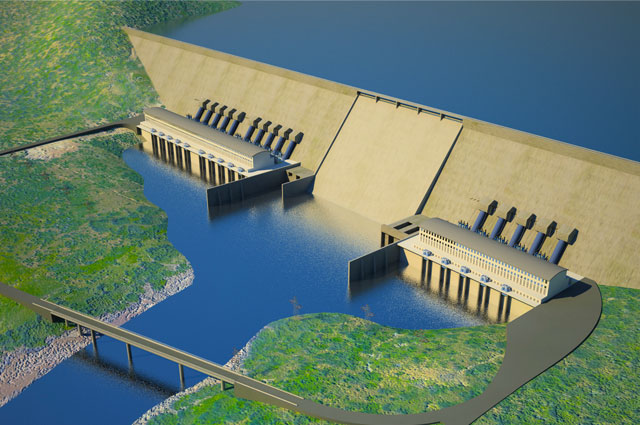
The 6,000 MW Grand Ethiopian Renaissance Dam (GERD) has been a point of contention between both nations since 2011.
While Ethiopian authorities continue to downplay the concerns of the Egyptian government, both sides have failed to formally resolve their dispute.
Tripartite talks between the water resources ministers of Ethiopia, Egypt and Sudan came to a halt abruptly earlier in the year due to the failure of the delegates to traverse their disagreements. However, this past month, officials from Ethiopia and Egypt have voiced their eagerness to return to the negotiation table. The delegates are expected to draw a plan for the implementation of the recommendations of a panel of experts on the dam and also address Egypt’s calls for new studies into the 63 billion cubic meters reservoir facility.
Reports indicate that the GERD is already over 30% complete and is on track to be officially commissioned by 2017. However, it is expected to start generating power by next year.
Meanwhile, commentators say Ethiopia seems to be winning the support of other Nile tributary countries. Officials from Rwanda, Uganda and South Sudan recently refuted demands for a review of the 2010 Entebbe agreement to support Egypt’s claims to a larger percentage of the Nile’s water.
This agreement has been at the centre of the brooding dispute. The Egyptian government has failed to recognize it in favour of two colonial era agreements between Nile tributary nations. But the other nations claim those agreements unfairly gave Egypt and Sudan rights to the lion-share of the fabled water.
Several pundits have suggested that the Egyptian government invests into developing alternative sources of freshwater for the arid nation.

Coca-Cola Issues Statement Regarding Teddy Afro’s Version of FIFA World Cup Song


New York (TADIAS) — The Coca-Cola Company, headquartered in Atlanta, responded to queries regarding the unreleased, Ethiopian version of Coke’s FIFA World Cup song performed by Teddy Afro. Coca Cola confirmed that Teddy’s contract was handled by a third party, Mandala Limited, a Kenyan production company based in Nairobi.
Teddy Afro was brought into our Coke Studio in Africa to record a version of the Coca-Cola FIFA World Cup song, ‘The World is Ours’ with the goal of capturing the unique genre of Ethiopian music,” a representative of The Coca-Cola Company said in an email to Tadias Magazine. “The contract with Teddy Afro was executed by a 3rd party, Mandala Limited, a production House based Nairobi and Teddy Afro was compensated in full for his efforts.”
Per the contract, Coca-Cola said, “following recording the produced track become the property of Coca-Cola CEWA to be used at the Company’s discretion. The song has not been released and there are no plans for release at this time.”Ethiopian's boycott Coca-Cola campaign
The company noted that currently there are 32 local versions of the track that have been released worldwide, but it remains unclear why Coca-Cola chose not to release the Ethiopian version.
Teddy Afro is scheduled to perform at SummerStage in New York on July 5th, gracing the popular outdoor venue along with fellow Ethiopians, Hahu Dance Crew, and Mauritania’s beloved singer Noura Mint Seymali. As organizers of SummerStage note: “Over the past ten years, Teddy has emerged as the number one voice in Ethiopia, breaking records for album sales and show attendance. He is known far and wide as the rising star of East Africa. Using Reggae rhythms combined with traditional sounds his songs are sung exclusively in the national language of Ethiopia, Amharic. Influenced by Ethiopian Maestro Tilahun Gessesse and international Reggae superstar Bob Marley, he sings of freedom from tyranny and self-emancipation.”
Source: Tadias Magazine

The war of destructions!


by Harsa
The conflict led by the clan-centered Issa- -Somalis fighters against the pastoralit Afars has been going on for decades and continue to cost the lives of thousands innocent civilians. This conflict has two sides:
1. External involvement of Greater Somalia. It was initiated by colonialists and even the Italian Fascist tried to make use of it during the occupation of Ethiopia in 1940s. Soon after it was consolidated by the Somali nationalist for ethnic mobilization in the Horn of Africa. The Greater Somalia dream led to the repeated invasion of Ogaden, its failure on the battle front caused to the frustration and ultimately to the collapse of Somalia itself. After the collapse Djibouti gradually emerged as saver not very much with ambition of Greater Somalia, but more of clan-centered to establish the Issaland (like other Somali clans) as composing only of the Issa inhabited from Somaliland, the whole of Djibouti and the Issa occupied area at Western Harar, that became nightmare of the inhabitant of the area.
2. The Ethiopian government mismanagement. The Ethiopian regimes always ignored the conflict unless it threatened the road access to the Red Sea. I know the area from Erer/Hourso to Awash Valley since 1960ss. From what I know the Afar and Issa have never been bordered each other. Around Dire Dawa/ Hourse, Gurgura was bordering the Afars. The Issa use to come to Dire Dawa from behind Shinnille in search of market.
In Ere, Afdem Miesso and later to Adal and Awraja there were only the Afars and the Oromo who inhabited the area were involved in the administration. I remember the major Oromo clans were Oborra, Noole, Ittu and Ala. (We need contact with the Oromos of these conflict areas) The leaders and clans of the Oromos and the Afars use to cooperate and discuss matter of common interests without any major conflicts. The pastoralist Oromos were driven far away from their areas of origin, like that of the Afar who are pushed into Awash Valley. The peasant of Oromos remained harassed regularly attacked by the Issa fighters.
The only major measures taken by the Ethiopian authorities to resolve the conflict was to remove the Afar and the Orom the administration center from Erer and placed it into Asbe Teferei as Adal and Garaguracha Awraja. The Afar had a liaison Office at Miesso. After the removal of the Awraja administration, the issa got an open opportunity to take over Erer and Dire Dawa areas for good. The Issa did not stay there either but chased away both Afars and Oromo to westwards.
Meantime Djibouti became an independent state with Issa dominated government, followed by the Somali invasion of Ogaden. The Issas accompanied the invasion along the railway line from Dire Dawa, Hourso, Erer Afdem and Miesso. After the defeat of the invading Somali army, the Issa forces negotiated with the Derg and remained around mount Afdem and agreed to take care of the security of the railway line from Dire Dawa to Afdem. (The Derg considerd the separation of the Issa forces from that of the invading Somali forces as import step to weaken the invaders) Before the Ogaden invasion the railway line security up to Awash was in the hands of the Afars. The administration of railway line villages from Erer to Awash were in the hands of the Oromos and the Afars.
In the past the ethnic conflict use to be resolved by traditional means. At times the Issas use to stay with the Afar when there were internal clan feud or during severe drought. As Djibouti became independent and inspired by the Issa clan parochialism, dialogue with them appeared to be impossible.
Among the Afar intellectuals a number of attempts have been made to resolve the conflict but the issas dictated to impose its territorial claim. The Woyane are trying to manipulate the conflict for the last two decades for its political ends. The Afar would never accept forced territorial claims. I think this is also the case for the neighboring Oromos. During the Woyanne rule of Ethiopia, the Issas due to its power in Djibouti, managed to claim its territorial wishes openly, supported by by guerrilla warfare. The conspiracy of Greater Tigray and Greater Somali is targeted to weaken the Afar people in the Horn of Africa. The Afar will never ever accept these conspiracies! The Afar is denied their human, their economic and social rights. We want the Ethiopians and the world community knows what is being to us!
Source: ecadforum.com

Tuesday, June 10, 2014

UN Says Oil Search in Northern Somalia Risks Stoking Tensions


Two semi-autonomous areas of northern Somalia have largely avoided the violence that’s plagued the rest of the Horn of African nation for decades. Now oil exploration may change that, according to the United Nations.
Territorial disputes between the governments of Somaliland and Puntland, a separatist campaign by a clan-based group and “discrepancies” in oil licensing throughout Somalia are all contributing to simmering tensions in the region, the UN Monitoring Group on Somalia and Eritrea said in a May 28 memorandum. Somaliland’s planned deployment of an oil-protection force in the region may also deepen the strains, it said.
“Urgent attention must be given to this issue to avoid commercial activity triggering conflict further down the road,” Jarat Chopra, the coordinator of the monitoring group, said in the report. The document was sent to Bloomberg by a UN official who asked not to be identified because it hasn’t been released publicly.
Somaliland and Puntland dispute a border that’s criss-crossed by oil concessions that have been awarded to companies including DNO International ASA (DNO) of Norway, Vancouver-based Horn Petroleum Corp. (HRN) and RAK Gas LLC of the United Arab Emirates. Oil deposits in Somalia may amount to as much as 110 billion barrels, according to a report published last week by the Mogadishu-based Heritage Institute for Policy Studies. Saudi Arabia, the world’s biggest oil exporter, has 266 billion barrels of proven reserves, BP Plc data shows.

Sovereignty Claims

Somaliland declared independence in 1991 following a coup in the Somali capital, Mogadishu, and drew boundaries along the lines of pre-colonial borders of the British and Italian occupied territories. Puntland, which declared itself an autonomous state in 1998, claims parts of Somaliland in the Sanaag and Sool regions. Khatumo, a clan-based political organization, also claims sovereignty over land that straddles the boundary, according to the UN monitoring group.
Chopra cites March clashes in Sanaag province following a visit by Somaliland’s President Ahmed Mohamed Silanyo and the deployment of forces in Sool by Somaliland and Puntland as examples of worsening relations.
“While there has not been major conflict to report, political and military tensions have nonetheless escalated in recent weeks,” he said.

‘Stop Meddling’

Somaliland Energy Minister Hussein Abdi Dualeh didn’t immediately respond to e-mailed questions. In a comment on his Twitter account on June 7, Somaliland’s president urged the UN monitoring group to “stop meddling in the affairs of Somaliland.” The semi-autonomous region will “protect its economic assets,” he said.
Since presidential elections in January, Puntland President Abdiwelli Mohamed Ali Gaas has been lobbying Khatumo representatives and other clans to drop their independence movement in support of Puntland, aggravating tensions with Somaliland, the UN said. Khatumo has challenged the legitimacy of DNO’s license with Somaliland in the disputed Nugaal block.
DNO entered Somaliland in April 2013 with a block in the Nugaal valley and have a competing claim with Horn Petroleum, which was issued a license in the disputed area by Puntland’s government.
Horn Petroleum is working to resolve disputes over the Nugaal block with the Puntland, Somaliland and Somali governments, along with London-based Genel Energy Plc (GENL), DNO and others organizations like the UN, Alex Budden, vice president of external relations for Africa Oil Corp., Horn’s parent company, said in a phone interview.
DNO’s press officer Henrik Schwabe didn’t respond to four phone calls and three e-mailed requests for comment.

Special Force

The UN is also concerned about the Somaliland government’s plan to hire Assaye Risk, a U.K.-based private security contractor, to train and equip a special force to protect oil exploration workers at a cost of as much as $25 million.
“The deployment of the oil-protection unit could play into internal and regional conflicts that appear to be brewing within Somaliland and between Somaliland and other regional authorities,” Chopra said.
Deeq Yusuf, chief of staff in the Puntland presidency, said his government sees the oil-protection unit as “part of the continued aggression and clan expansion of Somaliland against the territory and people of Puntland.”
Assaye Risk director Arabella Wickham said the 420-member oil protection unit would provide security services to international oil companies allowing the country to pursue one seismic operation.

Defensive Remit

“Within the blueprint, Assaye Risk clearly defined the operational remit of the OPU as defensive and pre-emptive only with a mandate confined to protective services in support of the energy industry,” Wickham said. The “government owned and commercially operated” unit would be recognized by the UN and constituted by Somaliland law, she said.
Puntland already has a similar force known as the Explorations Security Unit that provides protection for Africa Oil workers, according to the Heritage Institute.
Genel, which is exploring blocks in Somaliland, suspended seismic operations in September because of what it said was a “deteriorating security situation.” The company welcomes Somaliland’s plan to boost security, spokesman Andrew Benbow said in an e-mailed response to questions.
“Discussions continue with the government in order to facilitate a resumption of activity,” he said.
To contact the reporter on this story: Ilya Gridneff in Nairobi at igridneff@bloomberg.net
To contact the editors responsible for this story: Antony Sguazzin atasguazzin@bloomberg.net Paul Richardson, Karl Maier

Somaliland: President Speech at the opening of the HLACF


Excellencies and Ambassadors,

Honorable Ministers,

Distinguished guests,

Ladies and gentleman,

I would like to thank you all for making the trip to Hargeisa. I would like to mention, in particular, the UN Resident Coordinator, Philippe Lazzarini, and the Danish and UK governments for working with us to facilitate this meeting. On behalf of the Somaliland government and people, we are grateful to those development partners that sit before us here today, as well as those who were unable to share this occasion with us, for their generous assistance to Somaliland over all these years.

Today we come together to take stock of the progress Somaliland has made in implementing the New Deal since we endorsed the Somaliland Special Arrangement in September 2013, and to point the way forward. Somaliland and the international community are committed to working towards the same goals of a peaceful, democratic and prosperous region, and this coordination forum offers an important opportunity for the Somaliland government, civil society and our development partners to engage in productive dialogue on how to make this a reality on the ground.

We are not starting from scratch, but building on over two decades of successful peace consolidation, democratization and institution-building. These foundations have created an environment where programmes can be implemented successfully and effectively, with long-established government institutions and experienced civil society groups.


We have a long-term Vision: 2030 with a stable, democratic and prosperous society as our endpoint, and we have been working towards this goal since 2012 with our five-year National Development Plan. Our Special Arrangement is fully aligned with the National Plan, and provides architecture for our efforts to be focused in priority areas to achieve defined milestones.

My government is very much committed to necessary transformational reform in key areas such as public financial management, civil service, justice, investment climate and security. We have ambitious plans across all these sectors. With the support of our partners, we can create the institutional and legal framework necessary to fully realize the fruits of the New Deal.

The ownership and the accountability principles of the New Deal are also behind the government’s choice of the Somaliland Development Fund as our preferred financing mechanism. We thank the UK and Danish governments for helping to establish and contribute resources to this fund, and we call upon all international partners to consider channeling their support through the SDF and similar Trust Funds.

Although Somaliland, a post-conflict country, has made impressive progress in a very challenging environment, our future development needs cannot be ignored. For stability and security to be maintained at home and spread throughout the more volatile areas of our region, the international community must reward and empower Somaliland for its commitment to our shared values of peaceful coexistence and legitimate politics.

Major challenges and threats continue to present themselves which have global repercussions. We believe that the best solutions come from indigenous approaches and bottom-up initiatives. Somaliland takes pride in having embarked on such unique course of bottom-up state building which has far exceeded expectations.

Somaliland is committed to continue being a responsible international partner, and with your support for the Somaliland Special Arrangement, and our determination to carry out comprehensive reforms, we believe Somaliland can be a model of what successful New Deal-led development can look like. I am sure that one day, all of us sitting here will look back on this day with pride of what we have achieved together.

Thank you

Khilaafka Al Islaax Iyo Dam-Jadiid oo Soo Cusboonaaday Kadib Ka Qeybgalka Madaxweyne Xasan Shiikh Caleema-saarka C/Fataax Al-Sisi (Warbixin)


Ururka Al Islaax oo horey ay uga go’een kooxda Dam-Jadiid oo ka mid ahaa alladooda ayaa si kulul uga carooday in madaxweyne Xasan Sheekh Maxamuud uu ka qeybgalo caleema-saarka madaxweynaha cusub ee dalka Masar C/fataax Al-Sisi oo xukunka dalkaasi ku qabsaday awood miliari kadibna doorasho ku soo baxay.
Madaxweyne Xasan Sheekh Maxamuud iyo wafdi uu hogaaminayo oo ay ka mid yihiin wasiiro ayaa shalay magaalada Qaahira ee dalka Masar kaga qeybgalay xaflada caleema-saarka madaxweynaha cusub ee Masar Al-Sisi.  Waxaana madaxweyne Xasan Sheekh uu kadib kulan gaar ah la yeeshay madaxweyne Al-Sisi.
Haddaba ururka Al Islaax ayaa durba arrinkaasi ka hadlay, waxayna cambaareeyeen kulanka madaxweynaha Soomaaliya uu la yeeshay C/fataax Al-Sisi iyo ka qeybgalkiisa xaflada caleema-saarka.
War saxaafadeed uu sidaayey guddoomiyaha xarakada Al Islaax Dr Cali Baashe Cumar Rooraaye ayaa wuxuu ku sheegay in ay nasiib darro tahay in madaxweyne Xasan Sheekh Maxamuud uu la kulmo kana qeybgalo xaflada caleema-saarka Al-Sisi oo ah nin xukun la doortay dumiyey (xukunkii Maxamed Mursi) isla markaana uu laayey dadkiisa.
“Waa nin dhiigya cab ah oo laayey dadkiisa. Waa ninka masuulka ka ahaa in xukun si dimuqraadi ah loo soo doortay la dumiyo,” ayuu yii Dr Cali Baashe.
Guddoomiyaha Al Islaax ayaa ku dooday in dawladaha caalamka oo xitaa ay ku jiraan kuwa reer Galbeedka aysan madaxdooda ka soo qeybgalin caleema-saarka C/fataax Al-Sisi, balse kaliya wakiilo hoose ay usoo dirsadeen, taasina ay muujineyso sida caalamka ugu qanci karin xukun militari oo awood ku yimid waqtigan casriga ah.
Wuxuu ku eedeeyay madaxweynaha Soomaaliya inuu ahaa madaxweynaha kaliya ee goobta caleema-saarka C/fataax Al-Sisi fadhiyey, halka dawladaha kale ay wakiilo ku ekaayeen meteladooda.
Dawlada Soomaaliya iyo xafiiska madaxweyne Xasan Sheekh Maxamuud ee Villa Soomaaliya weli kama jawaabin eedeymaha uga yimid ururka Al Islaax.
XIRIIRKA AL ISLAAX IYO DAM JADIID
islaax
Dam Jadiid (oo sida dad badan sheegaan hadda heysta talada wadanka) ayaa ah garab ka soo go’ay ururka Al Islaax, qiyaastii sanadihii 2000, waxaana khilaafka u dhexeeya labada dhinac xoogiisa uu soo ifbaxay markii sanadkii 2006 magaalada Muqdisho ay dagaalo hubeysan ka bilaabeen wadaadadii Maxkamadaha Islaamiga ee dagaalka kaga saaray caasimada kooxdii qabqablayaasha dagaalka.

Garabka Dam Jadiid (oo micne ahaan ah dhiiga cusub) ayaa ahaa garab ay ku midoobeen inta badan raggii dhalinyarada ahaa ee ku jiray Al Islaax ama ay wax soo bareen, halka raggii odayaasha ahaana ay u hareen ururka Al Islaax (oo magaciisa loo yaqaano Dam Qadiim ama dhiigii hore).
Labada garab ayaa la rumeysan yahay in xiriir fiican uu ka dhexeeyay ayna isku aragti ka ahaayeen arrimo badan wixii hadda ka horeeyay. Labada garaba waxay xildhibaano ku leeyihiin baarlamaanka, inkastoo awooda fulinta (wasiirada) iyo madaxtooyada ay ku koobn tahay Dam Jadiid kaliya iyo dadka ay iyagu shaqaaleysiiyeen.
Al Islaaxda hore (Dam Qadiim) waxay weli gacanta ku hayaan awood dhaqaale oo macquul ah sida hay’adaha kheyriga ah, kuwa waxbarashada, isbitaalo iyo xarumo muhiim ah oo ka hawlgala dhammaan gobollada dalka min Muqdisho, Puntland illaa Somaliland.
Dadka ka faalooda arrimaha dhaqdhaqaaqyada kooxdan waxay sheegayaan in  wax badan oo isku ujeedooyin ah aysan sii jiri doonin, maadaama kooxda Dam-Jadiid ay yihiin kooxo dhalinyaro ah oo hadba dantooda u arka meeshii ay markaasi la gasho siyaasadda iyo waaqica taagan, halka taasi ay diidan yihiin kooxda Dam-Qadiimka ee ah Al Islaaxda hore.
Dhowaan waxaa garabka Dam-Qadiim ay diideen iskudayo ay wadeen dhalinyaro ka mid ah labada dhinac oo doonayey in dib la isugu soo celiyo labada garab ee Al Islaax, arrintaasoo ay ka qeybqaateen Sheekh Maxamed Garyare iyo Sheekh Nuur Baaruud oo labada garab ka tirsan.
XIGASHO: RBC RADIO

Conference on better trade opportunities in Somalia

Conference on better trade opportunities in Somalia

STOCKHOLM, Sweden, June 9, 2014/African Press Organization (APO)/ — On 10 June 2014, the Government will arrange the ‘Conference on Somali Business Opportunities’ in Stockholm.

Increasing investment, in which the Somali diaspora plays an important part, has strengthened interest and confidence in the region among foreign investors. The Swedish Government, together with Business Sweden, is therefore organising a trade and investment conference on 10 June for 150 representatives, primarily from Somali and Swedish businesses.


The Horn of Africa is one of the regions in Africa at an economic turning point. In Somalia – a country marked by long periods of conflict and where great challenges still remain – it is possible to discern a growing optimism.

“The Government hopes that the ‘Somali Trade and Investment Opportunities’ conference will promote trade relations between Sweden and Somalia, as well as the private sector in Somalia. This could contribute to economic growth, new job opportunities and income for the severely affected Somali population. It could also give Swedish companies an opportunity to find new markets and opportunities for cooperation in the Horn of Africa,” says Minister for Trade Ewa Björling, who will deliver the opening address at the conference.

SOURCE 

Sweden – Ministry of Foreign Affairs

Monday, June 9, 2014

Magacyada xubno ay Ethiopia dalbatay in lagu daro golaha wasiirada cusub


TOP NEWS Ilo-wareedyo xog ogaal ah a ayaa xaqiijiyay in liiska golaha Wasiirada cusub ee Xukumadda Somalia lagu derayo shaqsiyaad ku xiran dowlada Ethiopia.

Shaqsiyaadkan uu Jeneral Gabre u gudbiyay Ra’iisul wasaaraha iyo Madaxweynaha Somalia ee Xukumadda Ethiopia dalbatay in Wasaarado muhiima loo magacaabo waxaa ka mida Maxamed Sheekh oo laga dhigi doono Wasiirka Amniga Qaranka Somalia.

Shaqsiyaadka kale ee Jeneral Gabre u gudbiyay Madaxda Dowladda Somalia waxaa ka mida Mustaf Sheekh Cali Dhuxulow oo loo magacaabi doono Wasiirka Arrimaha gudaha, Xuseen Xalane oo dib loogu celin doono Wasaaradiisa Maaliyadda.

Sidoo kale ,Waxaa Ra’iisul wasaaraha Somalia la yaab ku noqotay in Dowladda Ethiopia ku hagoogatay Wasiirka Garsoorka iyo Federalka Xukumadda Somalia Faarax C/qaadir oo safka hore uga jiray Wasiirada la qorsheeynayay inaysan ku soo laaban Golaha Xukumadda Federalka Somalia.

Sooyaalka Dowladnimada waxaa ku asteysan inaan xil qaran lagu aaminin qofkii lagu tuhmo inuu Jaajuus u yahay Dal kale, hase yeeshee waxaa yaab noqotay in Madaxdii Jamhuuriyadda Somalia maanta ku qanacsan yihiin inay xilal Wasiiro ku taxaan shaqsiyaad ay soo gudbisteen Dowlado cadaawad fog kala dhaxeyso Dadka iyo Dalka Soomaaliyeed.
Inkastoon Wadaniyiinta Muqdisho ku nool ku qaxweeynayaan halku dhiga SHARAFI DHIMATAY hadana sida muuqato Dalka Somalia waxaa maamula Jeneral Gabre oo ka soo jeeda qoowmiyada Tigreega Ethiopia

Ethiopia: Egyptian Dream, Ethiopian Challenges


It is now almost a year since Egyptian politicians were inadvertently caught on live television broadcasting the proposal of military action to sabotage the Great Ethiopian Renaissance Dam (GERD) at a meeting called by the then Egyptian President, Mohammed Morsi. During this meeting, which was triggered by Ethiopia’s diversion of the Blue Nile to make way for the construction of the GERD, participants suggested hostile acts against Ethiopia to stop it from building the Dam.

Their suggestions were all centred on military action to curb what they claimed to be a threat to Egyptian national security. To pick some of the suggestions, Ayman Nour, head of the Ghad Party, suggested spreading rumours that Egypt is buying military planes in order to create the impression that it is planning an airstrike to destroy the dam. Yunis Makhyun, who heads the Islamist Nur Party, on his part, said the Dam constitutes a strategic danger for Egypt, requiring it to support Ethiopian rebels who would put pressure on the Ethiopian government.

Others raised the possibility of sending special forces in to destroy the dam. These suggestions have no power to change anything considering the stance of Ethiopia on the GERD, but there is the necessity to be vigilant enough towards these suggestions.
After these embarrassing statements on live transmission, several commentators, including Egyptians, forwarded severe criticisms against these politicians. But I have doubts as to whether the majority of the critics from the Egyptian side were against the suggestions or against the intention of the live transmission of such a meeting.\

On the other hand, the Ethiopian Government did not perceive it as something different to the usual bullying by Egypt when it comes to the Nile issue. The spokesperson of the Ethiopian Prime Minister, Getachew Reda, went to the extent of saying the suggestions were “day dreaming!”

Nevertheless, the government has not undermined what was being suggested by the politicians, but rather summoned the resident ambassador of Egypt to Ethiopia and seek an explanation about the hostile remarks. Whatever the reactions were, there were two possibilities: either the incident was just the customary bullying style of the Egyptians or the Egyptian government are actually considering what was mentioned. Considering some recent developments in the region (the Horn of Africa), which seem to have been initiated by Egypt, I am obliged to accept the latter scenario that the Egyptian government is approving what was proposed by the politicians.

(AddisFortune)