Search This Blog

Monday, April 14, 2014

Ethiopia slams International Rivers organisation for supporting Egypt


Ethiopia's National Panel of Experts linked to the Renaissance Dam project dismiss as biased to Egypt criticisms of the dam levelled by US-based environmental group

A general view shows construction activity on the Grand Renaissance dam in Guba Woreda, Benishangul Gumuz region March 16, 2014 (Photo: Reuters)
The National Panel of Experts linked to the Grand Ethiopian Renaissance Dam (GERD) has slammed the International Rivers Network (IRN) for criticising the Renaissance Dam project, accusing the body of being biased and supporting Egypt against the dam.
The panel accused, in a statement issued Thursday, the US-based environmental organisation "of subverting Ethiopia’s efforts to develop its water resources and lift its vast and growing population out of poverty." It accused the IRN of being paid by Egypt in order to lobby against the Renaissance Dam internationally. 
"Again, the IRN never loses opportunity to lobby for its Egyptian paymasters. Not only does the IRN talk about the 'oversize' of GERD, but also about the Egyptians’ negative emotions over GERD: anger and fear."
The IRN issued 31 March 2014 a statement about Renaissance Dam along with a leaked version of the report of the tripartite technical committee assigned to study the probable impact of the dam on Egypt and Sudan issued last year. 
"One international dam expert who has seen the report states that it shows that construction on the project is proceeding on an aggressively accelerated schedule with little room for adjusting key elements of dam design to reduce harm or prevent problems," the IRN said in its statement. 
The environmental NGO called on Ethiopia to halt construction of the dam until studies on the impact of the dam on the downstream countries are continued.
The IRN added that it would work on keeping international donors from investing in the GERD project while providing alternatives to Ethiopia for water and land reclamation. 
Egypt, Ethiopia and Sudan formed a tripartite technical committee to study the probable effects of the Renaissance Dam. But the committee's discussions were thwarted in December when Sudanese President Omar Al-Bashir announced his support for the dam during a meeting with Ethiopian Prime Minister Hailemariam Desalegn.
Talks between Ethiopia and Egypt broke down in recent months. Yet officials from both countries insist they will continue to hold talks in order to solve the dispute over the dam. Earlier this month, the foreign ministers of both Egypt and Ethiopia held talks in Brussels on the dam. 
Founded in 1985 as an international NGO, the International Rivers Network is an environmental anti-dam organisation that aims to protect rivers and local communities that depend on those rivers. The US based organisation is known internationally for its stances against dams in general.
source: english.ahram.org.eg

Ethiopia: Addis Ababa Light Rail project 60% complete


Is it a great time to be an Engineer in Ethiopia or what? Ethiopia has several ambitious infrastructure projects across the country from the massive Grand Ethiopian Renaissance Dam to Ethiopia's first light rail transit in Addis Ababa.

Ethiopia's state-run news agency reports that the construction of the Addis Ababa Light Rail Transit project entered electric traction works; a final phase in the construction of the 4.8 million USD electrified rail system.
The power traction works are started yesterday in the West East Rout of the light rail transit from Megenagna to Ayat.

Power traction works include installation of electric poles and overhead wires to power the light rail vehicles as well as construction of 18 traction sub stations, nine on each of the east-west and north-south directions of the transit.

The power traction work is the final phase of the 34km light railway project, project manager, eng. Behaylu Sintayehu said.

The light rail will rely on 15kvs of power supplied mainly from overhead wires. Power cuts will not be a concern for the smooth operation of the transit as the LRT will have a dedicated power supply through a grid system, officials of Ethiopian Railways Corporation said.

The construction of the transit, launched in 2012, is progressing. Nearly 60 percent of its construction has so far completed.

Track was laid on 17km, half of the total length of the project, so far, according to the manager

UK aerospace and defense firms fret over Scottish independence bid


A worker crosses the floor of the Eurofighter Typhoon production line at BAE systems Warton plant near Preston, northern England September 7, 2012. CREDIT: REUTERS/PHIL NOBLE


(Reuters) - Britain's aerospace and defense industries warned on Sunday that the sector could lose its global competitive edge as a result of Scotland's bid for independence, which is due to be decided by a referendum later this year.

The ADS Group, an aerospace and defense trade organization, said the uncertainty over the future of taxation, fiscal and monetary policy that the September 18 referendum has generated was a major cause of concern for firms operating in Britain.
"September's referendum on the future of Scotland could have a profound impact on these sectors' global competitiveness," said ADS Group Chief Executive Paul Everitt.
"In addition to the debates about monetary and fiscal policy, there is genuine uncertainty about the impact of independence on the UK's - and Scotland's - international influence, export opportunities and inward investment."
Britain is home to a number of major aerospace and defense industry firms such as BAE Systems, Cobham and Babcock - all of whom are members of the ADS Group.
Britain's defense sector has a 22 billion pound ($37 billion) annual turnover and employs more than 300,000 people. The industry is heavily reliant on government procurement, leaving it exposed to political uncertainty.
Sunday's comments are the latest in series of warnings from business leaders across a range of sectors, including finance and energy, who are concerned about a possible end to Scotland's 307-year tie with the rest of Britain.
In their statement the ADS Group warned that a split may have far-reaching consequences, such as forcing companies into a costly reshuffling of supply chains which straddle the English-Scottish border.
"Companies are concerned about the costs and consequences negotiation and transition arrangements might have on procurement budgets, mature supply chains and highly-skilled workforces," Everitt said.
(Reporting by William James; Editing by Raissa Kasolowsky)

Scottish independence ‘would harm world’s poorest’


Justine Greening: splitting aid programme would be damaging. Picture: Getty
 
by SCOTT MACNAB

SOME of the “world’s poorest people” would suffer from a Yes vote, Westminster’s International Development Secretary has claimed.

Justine Greening said the contribution of Scottish charities, universities and institutions are at the heart of the UK’s international efforts and these have a “far more positive impact” as part of the Union.

However, the Scottish Government accused the UK minister of using the world’s poor as a “political football”. The UK’s aid budget currently stands at £11 billion per year. The SNP has already pledged to spend almost £1bn a year after a vote for independence.

UK aid spending, through the Scottish-based Department for International Development (DfID), last year hit 0.7 per cent gross national income (GNI), making Britain the first in the G8 to reach this key UN target.

The UK has helped 20 million people get access to clean water in the past three years and 22 million children to be immunised against killer diseases, Ms Greening said. A further 6 million youngsters in the developing world have secured a primary school education.

Ms Greening said: “When it comes to the choice that Scotland faces in September, I firmly believe that splitting our hugely successful aid programme into two risks diminishing its impact.

“As the world’s second-biggest aid donor, the UK can use economies of scale to squeeze the maximum value for money out of every penny we spend, ensuring our money goes further in helping the world’s poorest people.” The UK is one of only five permanent members of the United Nations Security Council and also has its own place on the board of the World Bank.

This means that the “core values we share across the whole of the UK are reflected at the top of these global institutions,” Ms Greening added.

Scotland’s international development minister Humza Yousaf said: “This is insulting, hypocritical nonsense from Justine Greening, who should apologize for using the poorest in the world as a political football.”

He added: “The UK comes behind many countries of Scotland’s size in the Centre for Development’s Commitment to Development Index.

“Denmark, Sweden, Norway and Luxembourg top the index, with the UK in eighth place after Ireland. That gives the lie to the claims that big is best in this area and shows what an independent Scotland can aspire to.

“Scotland is more than capable of being a global leader in international development.”

When Wealth is Dangerous


by RACHEL PIEH JONES
I wrote last month about the troubling ways we sometimes talk about the poor – assigning the simplistic emotion of happiness while not allowing them a fuller, more complex array of human emotion. And about the way the poor are presented as inherently holy, simply because of their poverty.
Today I want to talk about the troubling ways rich Christians handle our wealth and our steadfast resistance to identifying with the poor, our endless and dangerous pursuit of riches, and the example Jesus set before all of us, poor and rich and everyone in between.
dangerous riches
I saw a commercial a few years ago that encapsulates the god of consumerism:
A man hands a boy a vanilla ice cream cone. The boy says, “And…?” The man adds sprinkles, hot fudge, and whip cream. The boy happily licks his treat.
A young man is offered a good job. The man says, “And…?” The interviewer gives him stock options, a corner office with a window, a month of paid vacation, and a major signing bonus. The man happily accepts the job.
A man spots the sexy butt of a woman wearing blue jeans. The man says, “And…?” The woman turns around and is gorgeous. They happily hop into bed.
A man drinks a Coke. The man says, “And…?” The Coke turns into Coke Lite. The man is happy.
This reminds me of the story in Luke 12. A farmer kept building bigger barns. He looked at his harvest and said, “And…?” And God struck him down dead. If that Coke commercial were in the Bible the ending would have been much different.
How much are we like the man, the farmer? We never have enough, we are never satisfied, we are never happy, we are never content, we are never as well-off as the person a few tiers above us. Gluttony, greed, discontent, comparison, envy, hoarding…they barely register as the serious sins they are. We take fighting poverty seriously (at least in word) and we explode over theological differences regarding the end times or marriage but we continue to consume and consume and consume and fail to recognize the danger to our souls. And just because I live and work with people of little to no income doesn’t mean I am exempt from this. Far from it.
I’m proud and I think: look how good I’m doing. I live at a lower standard than so-and-so. Or: compared to many Christians in the US, I look pretty good. As if holiness were based on how other people lived instead of being based on an absolute standard. And in the very next instant I can be self-pitying and think: I better get a good reward for this in heaven. Or: why can’t I just live in America where my standard of living would look poor and I could feel proud of my scarcity instead of ashamed of my abundance?
Lord have mercy.
There is a very real way in which the poor are free from the concerns of wealth, worry over protecting and maintaining their stuff, time wasted on managing bank accounts or caring for the goods that money buys. The Bible is clear that money is a hindrance to faith, contentment, and joy, that God has special concern for the poor, that the last will be first, that where our treasure is there our heart will also be. Did not God choose the poor of this world to be rich in faith and heirs of the Kingdom, which he promised to those who love him? (James 2:5)
A wise woman wrote this to me in response to last month’s essay, “I believe that when my tangible resources are fewer here, I have at least the possibility of depending on God in quite a different way, and I think that can reap powerful and eternal benefits.”
And this, “To discard the link between poverty and holiness, and between poverty and happiness, I think does overlook some inconvenient truths for our own lives.”
I struggle with this, I feel obscenely wealthy in Djibouti. I wonder what a ‘reasonable’ standard of living is. Is a generator for power cuts when it is 120-degrees excessive? Is it excessive to run an air conditioner, to eat meat, to have a refrigerator? when so many around me don’t? I struggle to be content in cold showers or while sharing a bedroom with my entire family while we run that air conditioner.
There is an inconvenient truth in my heart that I like comfort and ease. And yet, when I am comfortable and life is easy, I do not cast myself on God. I don’t beg and plead and demand that Jesus make his presence palpable. I don’t cry for miracles, I am less desperate in prayer.
I want more than this:
To know Christ and the power of his padded bank account, the participation in his glowing accolades, becoming like him in his affluent lifestyle, and so somehow, to attain to the comfort of treasures here on earth.
Jesus didn’t take on the nature of a ‘reasonably’ comfortable human. Though he was rich, for our sake Jesus didn’t become middle class. He took on the nature of a slave. For our sake he became poor.
While I challenged us not to oversimplify the experiences and personalities of people in poverty, I also challenge us to be like Jesus and to let go of the idol of wealth. To hold our stuff and money loosely, to be generous to the point of excess, to live unreasonably, to know, and live like we know, that godliness with contentment is great gain, for we brought nothing into this world and we can take nothing out of it.
How do you deal with economic disparity where you live? How do you address this issue of wealth and poverty in your own heart?

Sunday, April 13, 2014

Energy Revenues to Help Africa Trim ‘Infrastructure Gap’

Ahmed Osman Ali
Central Bank of Djibouti Governor 

IMF Survey
April 12, 2014
  • With growth steady, inflation low, Africa’s attention turns to quality of growth
  • Better roads, railways, ports, power supply would boost employment
  • Energy earnings offer new revenue stream to devote to infrastructure
New revenue streams arising from recent and upcoming crude oil and natural gas production would be channeled into investments in roads, railways, ports, and power, African finance officials said.
Three finance ministers and a central bank governor told a Washington news briefing that Africa’s “infrastructure gap” is a significant development obstacle that will have to be overcome for the continent’s economic growth to be more inclusive.
The officials told reporters during the IMF-World Bank Spring Meetings that investment in infrastructure is a major priority for Africa as the continent’s governments strive to create more jobs and expand social services. They noted that many African countries had achieved macroeconomic stability with steady growth and relatively low inflation. Governments were now aiming for better-quality growth by focusing on creating jobs and improving health and education.
The finance ministers of Uganda and Chad said significant shares of new revenue streams arising from their countries’ recent and upcoming crude oil and natural gas production had been and would be devoted to infrastructure development.
“Our oil reserves are about to start production,” observed Ugandan Finance Minister Maria Kiwanuka, “but our biggest challenge is our infrastructure gap.” She noted, however, that development of Uganda’s roads and railways is under way.
Dedicated revenues
“Our petroleum revenues will be dedicated to building infrastructure,” Kiwanuka said. She noted that that Uganda has a young population. “Therefore our need is for job creation, rather than pensions. So all monies coming from our oil and gas revenues will be invested through our budget, duly appropriated by the parliament of Uganda, in our infrastructure program over the next 20 years,” she declared.
“It’s a question of transforming robust growth into inclusive growth with more jobs, more even income distribution, and better health care and sanitation,” said Mozambican Finance Minister Manuel Chang.
He stressed that targeting better infrastructure is a key part of the government’s investment strategy. “Mozambique is clear about what sectors it needs to support to reduce poverty: the social sectors—health, education— along with infrastructure already 65 percent of the budget is channeled here. And the results are visible.”
Port connections
Now investment would focus on energy, railways, ports, agriculture, tourism, and natural gas as enablers of more inclusive growth, Chang said. Planners would concentrate particularly on connecting Mozambique’s ports to the hinterland.
Finance Minister Bedoumra Kordje said that Chad’s oil revenue stream since 2003 had enabled the country to make a significant qualitative jump in its budgeting. The government was investing in infrastructure and social services and had, for example, added 1,900 kilometers of paved roads in the ten years to 2013.
Kordje noted that two new oil fields would come on stream in 2014 as investment in the energy sector increased. “But it’s imperative that we diversify our economy, as oil is subject to fluctuations in world markets. So we are working to assist the agricultural sector, which is still the main provider of employment,” he added. He observed that Chad’s nonoil growth would likely hit double digits this year.
Regional benefits
Central Bank of Djibouti Governor Ahmed Osman Ali said increased infrastructure development in his nation, located where the Red Sea joins the Gulf of Aden, could benefit the whole of the Horn of Africa. “We have opened new harbors which, in addition to a new deep-water port built a few years ago, have boosted Djibouti’s economy but have also helped Ethiopia,” Ali said.
Ali said added Djibouti’s new harbors, established to export cattle, would be augmented by a new railway in the north of the country that would connect to another new port to export potassium. In addition, upgraded power transmission lines were set to reduce the cost of energy to small businesses and to fully electrify the port of Djibouti.
Kiwanuka said better infrastructure in Uganda could also help East Africa by making Uganda the distribution hub for the region. “When goods come to the sea ports of Mombasa and Dar es Salaam, the quickest and cheapest way to South Sudan, the eastern part of the Democratic Republic of the Congo, and Rwanda is through Uganda.”
Internet cables
Ali noted that Djibouti’s strategic location at the mouth of the Red Sea leading to the Suez Canal meant that six intercontinental submarine cables carrying internet connections passed through Djibouti. This ensured that the country had excellent digital connectivity.
Kiwanuka said infrastructure investment had helped cut the transit time of goods from the Kenyan port of Mombasa to Uganda from more than 20 days to five days. In addition, two new dams would double Uganda’s hydroelectric power capacity and greatly improve the availability and reliability of the country’s power supply.
The finance officials said better agricultural productivity would also promote more inclusive growth in Africa. Kiwanuka noted that some 70 percent of Uganda’s work force was employed in the agricultural sector, which contributed less than 30 percent of national income.
“We are looking to the agricultural sector to drive inclusive growth and contribute to further reducing rural poverty,” Kiwanuka said. Such poverty had been reduced in the past five years by constructing rural roads, extending electricity transmission lines, and improving irrigation projects. Modernized infrastructure would further reduce the cost of doing business in Uganda, she said.
■ Chang noted that infrastructure would be on the agenda at a high-level international conference on sub-Saharan Africa to be held by the IMF and the government of Mozambique in Maputo on May 29–30. The two-day event will bring together policymakers from throughout Africa and from development partners, business, and civil society, and will focus on how the current growth path can be maintained while sharing its benefits among all Africans.

US plans first cabinet visit to Taiwan in 14 years


EPA Administrator Gina McCarthy. Photo: AFP

The top US environmental official will visit Taiwan in the first trip by a cabinet-level leader from Washington to the Chinese-claimed island in 14 years, officials said Saturday.
Gina McCarthy, the administrator of the Environmental Protection Agency, will travel to Taiwan and Vietnam from Monday through Wednesday to discuss cooperation, her agency said in a statement.
The trip would be the first by a cabinet-level US official to Taiwan since 2000 when then US president Bill Clinton sent transportation secretary Rodney Slater.
China frequently protests any hint of international recognition for Taiwan, which it considers a province awaiting reunification, by force if necessary.
But tensions have abated markedly since President Ma Ying-jeou was elected in 2008 on a platform of improving relations with China through economic and cultural cooperation.
China has appeared eager to support Ma and in February held its first meeting with a Taiwanese official since their 1949 split. China had a muted reaction when Rajiv Shah, the head of the US Agency for International Development, visited Taiwan in 2011. Shah technically does not have cabinet status.
Still, McCarthy’s visit -- which had long been expected -- was announced with a low-key statement over the weekend.
The Environmental Protection Agency said that McCarthy would meet environmental officials and “other leading Taiwan authorities” and deliver a speech at the National Taiwan University.
The trip comes as Ma faces a growing challenge to his Beijing-friendly policies, with student-led protesters seizing control of parliament to protest a services agreement with China that critics charge would subordinate the island.
Taiwan’s government was set up by China’s nationalists who fled in 1949 after defeat in the mainland’s civil war. The island has since developed into a vibrant democracy.
For McCarthy, the trip will likely be a rare action that wins approval from the rival Republican Party which has strongly criticized her for spearheading regulations to fight climate change.
Taiwan is a popular cause for US lawmakers of both parties, who regularly visit the island even though Washington officially recognises only Beijing.

US Coast Guardsman steps up to the challenge; commands US Navy unit

Combined Joint Task Force - Horn of Africa


Staff Sgt. Christopher GrossU.S. Coast Guard Cmdr. Alan Tubbs, Coastal Riverine Squadron One-Forward (CRS1-FWD) mission commander, stands in front of a U.S. Navy boat on Camp Lemonnier, Djibouti. Tubbs’ squadron provides port and harbor security, protects high value assets and performs maritime security operations on the coast of Djibouti. Tubbs is currently the only Coast Guardsman commanding a U.S. Navy unit. (U. S. Air Force photo by Staff Sgt. Christopher Gross

CAMP LEMONNIER, Djibouti – It’s not something that happens very often in the U.S. Armed Forces, but the only Coast Guardsman at Camp Lemonnier, Djibouti, is also the only current Coast Guardsman to hold a command position of a U.S. Navy unit.

“They live to drive boats, shoot guns and protect assets,” Tubbs said. “They’re doing what they’ve been trained to do and it’s pretty rewarding.”

Anytime a United States Ship comes in to dock at the harbor, CRS1-FWD works hand-in-hand with several agencies to protect the ship and personnel aboard. The following procedures were put into place following the USS Cole attack in October 2000.

Before the ship comes into the harbor, military working dog and explosive ordnance disposal teams sweep the area in and around the port. Once the area is cleared the riverine squadron is cleared to meet the ship and escort them into port. When the ship is docked, CRS1-FWD provides static defense until the ship departs. 

Tubbs said there’s a lot of work that goes into ensuring the ships coming into port have sustained security. He said he felt his time in the Coast Guard prepared him for this position, because he’s accustomed to an upbeat operations tempo.

“In the Coast Guard we don’t have as many people,” Tubbs said. “I have a lot of different skill sets in a lot of different areas. It has helped me understand everybody’s job a little better. You have to be quick on your feet in a smaller service.”

Tubbs enlisted into that smaller force in 1978, a force nearly a tenth the size of the U.S. Navy. He is prior enlisted, and upon commissioning in 1992, he was assigned to the U.S. Coast Guard Cutter Munro. He said his prior experience as an enlisted member has allowed him to relate to his Sailors.

“Being prior enlisted I understand the nuts and bolts, starting from an E-1 in boot camp up to an E-6,” he said. “I know what makes a bad deployment and I know what Sailors don’t like. I try very hard to make sure the obstacles they’ll typically face as enlisted or junior enlisted Sailors are not interfering with what they’re trying to accomplish while they’re here.”

Eliminating obstacles has been something his Sailors have noticed and appreciate. 

“He’s got a great understanding of the Navy and the concept of the things that we do,” said Petty Officer 1st Class Sal Gandara, CRS1-FWD. “The way he treats his people, he knows how to take care of us. He listens to us through the chain of command.”

Ensuring mission success and a smooth deployment for his Sailors has been very rewarding for Tubbs. He said that during his time here he’s been amazed with what goes on in Africa. 

“I can’t believe how much is going on in the continent of Africa. I knew about some of it before, but now I really get it and I understand the country of Djibouti,” Tubbs said. 

Tubbs said he’s enjoyed his time in Djibouti, but looks forward to returning home to Alameda, Calif.

Spies unmasked: secret files of First World War agents like Mata Hari go online


Top-secret MI5 files on people and organisations involved in espionage during the First World War are available online for the first time.

More than 150 files created during the period of the Great War, but often extending beyond it, have been digitised by the National Archives, and include interrogation reports, letters, postcards and photos relating to individuals and groups under surveillance.

Part of a wider security service personal file series held by the National Archives, based in Kew, south-west London, they form part of its First World War 100 programme of digitised releases and events to mark the centenary of the war.

The files contain details of spies around the world, including famous people like British nurse Edith Cavell, who saved soldiers in German-occupied Belgium; Mata Hari, the notorious female spy and entertainer; Arthur Ransome, author of Swallows And Amazons, and American poet and author Ezra Pound.

They also contain intelligence reports and surveillance of organisations such as the Bolshevik Party, British Communist Party, and the Boy Scout Association, as well as files on political figures from known fascists to communists and Russian leaders such as Leon Trotsky and Vladimir Lenin.

National Archives records specialist Dr Stephen Twigge said: "The files in the National Archives' collection reveal the importance of the security service in safeguarding the nation during the First World War.

"Now that we have made the files available online as part of our First World War 100 programme, people across the globe can discover the secret history behind the war for themselves."

See the records at www.nationalarchives.gov.uk

Rights group urges UN to extend peacekeeping mandate for Western Sahara


Amnesty International (AI) [advocacy website] urged [press release] the UN Security Council [official website] on Friday to extend the MINURSO mandate [UN backgrounder] to include human rights monitoring for its peacekeeping force in Western Sahara . AI sent a report to Secretary General Ban Ki-moon [official website] illustrating the immediate need for human rights monitoring in Western Sahara and within Sahrawi refugee camps in southern Algeria.

AI's Secretary General Salil Shetty has stated in regards to these efforts that "[e]xtending the peacekeeping force's mandate to include human rights would shed much-needed light on violations and abuses that would otherwise go unreported and provide an independent and impartial account on disputed allegations of human rights violations." The human rights violations in Western Sahara have allegedly been a result of Moroccan authorities placing restrictions on freedom of speech, allowing harassment in the workplace, and invading people's privacy by use of surveillance systems. The UN Security Council is due to renew MINURSO at the end of April.


Human rights violations continue to be a contentious global issue. Earlier this month UN Secretary-General Ban Ki-moon urged global leaders [JURIST report] to commit to ensuring [press release] the protection of human rights and an end to mass atrocities. In March Human Rights Watch urged EU leaders [JURIST report] to publicly raise concerns about the diminishing support for human rights issues in China under President Xi Jinping [BBC profile]. Earlier in March during her first visit to Nigeria, UN High Commissioner for Human Rights, Navi Pillay praised [JURIST report] the country for the significant development in protecting human rights, while urging further protection against conflict, poverty and corruption.

In February Pillay condemned[JURIST report] the recent political violence in Venezuela, and urged all parties involved to move towards meaningful dialogue in hopes of resolving the situation. Also in February Pillay prompted [JURIST report] Central African Republic (CAR) leaders to remember their legal obligations and stressed that they are personally accountable for human rights violations or crimes against humanity resulting from their actions or omissions.

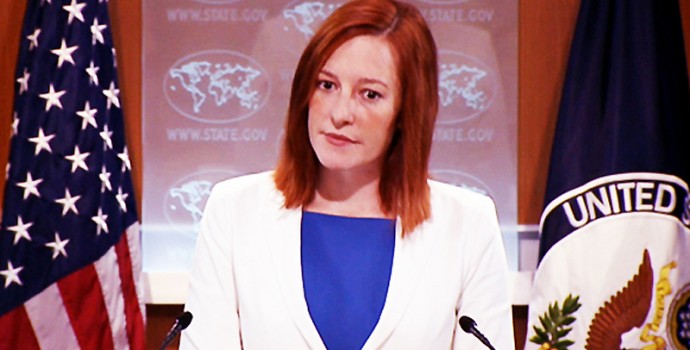
The White house strongly condemns the killing of UNODC in Somalia’s Puntland


Jen-Psaki

The United States has strongly condemned the killing of two employees of the United Nations Office on Drugs and Crime (UNODC) in Somalia’s Puntland region on Monday, and urged authorities there to bring those responsible to justice as soon as possible.

A British man shot dead while working for the UN in Somalia was a former Scotland Yard detective who launched a new career tracking illegal payments financing terrorism.

“We extend our deepest condolences to the families and loved ones of those killed in the attack. The United States urges the relevant authorities to fully investigate this crime and to bring the perpetrators to justice without delay,” read a statement issued by US State Department spokesperson Jen Psaki late on Monday.


“We reiterate our appreciation to all United Nations staff in Somalia for their continued dedication under difficult circumstances. The United States and the United Nations remain determined to support the people and the Federal Government of Somalia in their efforts to strengthen peace, security, and the rule of law,” the statement added.


Simon Davis, of Hatfield, Hertfordshire, was hired by the United Nations to meet with Somali businesses and government officials to discuss ways to make sure al-Qaeda was not using money transfer systems to fund attacks.  He and a French colleague were attacked soon after they landed on Monday morning in Galkayo, the town in central Somalia closest to the country’s pirate strongholds.

At least two men, one in a Somali police officer’s uniform, opened fire with an AK-47 as Mr Davis and his colleague, Clement Gorrissen, waited to for their visas to be stamped inside the airport’s immigration building.
Both men died within minutes. Their bodies were due to be flown to Nairobi, capital of neighbouring Kenya, on Tuesday night before being repatriated.

The United Nations has on Tuesday airlifted the bodies of two of its officials who were shot dead at the Galkayo airport yesterday. The United Nations deputy representative to Somalia Philippe Lazzarini told the media at Galkayo airport that it was a very shocking experience for the world body to learn the assassination of its officials urging the government of Puntland to do its utmost to bring the perpetrators to justice.

“The cooperation between Puntland and the UN agencies will continue and we hope that such brutal killing will not stop both sides from cooperating” Lazzarini told the media at the airport, but accentuated that the culprits must not escape from punishment.

The two senior UN officials also called on the authorities to immediately conduct a full investigation and bring the perpetrators to justice without delay