Search This Blog

Wednesday, April 30, 2014

POSITION LETTER: SOMALILAND MEDIA MAY UNDERMINE THE COUNTRY'S FRAGILE DEMOCRACY


 Public Release: Somaliland-018

We, the undersigned pro-democracy movements in Somaliland, comprising of independent civil society networks and umbrellas ranging from human rights defenders and minority rights lobbyists, the disabled people’s activists, wish to present our findings and position on the dispute between the Government of Somaliland and pravite owned Haatuf Media Network (HMN).
 
Seven years ago when the Somaliland security forces rounded up the owner of HMN, the editor-in-chief of Haatuf Somali newspaper, Ali Abdi Diini, and the HMN Awdal correspondent, Mohamed Omer, the Horn Watch organizations spared no effort to stand by them and pressure the government to unconditionally release them. The Organizations, at the same time, succeeded to spirit away to safety a fourth suspect on the government list, Mohamed Rashid, finding him asylum and living means in the neighboring country of Ethiopia.

In 2007, the Somaliland impartial human rights defenders were fully satisfied that HMN was responsibly dispensing its media commitment honestly and to the letter, and that the corruption scandals they exposed had no ulterior motives and was in line with their exercise of independent media obligations in a democratic, pluralistic society.

Today, HMN and its owner have not earned the unequivocal support of the Somaliland human rights defenders and pro-democracy activists. Following a comprehensive investigation we carried out to identify the bases of the dispute between HMN and the government, we found out that the owner of HMN used the media facilities under his disposal for personal gains which is a clear departure from the principles and obligations governing the protection of freedom of expression thus understandably losing the unstinted support of local human rights groups.


Unfortunately, it has become clear to pro-democratic movements in Somaliland, following its in-depth investigation of the matter from all possible angles, that the current disagreement between the government of Somaliland and HMN was borne from a sustained defamatory coverage against Somaliland Minister of Energy and Minerals as retaliation for a perceived opposition to an expressions of interest that the HMN owner and his brother-in-law, Mr. Yussuf Abdullahi Omar, submitted to the government which according the Somaliland Ministry of Energy and Minerals did not measure up to government standards required for active involvement pertaining to the grant of concessions to petroleum exploration blocks. The principal company, Boule Mining Group[i], through a letter signed by one Audrey Richardson, “Corporate Secretary”, appointed Mr. Omar, to submit an Expression of Interest to secure Petroleum Exploration and Development Licenses within Somaliland[ii] to the Ministry of Energy and Mineral Resources on their behalf. The communication between the Ministry, on one side, and the appointee with the owner of HMN, Mr. Yussuf Abdullahi Gaboobe, was confirmed to the human rights investigators by respectful individuals who tried to arbitrate the issue on behalf of HMN owner and his brother-in-law.

Following the rejection of the aforementioned Expression of Interest by the Ministry on technical grounds, the HMN owner started to continuously and intentionally publish highly defamatory material and slander against the Somaliland Minister for Minerals which grossly violated his constitutional rights without a shred of evidence accompanying it. The HMN coverage had the potential to yet have catastrophic consequences on the newly introduced natural resources exploration programs and their exploitation.

It is noteworthy that not a single other newspaper has taken up the HMN hue and cry of the past five months.
The rest of the independent media in Somaliland are of the belief that the HMN owner largely sided with the government protecting own personal interests.

Getting actively involved in business and broker-ship relating to the oil exploration initiatives in Somaliland, attests to the fact that the HMN and its owner have turned their backs on the impartiality and objectivity associated with independent media  and the constitutional exercise of a freedom of expression.

The Somaliland human rights defenders are gravely concerned that the owner of Haatuf Media Network can use his resources for personal vendetta tools which can set a highly questionable example for the more impressionable ranks presently practicing journalism in Somaliland.

On the same token, the Somaliland human rights defenders are equally disturbed that some of newly established human rights and media organizations are deliberately covering up actual facts surrounding this issue from the public obviously fulfilling agendas of their own. 

In conclusion, we, the pro-democratic and human rights movements in Somaliland, believe that the HMN case can be tried in a civil court. Prior to this, we urge the government to lift the ban from HMN on condition that it acts responsibly and with propriety within the realms of the rights set forth by the Constitution of Somaliland.

On a similar vein, we ask the residents of areas where the oil exploration affects not to claim sole proprietorship of consequent resources and to see the programs on their true, national perspective.

It is clear, that the current Somaliland media law is not sufficient mechanisms to guarantee adherence to professional standards and principles. Most important, Somaliland media industry needs policy and regulation upgrades, which can further develop their professionalism, independence and ethics. 

Somaliland journalists is not expected to solicit financial satisfaction or personal interest as a precondition for publishing a story. It is also advised that journalists should strive to employ honest and genuine means gathering information. Although, where public interest is at stake, media practitioners should go the extra mile to obtain information. And apart from educating the people, the press has another social responsibility that of promoting human rights, democracy and peace. This is what the Somaliland press should address in this era of security threat and terrorism turmoil in Horn of African region.

Somaliland Pro-democratic and human rights groups strongly advise the Somaliland government to submit all oil and minerals exploration agreements with foreign firms, to parliament for ratification in order to foster an environment of transparency, unity and cooperation on national issues. 

Furthermore, we call on the Somaliland government to uphold the Declaration of the Human Environment adopted by the Stockholm Conference stated in part that: 

The natural resources of the earth must be safeguarded for the benefit of     present and future generations through careful planning or management, and that the capacity of the earth to produce vital renewable resources must be maintained and wherever practicable, restored or improved.”

We call all Somaliland stakeholders on all matters relating to national resources, to jointly create an environment in which all Somaliland citizens get the profit underlying the country’s oil and minerals exploration and development projects in an equal manner. 

All interest individuals/institutions for detailed information about this case can contact: xuquuq@gmail.com, hornwatch@yahoo.com, Tel. +252-63-5147777.

Suleiman ismail Bolaleh
Speaker of Somaliland Pro-democratic Movements

Organizations Endorsed This Position Letter

-          Horn of Africa Human Rights Watch Committee (HORNWATCH) Hargeisa
-          Somali Rights Watch       Hargeisa      Togdheer region
-          Saaxil Handicap Organisation (SHO)   Saaxil region
-          ALXANAAN women organization         Saaxil region
-          VAYS Youth Organization                   Saaxil region
-          BILAN Women Organisation                Saaxil region
-          Disability Children Association            Hargeisa region
-          Laas-anod Youth Voluntary Organization LAYVO  Sool region
-          Las-anod Handicap Association in       Sool region
-          Muruq iyo Maskax Women Umbrella   Saaxil region
-          AL Ixsaan Development Organization Hargeisa region
-          Non State Actors                                Nationwide
-          Daami Youth Organization (DYdO)      Hargeisa region
-          Network for Disabled Persons             Nationwide
-          Young Minority Women Activists   Awdal, Togdher, Saaxil & Mordijeex
-          Displaced Community Concerns         Awdal region
-          Center of Research & International Studies   Hargeisa
-          Barwaaqo Farmers Union          Gabiley
-          Social Walfere Organization                Hargeisa
-          Human Rights Monitors Volunteers     Hargeisa
-          Welfare Tumaal Organization (WAAB) Gabiley
-          Tumaal Development Foundation (TDF)        Awdal
-          Women Minority Organization (ISIR)   Awdal


[i] Find the attached Boulle Mining Group's letter dated on 25 Oct. 2012 with subject: Expression of Interest to secure Petroleum Exploration and Development Licenses within Somaliland

[ii] Find more information about the Boulle Mining Group's website: www.jboullemininggroup.com/

Embassy cables reveal 34 nations pressured by UK to oppose Scottish independence


Sensational revelations in the Herald reveal the extent of the British Government’s collusion with foreign powers to undermine the Scottish Government, Scotland’s economy, and the referendum campaign.
They have blown the lid clean off the UK Government’s anti-Scotland covert operation and exposed the utter hypocrisy and mendacity of David Cameron.
Official diplomatic cables prove conclusively that even as Cameron told the country the choice was up to the Scottish people and that he would play no part in it, he was pressuring other nations leaders, including Russia’s Putin, to make statements that would undermine the case for Scotland’s ability to sustain itself, and to promote the meme of Scots dependence on the Union.
The most damaging aspect of these revelations is the extent to which Cameron, his ministers and civil service he controls, have perpetrated one bare-faced lie after another. Lied to the Scottish people, lied to the Scottish Government, lied to parliaments in both London and Edinburgh.
This whole orchestrated fiction of non-interference has been shattered, and the depth of Unionist subterfuge, secret deals and collusion, has been thoroughly exposed to public scrutiny.
Now, given Mr Cameron’s penchant for lying at the drop of a hat, what other intrigues to subvert the electoral process remain to be discovered? What other dirty tricks have he and his government yet to pull? Just how far are they prepared to go to usurp the democratic process they are sworn and legally bound to uphold?
The question for the Scottish electorate is: How do you trust a proven liar?


 FOREIGN Office department ostensibly set up to promote the Scottish Government's interests is being used against it in the independence referendum, diplomatic cables have revealed.
The Devolution Unit, created by the Foreign and Commonwealth Office (FCO) in 2012 to deliver abroad the "utmost co-operation", now appears to be at the heart of Westminster's anti-independence drive, amassing hostile reactions from overseas.
It is understood the FCO has contacted the governments of China, Russia, the US, New Zealand, Australia, Canada and the 28 EU nations about the Scottish referendum in a global search for allies who might oppose independence.
One recent cable showed UK embassies being ordered to forward a Westminster paper critical of independence "to their host governments and other local contacts" and then feed their comments back to the Devolution Unit "ASAP".
It would help the Unionist cause if countries raised their concerns about an independent Scotland joining international bodies such as the EU and Nato.
The action is in spite of Prime Minister David Cameron insisting that September's poll is purely "a debate between Scots" - the argument he uses for refusing to debate with Alex Salmond.
The First Minister yesterday issued a fresh challenge to debate to Cameron, saying he had "a responsibility to let people hear his case for the No campaign and for Scotland remaining under Westminster control".
The Sunday Herald has already revealed two examples of Westminster discussing independence with foreign governments.
In December, Downing Street's Scotland adviser Andrew Dunlop and a Cabinet Office official flew to Madrid to discuss the referendum with Mariano Rajoy's government.
With the visit coming soon after Rajoy had undermined the SNP by warning an independent Scotland would be left outside the EU, Alex Salmond accused the Spanish prime minister of plotting a "stitch-up" with Cameron.
The Sunday Herald also revealed how Russia's top news agency had reported Cameron's office was "extremely interested" in getting president Vladimir Putin's support for a No vote.
The SNP last night said the Devolution Unit's behind-the-scenes activity was "a disgrace".
The Unit's head appeared at Holyrood's European and External Relations Committee last July.
Annie McGee, a former vice-consul in Madrid, told MSPs: "Our focus is on working with the Scottish Government, the Welsh Government and the Northern Ireland Executive on their foreign policy interests. I make sure visits overseas run smoothly and that there is the utmost co-operation with our posts. We work with colleagues in the Scottish Government ... to ensure areas of interest are explored as they should be."
Europe Minister David Lidington told MSPs at the same session the Unit was about co-operation. "We are building a working culture between the United Kingdom Government and the devolved administrations in which we co-operate effectively on European policy," he said.
"The Unit ... gives a bit more focused support to that co-ordination role, particularly with regard to the interests of the devolved administrations."
However, official UK government material suggests that, far from advancing the Scottish Government's case, or remaining neutral, the Devolution Unit is actively engaged in promoting Westminster's desire for a No vote.
Last week, after Foreign Secretary William Hague launched the latest in Westminster's Scotland Analysis papers on the problems which could face an independent Scotland, the FCO sent a diplomatic telegram, or "Diptel", message about the document to its staff overseas.
The Sunday Herald has seen its content. It said: "EU Posts are requested to circulate the paper ASAP to their host govts & other local contacts.
"Other posts particularly Washington, Ottawa, Canberra, Wellington & UK Rep Brussels may wish to do so.
"You should refer to previous FCO guidance sent to Posts on how to present the referendum work. "Report back to DEVO UNIT, FCO. Other local reaction (public or private) ASAP."
Other Diptel messages released to the pro-Yes National Collective group under Freedom of Information also show the Unit acting as a clearing house for reactions from overseas governments to Scottish independence.
Angus Robertson, the SNP's Westminster leader, said: "In public David Cameron has pledged that the referendum is for people in Scotland.
"In private he's using UK diplomats around the world to support the 'no' campaign.
"Governments internationally have said they won't get involved in this democratic debate in Scotland.
"It's a disgrace that the Prime Minister is breaking his word, encouraging foreign interventions while running scared of a debate with First Minister Salmond."
A Westminster source said the SNP's attack was "frankly quite ludicrous", as Salmond was in regular touch with other governments, and it was routine for the Westminster government to share information abroad, "especially about issues that have ramifactions outwith the UK".
A Downing Street spokesman added: "The SNP can debate about debates all they like. We are getting on with informing the debate with detailed analyses so that people can decide."

Mohamed Hersi wanted to move to Muslim country to escape Canada’s ‘Islamophobia,’ terror trial hears


Mohamed Hersi arrives with an unidentified woman to testify at his trial at the Brampton courthouse, April 24, 2014.

|

A Toronto security guard on trial for allegedly attempting to join the Somali terrorist group Al-Shabab testified Monday he wanted to move to a Muslim country because of the discrimination he suffered in Canada, but insisted he did not support terrorism.
“I felt that throughout my time in Canada I felt a lot of discrimination, whether because I’m black or I’m Muslim,” Mohamed Hassan Hersi said. “I felt that if I lived in a Muslim country, I probably would not experience Islamophobia.”
Mr. Hersi, 28, told jurors as he began his defence that his entire clan was “hostile” to the group and its “extreme methods.”
They do tyrannical things like cut off peoples’ hands
“They do tyrannical things like cut off peoples’ hands,” said Mr. Hersi. “I don’t really like Al-Shabab.”
He insisted he was opposed to terrorism, which he called immoral and anti-Islamic. Terrorists who cited Islam to justify violence were taking the Koran out of its historical context, he added.
As the defence began presenting its case, Mr. Hersi took to the witness stand to counter the prosecution’s portrayal of him as a would-be jihadist immersed in online Al Qaeda propaganda.
In contrast, he depicted himself as an avid television viewer and sports fan, and said the talks he had about Somalia were mostly initiated by an undercover police officer who befriended him.
Mr. Hersi was arrested at Toronto’s Pearson airport on March 29, 2011, as he was boarding a flight. His destination was Cairo but the undercover police officer said Mr. Hersi had confided he would be traveling to Somalia to join Al-Shabab.
In the weeks before his arrest, Mr. Hersi’s laptop was used to search the Internet for terms such as “Somalia AK-47 cost.” He had also downloaded an edition of the Al Qaeda magazine Inspire, an RCMP officer testified.
AP Photo/Farah Abdi
AP Photo/Farah Abdi Al-Shabab fighters display weapons as they conduct military exercises in northern Mogadishu, Somalia in 2010.
But his lawyer Paul Slansky said Mr. Hersi had never intended to join Al-Shabab, nor had he encouraged the undercover officer to do so.
The officer was playing the role of a Somali who wanted to join Al-Shabab. One of the charges alleges Mr. Hersi gave the officer advice on how to do so, but Mr. Slansky said Mr. Hersi had an “anti-Al Shabab mindset.”
“Sometimes he just talked nonsense,” Mr. Slansky said of his client, “just a tendency to jabber, but Mr. Hersi will make clear that he never intended to join Al-Shabab.” The lawyer claimed the case was based on police lies.
Sometimes he just talked nonsense
In his testimony, Mr. Hersi said he was born in Mogadishu and, during a visit to the United States, he came to Canada with his mother to claim refugee status. His father, who worked at the Islamic Development Bank in Saudi Arabia, died before he could join the family in Toronto.
While growing up at a Toronto Community Housing Corp. apartment building, he said he was regularly discriminated against, and described seeing police harassing blacks and Muslims. “I have sort of a love hate relationship with the police,” he said. “I love to hate them, they love to hate me.”
After studying at the University of Toronto’s Scarborough campus, he wanted to become fluent in Arabic, he said. He planned to spend six to 12 months in Cairo, return to Canada for graduate studies and then move to a Muslim country such as Egypt or Turkey.
Peter J. Thompson/National Post/Files
Peter J. Thompson/National Post/FilesMohamed Hersi, centre, is charged with planning to join Al-Shabab, a Somali group associated with Al-Qaeda. He was arrested in Toronto as he attempted to leave Canada.

But he said he had never had any contact with Al-Shabab. He acknowledged accepting a friend request on Facebook from Abdurahman Guled, an alleged Al-Shabab member. But he said they had been friends in high school and he was not sure Mr. Guled was in Al-Shabab. “I thought he was, but I really don’t know.”

The case is the first attempt to prosecute a Canadian for allegedly attempting to travel abroad to join a terrorist group. The National Post revealed this week the RCMP has set up a program to track and disrupt “high risk travelers” preparing to leave the country.

Al-Shabab was behind last year’s massacre at the Westgate shopping mall in Nairobi that left two Canadians dead, including a Canada Border Services Agency officer. The Al-Qaeda aligned group is fighting to impose its militant version of Islamic law on Somalis.

National Post

The hypocrisy of foreign funding laws in Ethiopia

In the constantly shrinking space for civil society around the world, Ethiopia faces some enormous challenges in generating local support. Largely due to the country’s new CSO Proclamation, which severely restricts foreign funding of rights groups, human rights work in the country has nearly shut down. But can local donors pick up the slack?

Across the globe, the space for Civil Society Organizations (CSOs) to operate is rapidly shrinking. In fact, the US Ambassador to the United Nations, Samantha Power, recently lamented that over the past five years at least 40 countries have embraced legislation restricting access to foreign funding and limiting the legitimate activities of CSOs. Similarly, a 2013 report by CIVICUS, the global civil society alliance, concludes that many governments are failing to honour their promise to create an “enabling environment” for civil society. Dozens of other countries, under the pretence of safeguarding national security and state sovereignty, have proposed similar laws to unduly temper the influence of independent organizations.
Recently on openGlobalRights, Saskia Brechenmacher and Thomas Carothersnoted that while dependence on foreign donors for human rights work is high, many governments are not only restricting but also vilifying domestic CSOs who receive foreign assistance. Indeed, as Melaku Mulualem pointed out, when the Kenyan government attempted to place heavy restrictions on NGO foreign funding, they portrayed local NGOs as “money scavengers” and agents of foreign intervention. As local funds have yet to materialize in significant amounts, these interventions are creating an environment in which many local human rights organizations are simply shutting down. In this shrinking space,James Ron and Archana Pandya argue that human rights NGOs must find different ways to market their work, so that local populations are more inspired to support them. Correspondingly, Okeoma Ibe strongly advocates for local support for local rights, arguing that NGOs throughout the global South must distance themselves from international funding to avoid being hamstrung by external demands. But can local donors actually pick up the slack?
Ethiopia is no exception to these government restrictions and domestic funding challenges. In fact, it has one of the most debilitating laws in the world for civil society operations. The country received nearly $4 billion in development aidfrom the US and other western countries in 2013, arguably due to its strategic and military importance. However, while relying on international funding to supplement 50-60 percent of its national budget, the government has criminalized most foreign funding for human rights groups. Under the CSO Proclamation, organizations working on a number of human rights issues, including the advancement of democratic rights, rule of law and the promotion of the rights of children and the disabled, can only receive 10 percent of their budget from foreign funding.
Such blanket restrictions have precipitated the near complete cessation of organized human rights activity in the country. While official figures put the number of the registered CSOs at 4000 – a remarkably low figure for a country with a population nearing 100 million – several Ethiopian civil society activists working in the capital contend that no more than three independent human rights organizations actually remain.
Even then, the few organizations that have refused to abandon their human rights activities in exchange for access to international funding have been forced to make crippling cutbacks. In 2010, the Human Rights Council (HRCO), Ethiopia’s first and only remaining human rights monitoring group, closed nine of its twelve offices and cut 85 per cent of its staff. At the same time, Ethiopia’s most prominent women’s rights group, the Ethiopian Women’s Lawyers Association (EWLA), was forced to cut 70 per cent of its staff.
International human rights organizations are further barred from working in Ethiopia under the CSO Proclamation. Representatives of the global human rights group Amnesty International were summarily expelled from the country last year despite having a secured a business visa. In addition, representatives of other international human rights organizations have reported being denied entry upon arrival. 
In response to growing international criticism of the law, the Ethiopian government, seemingly unconcerned by the glaring hypocrisy of its dependence on international assistance while criminalizing the same for human rights organizations, has exhorted CSOs to seek greater domestic support to fund their operations. However, severe limitations found in the CSO Proclamation on domestic resource mobilization, as well as a strong contagion of fear about supporting activist causes, have proved insurmountable hurdles to financial “self-sufficiency.”
For example, Ethiopian CSOs must secure explicit authorization from the Charities and Societies Agency – the government authority tasked with overseeing implementation of the CSO Proclamation – to organize a domestic fundraising event. Independent organizations that manage to traverse the labyrinth of bureaucracy erected by the Agency are regularly subjected to discriminatory application of the law. In 2013, the Agency forced the Human Rights Council (HRCO) to cancel a number of proposed fundraising events due to repeated delays and outright rejected other applications.  
The law further stipulates that CSOs submit detailed information of all benefactors and members to the Agency. In a country that has the dubious distinction of having the second highest number of imprisoned journalists, according to the Committee to Protect Journalists, and that regularly detains opposition party members and human rights defenders, such requirements have become a strong deterrent to securing financial support from Ethiopia’s growing middle class.  The Human Rights Council (HRCO) has reported a swift decline in membership following the introduction of the CSO Proclamation while a number of independent development groups have observed a growing reticence among small business owners to openly support their work.
In addition, as Osai Ojigho has noted, the African continent in general has little history of donating to social justice NGOs, and African philanthropists usually prefer to donate to projects with tangible results like schools and hospitals. These issues in combination with restrictive laws and a hostile environment make the generation of local funds extremely difficult. 
While considerable attention has been paid to the debilitating effects of the CSO Proclamation on human rights groups, development organizations permitted to receive foreign funding have not been spared from the government’s campaign to silence all independent monitoring and reporting of its policies. A number of independent development organizations that do not have explicit human rights mandates have reported severe obstruction by the government, including instructions to cease any form advocacy or policy analysis and focus exclusively on service delivery activities.  Such restrictions have left the country increasingly bereft of any independent assessment of its development prerogatives and have further undermined Ethiopia’s ability to ensure equitable and sustainable development for the entire population.
The drastic contraction of human rights activity in Ethiopia precipitated by the 2009 CSO Proclamation is a stark reminder of the severe democratic backsliding hastened by restrictive NGO laws. While having local funds for local projects is ideal, this solution is highly unlikely in the Ethiopian context. If the government itself cannot function without international funds, it cannot possibly expect civil society to do so, and that is exactly the point. As the international community, including the UN Human Rights Council, which just organized itsfirst ever formal discussion on civil society space, debates rising restrictions on civil society across the world, it is now especially crucial to underscore the duplicity of states that receive significant amounts of foreign aid while simultaneously denying CSOs the same privilege.

Israel Comes To A Halt To Mark Holocaust Remembrance Day (PHOTOS)


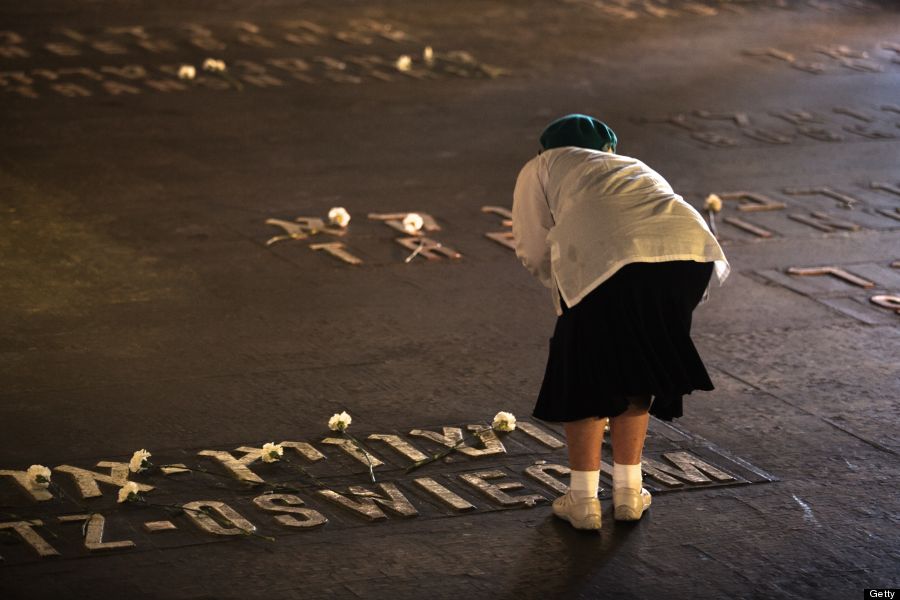
Israel marked Holocaust Remembrance Day on Monday -- the solemn holiday to remember the six million Jews that fell victim to Nazi persecution.
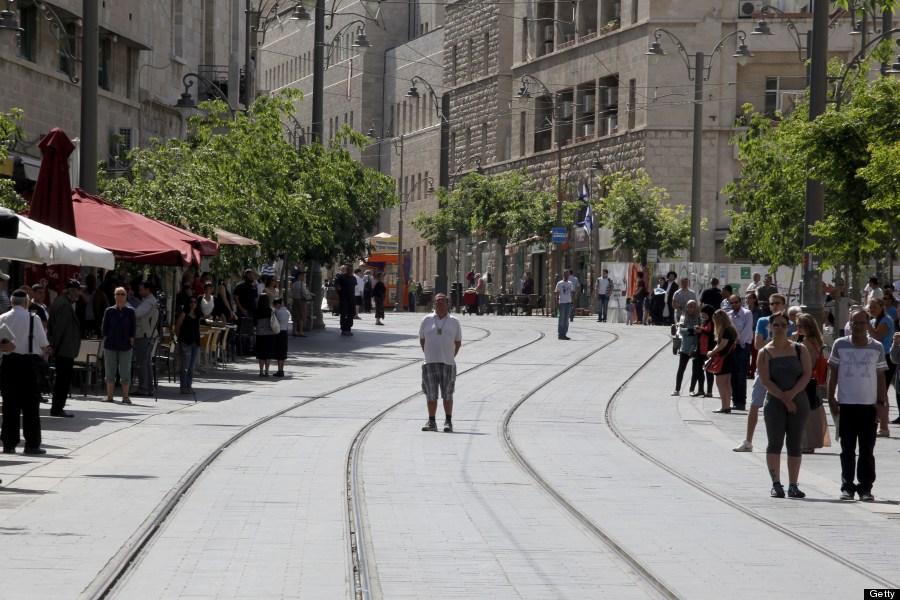
At 10 am local time, Israelis all over the country stood silent during a two-minute siren that resonated through towns and cities. Later during the day, the president and prime minister attended a wreath-laying ceremony at the Yad Vashem Holocaust Memorial and the names of the victims of the horror were read out loud. Radio stations and TV channels have adapted their program for the day.
"Each and every child and every person must have a name. Not a number, not a figure, but an actual name of his given to him by his mother and father," Knesset Speaker Yuli Edelstein said at the opening of a ceremony in parliament, Haaretz reports.
israel
A relative of Holocaust victims lays flowers on the names of concentration camps in the hall of remembrance at the Yad Vashem Holocaust Memorial on April 28, 2014 during the Holocaust memorial day in Jerusalem. (MENAHEM KAHANA/AFP/Getty Images)
israel
Israelis stand still on the beach as a two-minute siren sounds in memory of victims of the Holocaust, In Tel Aviv, Israel, Monday, April 28, 2014. (AP Photo/Oded Balilty)
israel
A nun pauses after laying a wreath during the annual Holocaust Remembrance Day ceremony, at the Yad Vashem memorial in Jerusalem, Monday, April 28, 2014. (AP Photo/Sebastian Scheiner)
israel2
Israelis stop their vehicles on the highway and stand still in the Mediterranean coastal city of Tel Aviv on April 28, 2014, as sirens sounded across Israel for a two-minute silence in memory of Holocaust victims. (JACK GUEZ/AFP/Getty Images)
israel
Israelis stand still in downtown Jerusalem on April 28, 2014, as sirens sounded across Israel for a two-minute silence in memory of Holocaust victims. (GALI TIBBON/AFP/Getty Images)
israel
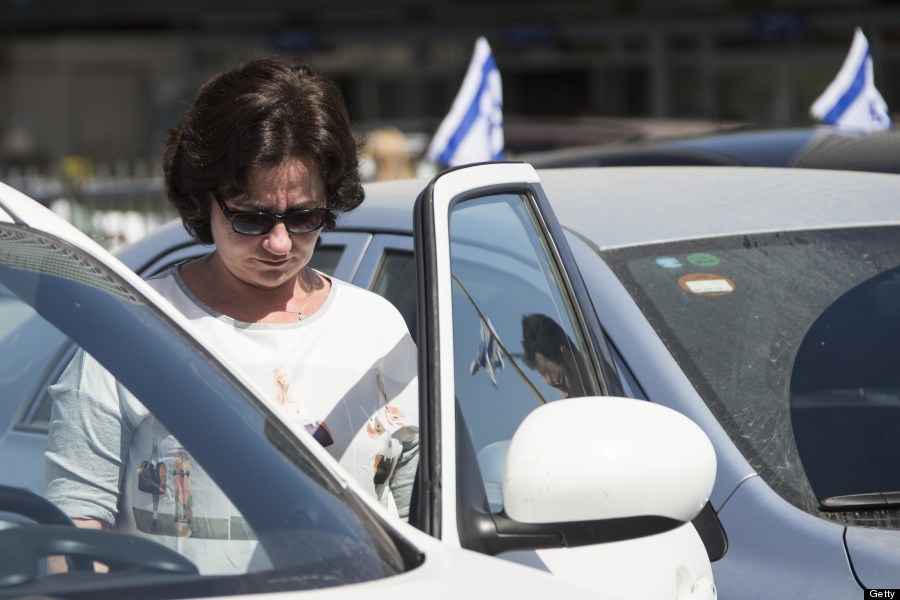
Israeli motorists stand still next to their cars on a freeway as a two-minute siren sounds in memory of victims of the Holocaust in Tel Aviv, Israel, Monday, April 28, 2014. (AP Photo/Ariel Schalit)
israel
A Israeli woman stops her vehicle on the highway and stands still in the Mediterranean coastal city of Tel Aviv on April 28, 2014, as sirens sounded across Israel for a two-minute silence in memory of Holocaust victims. (JACK GUEZ/AFP/Getty Images)