Search This Blog

Sunday, April 27, 2014

Snowden reveals spying on human rights organisations


Following whistleblower Edward Snowden’s allegations that the NSA is engaged in the surveillance of human rights organisations within the USA and beyond, Thomas Hughes, ARTICLE 19 Executive Director, said:
“Edward Snowden's revelation that the NSA has been spying on human rights defenders is appalling. Human rights organisations like ARTICLE 19 deal with very sensitive information with the intention of holding governments accountable for their wrongdoing. Spying on them is nothing less than harassing the watchdogs.
“The USA's surveillance practices need to be overhauled. Their spying has a chilling effect on the freedom of expression of human rights defenders and the people they are working with. State spying makes the work of human rights groups operating in dangerous environments even more challenging,” he added.
ARTICLE 19 is a founding organisation of the Don’t Spy On Us campaign, demanding changes to UK surveillance legislation so that surveillance practices respect the right to freedom of expression. ARTICLE 19 is also a supporter of the Day We Fight Back campaign to end mass surveillance worldwide.
Source: article19.org

Riwaayad Cusub (dadku waa isku dhoone ha dhamaado takoorku)

Installation of Venezuelan-Saharawi friendship parliamentary group


Caracas - A Venezuelan parliamentary group of friendship with the Saharawi people was installed Wednesday, in the presence of the Saharawi ambassador in Caracas Mr. Mohamed Salem Dahi and some Venezuelan officials.

The parliamentary group, which is composed of 7 members of Venezuela’s parliament, aims at strengthening the bonds of friendship and brotherhood already exist between the Saharawi Republic (SADR) and Venezuela, as to mobilize solidarity with the Saharawi cause at the level of Latin America and the rest of the world.

The ceremony, which took place at the headquarters of the Venezuelan National Assembly, was attended by several officials in the state of Venezuela.


In his speech on the occasion, Venezuela’s Vice-Minister of Foreign Affairs for Africa Mr. Reinaldo Jose Bolivar, who was present at the event, highlighted that Morocco, supported and funded by the Kingdom of Saudi Arabia, Israel and several other powers, deliberately built a military wall to separate Western Sahara’s territory and people. (SPS)


Egypt invited to Nile dam talks


APA
Copyright : APA


Ethiopian Prime Minister, Hailemariam Desalegn has invited Egypt to restart talks to resolve their long-running dispute over the construction of a controversial dam on the River Nile.

The PM said Egypt should join what his country intend as tripartite talks with Sudan in order to implement recommendations by an international committee over the construction of its dam on the Nile which Cairo vehemently opposes.

“We seek to persuade the authorities in Cairo to avoid unnecessary complaints about the dam and to resume tripartite talks with Ethiopia and Sudanâ€� the Egyptian media quoted the Ethiopian PM as saying on Friday.

The Egyptian government has not reacted to the latest invitation for talks which if reopened will be the third round of negotiations since Ethiopia began the construction of the Grand Ethiopian Renaissance Dam (Gerd) two years ago.

The hydroelectric dam which is meant to boost electricity supply in Ethiopia and satisfy the demands of neighbouring countries is said to be 30 percent complete.

Talks between Cairo and Addis Ababa broke down in January amid differences of opinion over the effect that the dam will have on Egypt’s share of the Nile, on which its citizens depend for their water supply.

Egypt’s opposition to the construction of a dam is informed by fears that the project will leave a significantly damaging effect on the flow of the Nile River and deprive millions of its people of such a vital resource in their lives.

Ethiopia’s Water Minister Alemayehu Tegenu meanwhile said his government would always sue for dialogue to rebuild trust among all riparian countries of the Nile despite what he called Egypt’s campaign of misinformation against the dam project.

Signature : APA    

Kerry to visit Ethiopia, Congo and Angola next week


U.S. Secretary of State John Kerry will travel to Ethiopia, the Democratic Republic of Congo and Angola from April 29 to May 5 to promote democracy and human rights, the State Department said on Friday.

Kerry will meet with Ethiopian Prime Minister Hailemariam Desalegn and Foreign Minister Tedros Adhanom in Addis Ababa to discuss peace efforts in the region and strengthen ties with Ethiopia, State Department spokeswoman Jen Psaki said in a statement.

“In Kinshasa, Secretary Kerry will meet with President Joseph Kabila and will discuss how the DRC government’s progress in neutralizing some of the dozens of dangerous armed groups that victimize the Congolese people can be consolidated and how to best advance the DRC’s democratization and long-term stability, including through a timely and transparent electoral process,” she said.


Kerry will meet Angolan President José Eduardo dos Santos in Luanda to commend him on his engagement in the peace process in Africa’s Great Lakes region, Psaki added.

Somalia: The Only Solution


April 26, 2014: Peacekeepers and Somali security forces continue to chase al Shabaab out of towns and villages from central Somalia (west of Mogadishu) south to the Kenyan border. The al Shabaab gunmen tend to flee, so it’s largely a matter of chasing the Islamic terrorists constantly, leaving them little opportunity to organize attacks.

Al Shabaab is forced to forage and loot to survive, which makes them even less tolerable to the locals. There has been some violence, or threats of violence and this has produced over 40,000 refugees. There are also a lot of roads that go through areas where al Shabaab operate and often ambush and rob vehicles. This has made delivery of aid more difficult.

There are still over half a million people in the area dependent on food aid. Al Shabaab publicly insists that it will fight on, so the peacekeepers are wearing them down to the point where al Shabaab is no longer a major threat. That could take years, as in until the end of the decade.

That is what has worked against similar terrorist movements in the past and grinding them down still appears to be the only solution.

In response to a March 31st al Shabaab attack (three bombs) in Kenya the government there immediately began searching buildings in the main Somali neighbourhood of the city seeking al Shabaab members and sympathizers. By the next day police had arrested over 650 local Somalis for questioning and so far several thousand have been taken in for interrogation.

This brought forth much criticism from the UN and the Arab world. This did not bother the Kenyans who consider the Arabs complicit in the creation and spread of Islamic terrorism.

Al Qaeda and other Islamic radical groups came out of Arabia and many wealthy Arabs still support Islamic terrorist groups like al Shabaab. The fact that current al Shabaab leadership contains many Arabs adds to Kenyan animosity towards the Arabs.

The UN is considered corrupt and subservient to oil-rich Arab states and Western leftists who glamorize and sympathize with some Islamic radical groups. Ignoring the UN and Arab criticism Kenya has been deporting hundreds of Somalis back to Somalia.

Those sent back are the ones found living illegally in Nairobi outside refugee camps. Police believe these illegals are the most likely to be Islamic terrorists or al Shabaab supporters. To add to the problems there is the long-standing animosity between Somalis (who are Moslem and consider themselves “Arab”) and the Kenyans (who are Christian and black Africans, who have long been disdained and abused by Arabs). The crackdown on Somalis in Kenya is popular with most Kenyans but hampered by the corruption. Somalis (even al Shabaab members) with enough cash can buy their way out of detention, arrest or deportation.

The Somali government has been seeking ways to deal with al Shabaab terrorist cells returning to Mogadishu. The city has 1.5 million residents and too few (and too corrupt) police to deal with crime or terrorism. Efforts to set up an informant network stumbled because of the rampant corruption among police and the general knowledge that police can be bribed by al Shabaab to get out of being arrested or to obtain the names of informants.   

The UN is bringing in trainers, advisors and cash to create a Somali operated logistical capability for the Somali Army. This force currently consists of six brigades and about 7,000 troops actually in service. The ultimate size is to be three times that and without support troops that won’t happen. Corruption and poor discipline remain a major problem and creating a logistical force that will handle purchasing, storing and distributing supplies as well as maintaining equipment will face enormous problems with corruption. Meanwhile the 22,000 foreign peacekeepers provide most of the logistical support for Somali security forces.

The Somali pirates are still in business and there have been five attacks so far this month. The piracy business has changed a lot since 2010, when it reached levels of activity not seen in over a century. But over the next three years that all changed. By 2013 attacks on ships by Somali pirates had declined 95 percent from the 2010 peak. It’s been over two years since the Somali pirates captured a large commercial ship, and even smaller fishing ships and dhows (small local cargo ships of traditional construction) are harder for them to grab.

The rapid collapse of the Somali pirates since 2010 was no accident. It was all a matter of organization, international cooperation and innovation. It all began back in 2009 when 80 seafaring nations formed (with the help of a UN resolution) the Contact Group on Piracy off the Coast of Somalia. The most visible aspect of the Contact Group was the organization of an anti-piracy patrol off the Somali coast.

This came to consist of over two dozen warships and several dozen manned and unmanned aircraft, as well as support from space satellites and major intelligence and police agencies. Despite all this there are still pirates who are active along the coast.

April 23, 2014: In Kenya (Nairobi) a car bomb went off outside a police station in a Somali neighborhood, killing two policemen and two civilians.

April 22, 2014:  In Mogadishu two al Shabaab men shot dead a member of parliament. The government agreed to provide better security for senior government officials while al Shabaab has boasted that it will keep on killing key government people. Most of these officials are hiring whatever security they can afford.

April 21, 2014:  In Mogadishu an al Shabaab bomb placed under his car killed one member of parliament and wounded another.

April 18, 2014: In Balad (30 kilometers north of Mogadishu) militiamen of a local pro-government warlord got into a fire-fight with some national police. There were several casualties before a ceasefire was arranged. Balad was under al Shabaab control until June 2012 and because of a shortage of trained and trustworthy security personnel the government had to make deals with local warlords to keep the peace. These warlords are often uncomfortable around the trained police and army units and their gunmen are undisciplined and unpredictable.

April 17, 2014: Uganda has sent 400 more peacekeepers to Somalia to provide security for UN facilities. These troops received specific training for this duty.

April 10, 2014: In Mogadishu three Turkish construction workers were wounded when al Shabaab fired RPG rockets at the Turkish embassy compound.

In the south, near the Kenyan border, Kenyan peacekeepers rescued two Kenyan aid workers who were kidnapped in 2011. The two were finally released in March when they agreed to convert to Islam. Al Shabaab was unable to obtain any ransom for the two men and sought to at least get some positive publicity with the “conversion.” The two men were still being watched but found an opportunity to escape when peacekeepers patrolled the area they were in.

April 7, 2014: At the Mogadishu airport two UN anti-drug officials were shot dead. It’s unclear who was responsible, although al Shabaab will kill anyone associated with the UN and there many criminal gangs who would murder anti-drug investigators from anywhere.


April 4, 2014: In central Somalia (Gal Hareri) there was a large explosion outside the town and when troops arrived they found three dead al Shabaab men and evidence that wounded victims were removed. The Islamic terrorists were apparently assembling a car bomb when the explosives went off by accident. This sort of thing is becoming more common as experienced bomb builders are killed, captured or flee the region because of the constant pressure from peacekeepers and security forces.

Source:

Policymaking by Remote Control

The Obama administration has to learn that foreign policy by remote control won't work.


U.S. use of armed drone strikes, principally to combat terrorism, has increased steadily in recent years. The defense and intelligence communities defend drones as effective antiterrorism tools. They are accepted by some U.S. allies, and even public opinion in some measures, for the same reason. However, concerns over the legality, and ultimately the ethics, of lethal U.S. drone strikes are very real. Scholars at the New America Foundation are among those attempting to codify the number of drone strikes and push the Obama administration to set clearer guidelines for their use.
In and article in the current issue of Foreign Affairs – “The Next Drone Wars: Preparing for Proliferation” – Sarah Kreps and Micah Zenko argue that armed drones are here to stay and urge the U.S. to lead the establishment of international standards governing their use. Short of that, the authors fear both steady growth in the number of armed drone operations and a lowering of the threshold for drone strikes. More countries will employ more armed drones for more reasons, to the detriment of global stability.
The need for global standards on drones is real, but there are more obstacles to it than the authors discuss. While Kreps and Zenko articulate the “hard power” consequences of growing drone use, there are “soft power” consequences for the way American foreign policy is perceived abroad. These consequences are no less real for being less quantifiable.
Kreps and Zenko argue for the U.S. to lead the establishment of international controls on drones, informed in part by past agreements governing ballistic missiles. Recent experience shows, however, that the biggest barriers to U.S. leadership on such an agreement may be internal, emerging from two branches of the U.S. government. First, that the Obama administration’s stance on drone use has hewed closely to that of the Bush administration demonstrates how the executive branch – Republican or Democratic – will fight to maintain flexibility in the use of force. Drones are merely the most recent example of that long-term strategic trend. Second, the U.S. Senate has been reluctant to engage in treaties or international agreements in many areas, from crucial nonmilitary topics like climate change to strategic ones like maritime law. To lead on drone standards, it is likely that the White House would not only have to surrender some of its own autonomy over their use, but expend political capital to convince Congress of the need for international controls.
America’s drone use has a “soft power” impact as well. Many diplomats have argued that U.S. embassies, responding to real security pressures, have been so heavily defended that they resemble not outposts of an allied country but fortresses in enemy territory. This tangible distancing is driven by safety concerns, but it has ramifications. It creates an atmosphere of foreign policy conducted at a remove. The use of remote-controlled armaments like drones furthers this trend. Paul Brinkley, a former senior Defense Department official who ran civilian economic development efforts in Iraq and Afghanistan, in his recent memoir War Front to Store Front, discusses how the use of body armor created a similar phenomenon – those executing U.S. foreign policy keeping their distance when engaging abroad:
We were there to help the citizens of Baghdad. Our soldiers were combatants; they had every reason to wear armor. But as civilians, we were there to build trust, to engage. Instead, we looked like astronauts exiting our spacecraft, wrapped in layers of protective gear to walk among the aliens.

It’s an imperfect analogy. Armored drones are combat technology; they are not engaged in community development. Outwardly, however, they are the airborne and unmanned equivalent of Brinkley description of body armor: technology that allows the U.S. to pursue its foreign policy goals at a remove – to engage, to paraphrase Brinkley, but at a safe distance.
Kreps and Zenko are rightfully concerned about drone proliferation. The White House and Senate may be the biggest obstacles to their goal of U.S. leadership toward international governance of their use. Ultimately, how the U.S. executes its foreign policy is as important as the policy itself. Kreps and Zenko point to the dangers of policy by remote control.
  • Michael Crowley is a writer for the Foreign Policy Association. He has previously worked at the Center for Strategic International Studies, Akin Gump and The Pew Charitable Trusts.


Nile dam study fails to stem the tide of Egyptian indignation towards Ethiopia

Claim and counter-claim has attended the delayed publication of a report on the likely impact of the Grand Renaissance dam

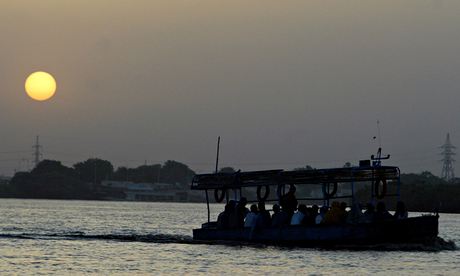
Sudanese villagers ride in their boat at the river Nile in Sudan's capital Khartoum
Villagers on the Nile in Khartoum. Ethiopia's Gerd dam may give Sudan greater water access than an agreement with Egypt allows. Photograph: Antony Njuguna/Reuters
The opening sentence of Egypt's new constitution describes the country as the river Nile's gift to Egyptians. It is a grand claim, but one that helps explain Egypt's indignation at the ongoing construction of a blockage on the Nile, thousands of miles upstream: the $4.7bn (£2.8bn) Grand Ethiopian Renaissance dam (Gerd).
Egyptians have long maintained that Ethiopia's dam project will dangerously deplete its water stocks – about 95% of which are derived from the world's longest river. A year ago, a former Egyptian water official boldly claimed that the Gerd might deprive Egypt of up to 10bn kilolitres, devastating roughly a million acres of farmland along the shores of the Nile.
"Then you might cross the Nile on the back of a camel," the former head of Egypt's National Water Research Centre said at the time, in what were highly contested claims.
Egyptian politicians have used such claims to portray the dam as a threat to national security, and have occasionally made ambiguous statements about the possibility of military action. For their part, the Ethiopian government sees the Gerd as a crucial developmental goal – a 6,000 megawatt source of surplus electricity that they could sell to foreign countries to boost their economy.
Last month, the saga took a fresh twist after the leak of a highly anticipated and hitherto suppressed report into the long-term effects of what would be Africa's largest hydroelectric dam. Written by two water experts from each of the three main countries concerned – Ethiopia, Egypt and Sudan – as well as international advisers, the report was seen as a much needed means of arbitration between the parties concerned.
But for nearly a year the report's contents were a mystery. After its submission last April, publication was suppressed at the request of one of the countries involved, enabling all concerned to make whatever claims they liked about its contents.
That should have changed at the end of March, when a leaked version (pdf) was finally published by the International Rivers Network (IRN), an independent group that campaigns against dams across the world. But rather than clarifying the dam's impact once and for all, the report has become the latest pawn in a war of words between Egypt and Ethiopia.
IRN said it showed that "big questions remain" and called for a halt to the dam's construction. But Ethiopian government spokesman Getachew Reda said the group was "absolutely biased", and "part of the smear campaign organised by Egypt". In the meantime, the dam's construction continues apace.
The report is nuanced and complex, and does not try to quantify exactly the likely downstream effect of the dam on Egypt's water supply. But its 48 pages nonetheless contain alarming findings. If the dam's reservoirs are filled during years of average or above-average rainfall, says the report, the hydroelectric capacity of Egypt's downstream Aswan High dam (Had) – which provides about 15% of Egypt's power – could face a temporary 6% decrease. But if filled during years of below-average rainfall, the Gerd may "significantly impact on water supply to Egypt and cause the loss of power generation at Had for extended periods".
Among other criticisms, the report warns that the dam's foundations may need further structural support to protect against sliding. It also says Ethiopia has done little to assess the Gerd's effect on local people, ecosystems and biodiversity. Based on these findings, the IRN concludes that the report "confirms Egypt's concerns that the project's impacts could be significant", and calls for construction to cease pending better analysis.
Not all independent analysts share this view, however. According to Dr Ana Cascão, a researcher at the Stockholm International Water Institute whose doctoral thesis analysed hydropolitics in the Nile basin, Egypt fought for the report to be kept secret. Cascão argues the study is largely optimistic about the Gerd's impacts – "and that's why Egypt was not happy for it to be released". It is critical about the dam's social and environmental impact, she says, "but otherwise – in terms of dam safety and even in terms of water going downstream – the report is quite positive".
This is because the Gerd may eventually help to reduce the build-up of sediment in downstream dams like the Had, increasing capacity. The Gerd will also help to keep the Nile's flow – which presently fluctuates according to the amount of rainfall, potentially causing problems for downstream farmers even in Egypt – constant throughout the year. In terms of structural safety, Sudan – the country most endangered by any catastrophe at the Gerd – is satisfied with its construction.
Egypt's interests may actually be aligned with Ethiopia's, since Ethiopia will ultimately want to see as much water flow through the Gerd as possible in order to maximise hydroelectric power. It is, says Cascão, Sudan's intentions that may instead cause the greatest long-term concern for Egypt. The Gerd would allow Sudan to siphon off more downstream water for farm irrigation, potentially allowing the republic to take more water from the Nile than allowed by an agreement signed with Egypt in 1959.
Sudan has achieved this leverage by engaging positively with the dam's construction; Egypt's only means of reaching a grand compromise may be through similar engagement.
But it may now be too late. According to the Ethiopian government, an army of 8,500 builders, working 24 hours a day, has already completed about 30% of the 1,800 sq km site.

A New Turn in the War on Whistleblowers & Journalism?


If Director of National Intelligence James Clapper thinks you need to know about US intelligence, he'll tell you.

A remarkable bit of news was made this week by Steven Aftergood of the Federation of American Scientists (Secrecy News4/21/14). And it sends an ominous message about how can journalism is practiced.
Aftergood writes:
The Director of National Intelligence has forbidden most intelligence community employees from discussing "intelligence-related information" with a reporter unless they have specific authorization to do so, according to an Intelligence Community Directive that was issued last month.
One might think–or want to think–that the new rules are intended to stem the flow of classified information. But, as Aftergood points out:
The new prohibition does not distinguish between classified and unclassified intelligence information. The "covered matters" that require prior authorization before an employee may discuss them with a reporter extend to any topic that is "related" to intelligence, irrespective of its classification status.
He adds:
Essentially, the Directive seeks to ensure that the only contacts that occur between intelligence community employees and the press are those that have been approved in advance. Henceforward, the only news about intelligence is to be authorized news.
It's hard to see how a move to criminalize routine discussions between government officials and members of the press is anything but an attempt to shut down such conversations. The story was since picked up by reporters like McClatchy's Jonathan Landay (4/21/14), who pointed out that the directive
includes a sweeping definition of who’s a journalist, which it asserts is "any person… engaged in the collection, production or dissemination to the public of information in any form related to topics of national security."

That would apply to a whole lot of people, every one of whom should be alarmed and outraged by this policy.

Source: fair.org

Saturday, April 26, 2014

Nile dam study fails to stem the tide of Egyptian indignation towards Ethiopia


Claim and counter-claim has attended the delayed publication of a report on the likely impact of the Grand Renaissance dam
Sudanese villagers ride in their boat at the river Nile in Sudan's capital Khartoum
Villagers on the Nile in Khartoum. Ethiopia's Gerd dam may give Sudan greater water access than an agreement with Egypt allows. Photograph: Antony Njuguna/Reuters
The opening sentence of Egypt's new constitution describes the country as the river Nile's gift to Egyptians. It is a grand claim, but one that helps explain Egypt's indignation at the ongoing construction of a blockage on the Nile, thousands of miles upstream: the $4.7bn (£2.8bn) Grand Ethiopian Renaissance dam (Gerd).
Egyptians have long maintained that Ethiopia's dam project will dangerously deplete its water stocks – about 95% of which are derived from the world's longest river. A year ago, a former Egyptian water official boldly claimed that the Gerd might deprive Egypt of up to 10bn kilolitres, devastating roughly a million acres of farmland along the shores of the Nile.
"Then you might cross the Nile on the back of a camel," the former head of Egypt's National Water Research Centre said at the time, in what were highly contested claims.
Egyptian politicians have used such claims to portray the dam as a threat to national security, and have occasionally made ambiguous statements about the possibility of military action. For their part, the Ethiopian government sees the Gerd as a crucial developmental goal – a 6,000 megawatt source of surplus electricity that they could sell to foreign countries to boost their economy.
Last month, the saga took a fresh twist after the leak of a highly anticipated and hitherto suppressed report into the long-term effects of what would be Africa's largest hydroelectric dam. Written by two water experts from each of the three main countries concerned – Ethiopia, Egypt and Sudan – as well as international advisers, the report was seen as a much needed means of arbitration between the parties concerned.
But for nearly a year the report's contents were a mystery. After its submission last April, publication was suppressed at the request of one of the countries involved, enabling all concerned to make whatever claims they liked about its contents.
That should have changed at the end of March, when a leaked version (pdf) was finally published by the International Rivers Network (IRN), an independent group that campaigns against dams across the world. But rather than clarifying the dam's impact once and for all, the report has become the latest pawn in a war of words between Egypt and Ethiopia.
IRN said it showed that "big questions remain" and called for a halt to the dam's construction. But Ethiopian government spokesman Getachew Reda said the group was "absolutely biased", and "part of the smear campaign organised by Egypt". In the meantime, the dam's construction continues apace.
The report is nuanced and complex, and does not try to quantify exactly the likely downstream effect of the dam on Egypt's water supply. But its 48 pages nonetheless contain alarming findings. If the dam's reservoirs are filled during years of average or above-average rainfall, says the report, the hydroelectric capacity of Egypt's downstream Aswan High dam (Had) – which provides about 15% of Egypt's power – could face a temporary 6% decrease. But if filled during years of below-average rainfall, the Gerd may "significantly impact on water supply to Egypt and cause the loss of power generation at Had for extended periods".
Among other criticisms, the report warns that the dam's foundations may need further structural support to protect against sliding. It also says Ethiopia has done little to assess the Gerd's effect on local people, ecosystems and biodiversity. Based on these findings, the IRN concludes that the report "confirms Egypt's concerns that the project's impacts could be significant", and calls for construction to cease pending better analysis.
Not all independent analysts share this view, however. According to Dr Ana Cascão, a researcher at the Stockholm International Water Institute whose doctoral thesis analysed hydropolitics in the Nile basin, Egypt fought for the report to be kept secret. Cascão argues the study is largely optimistic about the Gerd's impacts – "and that's why Egypt was not happy for it to be released". It is critical about the dam's social and environmental impact, she says, "but otherwise – in terms of dam safety and even in terms of water going downstream – the report is quite positive".
This is because the Gerd may eventually help to reduce the build-up of sediment in downstream dams like the Had, increasing capacity. The Gerd will also help to keep the Nile's flow – which presently fluctuates according to the amount of rainfall, potentially causing problems for downstream farmers even in Egypt – constant throughout the year. In terms of structural safety, Sudan – the country most endangered by any catastrophe at the Gerd – is satisfied with its construction.
Egypt's interests may actually be aligned with Ethiopia's, since Ethiopia will ultimately want to see as much water flow through the Gerd as possible in order to maximise hydroelectric power. It is, says Cascão, Sudan's intentions that may instead cause the greatest long-term concern for Egypt. The Gerd would allow Sudan to siphon off more downstream water for farm irrigation, potentially allowing the republic to take more water from the Nile than allowed by an agreement signed with Egypt in 1959.
Sudan has achieved this leverage by engaging positively with the dam's construction; Egypt's only means of reaching a grand compromise may be through similar engagement.
But it may now be too late. According to the Ethiopian government, an army of 8,500 builders, working 24 hours a day, has already completed about 30% of the 1,800 sq km site.