Monday, December 31, 2012
War Deg Deg ah Ciyaariyahankii Reer Somaliland Ee Mo Farah Ee Ku Guuleystay Oradka 10 Kun oo Dowlada Maraykanka Gacanta Ku Dhigtay
Orodyahanka haysta horyaalka
orodka 10-ka kun iyo shanta kun ee dunida ee asalkiisu ka soo jeedo
Somaliland , hase yeeshee haysta dhalashada Britain ugana qayb gala
tartamada magaca British-ka Mo Farah, ayaa loo qabtey tuhun waxaa loogu
yeero argagixisada, xili uu doonayey in uu galo wadanka Mareykanka.
 |
| Mo Farah |
Wargeyska The Sun ee ka soo baxa
magaalada London ayaa faafiyey wareysi uu la yeeshay orodyahanka
Mo
Farah kaasi oo uu ku xaqiijiyey in mudo saacado ah lagu haystey garoonka
diyaaradaha magaalada Portland ee gobolka Oregon ee wadanka Mareykanka,
isagoo xiligaasi ay la socdeen qoyskiisa, waxaana uu sheegay in
ujeedada loo xiray ama su’aalaha loo waydiiyey aanay aheyn shaki isaga
shakhsiyan laga qabey, balse markii uu Baasaboorkiisa uu dhiibay waaxda
hubinta document-yada ay ku arkeen in uu ku dhashay Soomaaliya,
sidaasina loogu sheegay in su’aalo loo baahan yahay in la waydiiyo,
iyagoo u sheegay in ay ka qabaan shaki ku aadan argagixisnimo.
Mo Farah wuxuu u sheegay saraakiishii
su’aalaha waydiinaysay ee uga shakisay argagixisnimada in hadii ay isaga
shaki ka qabaan in uu yahay Mo Farah ay eegaan cadeymaha uu haysto sida
isagoo tusay labadii biladood ee dahabka ahaa ee uu ku helay orodka
10-ka kun iyo shanta kun ee uu ku guuleystey xiligii ay socdeen
ciyaarihii Olympic-da, balse wuxuu sheegay in arintaasi laga diiday oo
lagu sameeyey baaritaan dheer, loona sheegay in mudo la haynayo.
“Ma Rumeysan karin in dhalashada aan ku
dhashay Soomaaliya in la ii xiro ama tuhun la iga qaado, mar kasta oo
aan imaado wadanka Mareykanka, laakiin markan waxaan watey cadeymihii
biladihii aan ku guuleystey inkasoo aanay qaadan ama rumaysan{Kooxaha
baarayaasha}” ayuu yiri Mo Farah oo 29 sano jir ah.
Mo Farah wuxuu sheegay in xiligii uu loo
qabtey shakiga argagaxisnimada in uu ka yimid magaalada Toronto ee
wadanka Canada, isagoo xusey in uu doonayey in uu ka qaato wadanka
Mareykanka deganaansho ay u diyaarisay shirkada Nike oo uu kula jiro
heshiis, uuna ku tababarto xarunteeda, isagoo degan Portland.
Mo Farah wuxuu tibaaxay in markii mudo
ay su’aalo waydiinayeen uu la xiriiray tababarihiisa Alberto Salazar
isagoo u sheegay in loo haysto shaki la xiriira argagxisnimo maadama ay
ugu qoran tahay baasaboorka in uu ku dhashay Soomaaliya, waxaana taasi
keentey in Alberto uu la xiriiro hay’ada dambi baarista ee FBI-da oo uu
ku leeyahay qof saaxiib ah, isagoo u sheegay in qofka la haysto uu yahay
Mo Farah oo aanay jirin tuhunka laga qabo.
“Nasiib wanaag Alberto wuxuu la xiriiray
qofkaasi uu yaqiin ee FBI-da ka shaqeeya, kaasi oo aniga xitaa ah ii
taageere aad u weyn, wuxuuna ogaa waxa aan ahay, iyadoo arintaasi
sidaasi lagu xaliyey isla markaana naloo ogolaadey in aan gali karno
gudaha wadanka Mareykanka” ayuu yiri Mo Farah.
Mo Farah oo magaciisa rasmiga ah uu
yahay Maxamed Mukhtaar Faarax wuxuu ku dhashay magaalada Muqdisho, hase
yeeshee isagoo 8 sano jir ah ayuu la midowbay Aabihiis oo uga soo
horeeyey wadanka Ingiriiska oo haystey dhalashada British-ka, isagoo
qaatey dhalashadii Aabihiis haystey.
Olympic gold medalist Mo Farah stopped by U.S. Customs for 'routine questioning,' says coach Alberto Salazar
By
on December 30, 2012 at 11:47 AM, updated December 30, 2012 at 12:10 PM

Mo Farah
was stopped by U.S. Customs and Border Protection officials two weeks
ago while returning to Portland from London in what has become "routine
questioning," according to his coach Alberto Salazar.
Salazar said the incident was "blown out of proportion" by British newspapers Sunday that reported Farah was held under suspicion of being a terrorist.
Farah, a British distance runner, moved to Portland almost two years ago to train with Salazar at the Nike World Headquarters near Beaverton.
The Somali-born runner emigrated to England as a child and is often questioned at U.S. Customs, Salazar said, and the stop two weeks ago was nothing out of the ordinary.
Farah usually mentions such instances to his coach, but did not mention the most recent incident to Salazar until The Oregonian called Salazar Sunday morning, and he in turn called Farah.
"It was not a big deal at all," Salazar said. "That's why he didn't even say anything about it."

Farah could not be reached for comment Sunday.
The two-time gold medalist at the 2012 Olympic Games was returning from BBC’s Sports Personality of the Year event in London. He was detained for no more than 20 minutes, Salazar said.
Farah did show his Olympic gold medals to U.S. Customs officers in an attempt to prove his identity, Salazar said.
Farah is set to run with training partner Galen Rupp at Nike headquarters later today, Salazar said.
on December 30, 2012 at 11:47 AM, updated December 30, 2012 at 12:10 PM
Britain's
Mo Farah goes to cross the finish line to win gold in the men's
10,000-meter final during the athletics in the Olympic Stadium at the
2012 Summer Olympics, London, Saturday, Aug. 4, 2012.
Olympic gold medalist
Salazar said the incident was "blown out of proportion" by British newspapers Sunday that reported Farah was held under suspicion of being a terrorist.
Farah, a British distance runner, moved to Portland almost two years ago to train with Salazar at the Nike World Headquarters near Beaverton.
The Somali-born runner emigrated to England as a child and is often questioned at U.S. Customs, Salazar said, and the stop two weeks ago was nothing out of the ordinary.
Farah usually mentions such instances to his coach, but did not mention the most recent incident to Salazar until The Oregonian called Salazar Sunday morning, and he in turn called Farah.
"It was not a big deal at all," Salazar said. "That's why he didn't even say anything about it."
Britain's
Mo Farah, right, crosses the finish line to win gold ahead of United
States' Galen Rupp in the men's 10,000-meter final during the athletics
in the Olympic Stadium at the 2012 Summer Olympics, London, on Aug. 4
Farah could not be reached for comment Sunday.
The two-time gold medalist at the 2012 Olympic Games was returning from BBC’s Sports Personality of the Year event in London. He was detained for no more than 20 minutes, Salazar said.
Farah did show his Olympic gold medals to U.S. Customs officers in an attempt to prove his identity, Salazar said.
Farah is set to run with training partner Galen Rupp at Nike headquarters later today, Salazar said.
Indian rape victim was 'planning to marry man she was attacked with'
7:06PM GMT 30 Dec 2012
The young Indian woman who died on Saturday from injuries she suffered in a gang-rape that has prompted national soul-searching was set to marry the man she was with when they were attacked, said friends and relatives.
 |
|
A girl lights candles during a candlelight vigil for the gang rape victim Photo: REUTERS/Rupak De Chowdhuri
|
Friends revealed that the 23-year-old student was engaged to the man who was
attacked alongside her, and that they planned to marry in February. “They
had made all the wedding preparations and had planned a wedding party in
Delhi,” said Meena Rai, who was a close friend and neighbour. “I really
loved this girl. She was the brightest of all.”
Manmohan Singh, the Indian prime minister, and Sonia Gandhi, the leader of the ruling Congress party, were at Delhi airport to console her parents as they arrived home on a chartered plane with their daughter’s body in the early hours.
After treatment in a Delhi hospital following the attack on Dec 16, the woman was flown to Singapore on Wednesday, but doctors were unable to prevent multiple organ failure. She was pronounced dead in the early hours of Saturday.
Her killing has prompted government promises of better protection for women,
and profound soul-searching in a nation where horrifying gang-rapes are
commonplace and sexual harassment is routinely dismissed as “Eve-teasing”.
Several thousand people gathered in the centre of the Indian capital — some to express sympathy for the victim, others to voice their anger at the government.
Stringent security measures in which government offices and other public areas in New Delhi have been sealed off to prevent protests have been seized on by critics as further evidence of an out-of-touch government bungling its response.
“We cannot understand the high-handedness of the police. This is our city, we should be free to move around and protest peacefully,” said Mahima Anand, 21, who works for a multi-national company.
She spoke from the Jantar Mantar area of Delhi, where protesters have been allowed to gather.
“She was not just one woman, she epitomises every Indian woman who has been wronged in some way or the other,” she added.

(AFP/Getty Images)
The student, whose identity has been withheld to protect her family, with her fiancé were attacked by men wielding an iron bar after they boarded a bus in South Delhi’s upmarket Saket neighbourhood.
She was raped repeatedly by six men, who have been charged with her murder, as the bus – which had tinted windows and closed curtains – cruised the capital’s streets. The couple were hurled from the bus.
The fiance, whose name has also been withheld, was treated in hospital and later released.
The Hindustan Times newspaper reported that the woman, a trainee physiotherapist, was the joker of her family who always entertained her two younger brothers and tutored neighbours’ children to boost her family’s income. A dedicated student, she was determined to get a well-paid job to help repay her father, who had sold his ancestral home to fund her tuition, reports said.
The tragedy has forced India to confront the reality that sexually assaulted women are often blamed for the crime, which discourages them from going to the authorities for fear of exposing their families to ridicule. Police often refuse to accept complaints from rape victims, and the rare prosecutions that reach courts can drag on for years.
Human Rights Watch said Indian rape survivors “usually find it difficult to register police complaints, and often go from one hospital to another even for a medical examination”.
Ban Ki-moon, the UN secretary-general, sent his condolences to the family.
Several thousand people gathered in the centre of the Indian capital — some to express sympathy for the victim, others to voice their anger at the government.
Stringent security measures in which government offices and other public areas in New Delhi have been sealed off to prevent protests have been seized on by critics as further evidence of an out-of-touch government bungling its response.
“We cannot understand the high-handedness of the police. This is our city, we should be free to move around and protest peacefully,” said Mahima Anand, 21, who works for a multi-national company.
She spoke from the Jantar Mantar area of Delhi, where protesters have been allowed to gather.
“She was not just one woman, she epitomises every Indian woman who has been wronged in some way or the other,” she added.
(AFP/Getty Images)
The student, whose identity has been withheld to protect her family, with her fiancé were attacked by men wielding an iron bar after they boarded a bus in South Delhi’s upmarket Saket neighbourhood.
She was raped repeatedly by six men, who have been charged with her murder, as the bus – which had tinted windows and closed curtains – cruised the capital’s streets. The couple were hurled from the bus.
The fiance, whose name has also been withheld, was treated in hospital and later released.
The Hindustan Times newspaper reported that the woman, a trainee physiotherapist, was the joker of her family who always entertained her two younger brothers and tutored neighbours’ children to boost her family’s income. A dedicated student, she was determined to get a well-paid job to help repay her father, who had sold his ancestral home to fund her tuition, reports said.
The tragedy has forced India to confront the reality that sexually assaulted women are often blamed for the crime, which discourages them from going to the authorities for fear of exposing their families to ridicule. Police often refuse to accept complaints from rape victims, and the rare prosecutions that reach courts can drag on for years.
Human Rights Watch said Indian rape survivors “usually find it difficult to register police complaints, and often go from one hospital to another even for a medical examination”.
Ban Ki-moon, the UN secretary-general, sent his condolences to the family.
Sunday, December 30, 2012
SomCable, Bluwan to Expand Fast Wireless Service From Somalia

SomCable, a broadband operator in Somalia, has chosen wireless technology company Bluwan SA to help introduce a high-speed wireless Internet service in the sparsely populated and predominately rural Somaliland region.
“We can do this Fibre Through the Air project at one-10th of the price of a fixed-line fiber connection,” Mike Cothill, chief executive officer of SomCable, said in a phone interview. “To run a cable to a home, you have to dig up people’s properties and management of the network is pretty expensive.”
Globecomm Systems Inc. (GCOM), a New York-based provider of satellite services, will deliver and integrate the system, according to an e-mailed statement from the companies. The goal is 1 million subscribers by 2015. Paris-based Bluwan will initially deploy hubs in Hargeisa, the capital, with a 5- kilometer (3.1-mile) range offering links fast enough for video and audio.
The network will expand to Burco, Borama and Berbera, and then across the border to Djibouti, which is connected to underseas fibre-optic cables. It may then extend to Ethiopia, Rwanda, Uganda and South Sudan, the companies said.
“We can do this Fibre Through the Air project at one-10th of the price of a fixed-line fiber connection,” Mike Cothill, chief executive officer of SomCable, said in a phone interview. “To run a cable to a home, you have to dig up people’s properties and management of the network is pretty expensive.”
Globecomm Systems Inc. (GCOM), a New York-based provider of satellite services, will deliver and integrate the system, according to an e-mailed statement from the companies. The goal is 1 million subscribers by 2015. Paris-based Bluwan will initially deploy hubs in Hargeisa, the capital, with a 5- kilometer (3.1-mile) range offering links fast enough for video and audio.
The network will expand to Burco, Borama and Berbera, and then across the border to Djibouti, which is connected to underseas fibre-optic cables. It may then extend to Ethiopia, Rwanda, Uganda and South Sudan, the companies said.

Somaliland, a former British colony, declared independence from Somalia in 1991, after the fall of dictator Mohammed Siad Barre. No country officially recognizes its independence.
Users will connect to the wireless service via an outdoor antenna and the deal is worth at least $3 million for Bluwan, according to today’s statement. Each Bluwan hub will offer constant speeds of 2 megabits per second and peak speeds of 100 megabits per second to thousands of customers.
Standard access costs $5 a month and doesn’t allow downloads of video such as YouTube, SomCable said in a separate e-mail. A premium service at a minimum of $20 a month is “open completely to the Internet.”
Remittances from overseas workers account for an estimated 80 percent of Somaliland’s $500 million annual gross domestic product, while the sale of livestock mainly to buyers in the Middle East is its biggest generator of export income.
Internet connection speeds have improved and costs have fallen since 2009 in the region as at least four undersea cables began operating off Africa’s Indian Ocean coast, replacing more expensive satellite links.
Africa has fewer than five mobile-broadband subscriptions per 100 inhabitants, compared with more than 10 percent in all other regions of the world, according to the International Telecommunications Union, a Geneva-based industry group.
- BLOOMBERG
Angered India demands change after gang rape exposes a society in crisis
Six
men may face the death penalty after a student was attacked on a bus.
Her death may be a turning point in the nation's attitude to women,
reports Jason Burke in Delhi
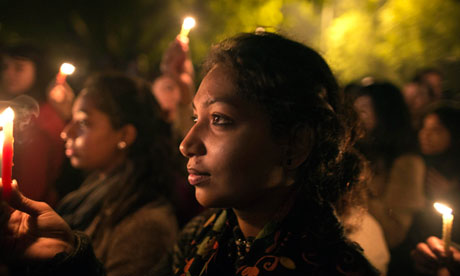
Protesters and
mourners attend a vigil in Delhi as a student’s death galvanises Indians
to demand greater protection for women. Photograph: Ahmad
Masood/Reuters
At seven o'clock on Saturday night, they lit the candles – on
Juhu Beach, where Mumbai meets the Indian Ocean; in the centre of the
bustling southern cities of Hyderabad and Bengaluru (formerly
Bangalore); at the statue of Mahatma Gandhi in chaotic, poverty-stricken
Lucknow, 1,000 miles to the north.
Simultaneously, thousands of people across this vast nation remembered a still anonymous 23-year-old medical student who, late on Friday night, died of injuries sustained when she was raped and brutalised with an iron bar by six men on a moving bus in Delhi two weeks ago.
In Delhi itself, a city full of temples, mosques and churches, scores gathered at a shrine set up at the bus stop where, tired of waiting for the rare public buses after a trip to see the film Life of Pi, the young woman and her male friend had accepted a lift from the men who would rape her. Whether those in the crowd were mourners, protesters or both was unclear. Under the hastily printed posters reading "You Inspired Us All" and "No to Violence to Women", they too lit their candles. "We are feeling very sad. We are feeling very angry. Now we hope our lives will change," said Archana Balodi, a 24-year-old student.
The six men who are accused of the attack were charged on Saturday with murder, an offence which can be punished by death in India. Even this would be insufficent, said some demonstrators. "Hanging them is not enough. They should be tortured like she was," said Srishdi Kumar, 16. "Then maybe there will be a change. Why not?"
The victim died of organ failure after internal injuries sustained during an assault that lasted for more than an hour. She and her male friend were thrown from the moving bus.
Few now doubt that India, and particularly Delhi, has a problem with rape and sexual violence against women. In recent weeks the issue has changed from being "a privately accepted fact" to a "public cause", said the local Indian Express newspaper. Now many are talking about a turning point.
"In legal terms, it can be [a turning point] if there is the political will. But more broadly it could be a turning point for young women in India. They have seen and sensed the power of their united voice and their resistance, and that is critical," Brinda Karat, a veteran activist and Communist MP, told the Observer.
Many have been angered by the response of the authorities since the incident. While leading figures of the beleaguered ruling Congress party pledged action and spoke of their deep sadness on Saturday, a huge security operation was under way in the capital city to prevent demonstrators reaching parliament, the India Gate war memorial or their own official residences.
Protests last weekend turned violent with water cannon, teargas and baton charges used to disperse demonstrators. But there appeared to be no such threat on Saturday and the massed ranks of police looked like an over-reaction rooted in the paranoia and aloofness of India's political elite.
In a rare televised address, Sonia Gandhi, president of the Congress party, said that she spoke as "a mother and a woman", and called for efforts to counter "shameful social attitudes and mindsets that allow men to rape with such impunity".
Sexual harassment – known locally as "Eve-teasing" – is endemic in India. The belief that women are responsible for sexual assault is widespread. This year a series of rapes in rural areas in the state of Haryana, which is adjacent to Delhi, led to suggestions from politicians and community leaders that much sexual violence was consensual.
Investigations have revealed similar attitudes among the police. Women who report rapes are repeatedly ignored or even harassed themselves.
In the wake of the most recent incident, dozens of other rapes, often by multiple assailants, have been reported by the media across India. More than 24,000 rape cases were registered with the authorities in 2011, a 9% increase on the previous year.
In one incident reported last week, police took 14 days to register a complaint from a 17-year-old in Patiala, in the north-western state of Punjab, who attempted to report a gang rape. She later took her own life. Two officers have been sacked and one suspended.
The government has set up two committees to recommend new measures to combat sexual violence against women. One is likely to be the publication on the internet of a register of sex offenders; others include fast-track courts and a higher proportion of female police officers.
But the events of the past week have also revealed a growing gulf between young Indians and the ageing political class. The prime minister, Manmohan Singh, an 80-year-old former economist, encountered derision when he described the "emotions and energies this incident has generated" as "perfectly understandable reactions from a young India and an India that genuinely desires change".
Sheila Dikshit, the chief minister of Delhi – an otherwise popular figure who said she felt ashamed "not just as [chief minister], but as a citizen of India" – was booed when she tried to visit one of the protests in the city on Saturday . Few among the overwhelmingly youthful protesters had much confidence in their leaders. Many asked why they should trust political parties who in the last five years have fielded candidates for state elections that included 27 charged with rape and scores more under investigation for harassment and assault.
Brinda Karat said some good might yet come out of the tragedy – but at a high cost. "There has been a critical shift," she said. "But how many young lives and how many young women have to be sacrificed for change to happen?"
Simultaneously, thousands of people across this vast nation remembered a still anonymous 23-year-old medical student who, late on Friday night, died of injuries sustained when she was raped and brutalised with an iron bar by six men on a moving bus in Delhi two weeks ago.
In Delhi itself, a city full of temples, mosques and churches, scores gathered at a shrine set up at the bus stop where, tired of waiting for the rare public buses after a trip to see the film Life of Pi, the young woman and her male friend had accepted a lift from the men who would rape her. Whether those in the crowd were mourners, protesters or both was unclear. Under the hastily printed posters reading "You Inspired Us All" and "No to Violence to Women", they too lit their candles. "We are feeling very sad. We are feeling very angry. Now we hope our lives will change," said Archana Balodi, a 24-year-old student.
The six men who are accused of the attack were charged on Saturday with murder, an offence which can be punished by death in India. Even this would be insufficent, said some demonstrators. "Hanging them is not enough. They should be tortured like she was," said Srishdi Kumar, 16. "Then maybe there will be a change. Why not?"
The victim died of organ failure after internal injuries sustained during an assault that lasted for more than an hour. She and her male friend were thrown from the moving bus.
Few now doubt that India, and particularly Delhi, has a problem with rape and sexual violence against women. In recent weeks the issue has changed from being "a privately accepted fact" to a "public cause", said the local Indian Express newspaper. Now many are talking about a turning point.
"In legal terms, it can be [a turning point] if there is the political will. But more broadly it could be a turning point for young women in India. They have seen and sensed the power of their united voice and their resistance, and that is critical," Brinda Karat, a veteran activist and Communist MP, told the Observer.
Many have been angered by the response of the authorities since the incident. While leading figures of the beleaguered ruling Congress party pledged action and spoke of their deep sadness on Saturday, a huge security operation was under way in the capital city to prevent demonstrators reaching parliament, the India Gate war memorial or their own official residences.
Protests last weekend turned violent with water cannon, teargas and baton charges used to disperse demonstrators. But there appeared to be no such threat on Saturday and the massed ranks of police looked like an over-reaction rooted in the paranoia and aloofness of India's political elite.
In a rare televised address, Sonia Gandhi, president of the Congress party, said that she spoke as "a mother and a woman", and called for efforts to counter "shameful social attitudes and mindsets that allow men to rape with such impunity".
Sexual harassment – known locally as "Eve-teasing" – is endemic in India. The belief that women are responsible for sexual assault is widespread. This year a series of rapes in rural areas in the state of Haryana, which is adjacent to Delhi, led to suggestions from politicians and community leaders that much sexual violence was consensual.
Investigations have revealed similar attitudes among the police. Women who report rapes are repeatedly ignored or even harassed themselves.
In the wake of the most recent incident, dozens of other rapes, often by multiple assailants, have been reported by the media across India. More than 24,000 rape cases were registered with the authorities in 2011, a 9% increase on the previous year.
In one incident reported last week, police took 14 days to register a complaint from a 17-year-old in Patiala, in the north-western state of Punjab, who attempted to report a gang rape. She later took her own life. Two officers have been sacked and one suspended.
The government has set up two committees to recommend new measures to combat sexual violence against women. One is likely to be the publication on the internet of a register of sex offenders; others include fast-track courts and a higher proportion of female police officers.
But the events of the past week have also revealed a growing gulf between young Indians and the ageing political class. The prime minister, Manmohan Singh, an 80-year-old former economist, encountered derision when he described the "emotions and energies this incident has generated" as "perfectly understandable reactions from a young India and an India that genuinely desires change".
Sheila Dikshit, the chief minister of Delhi – an otherwise popular figure who said she felt ashamed "not just as [chief minister], but as a citizen of India" – was booed when she tried to visit one of the protests in the city on Saturday . Few among the overwhelmingly youthful protesters had much confidence in their leaders. Many asked why they should trust political parties who in the last five years have fielded candidates for state elections that included 27 charged with rape and scores more under investigation for harassment and assault.
Brinda Karat said some good might yet come out of the tragedy – but at a high cost. "There has been a critical shift," she said. "But how many young lives and how many young women have to be sacrificed for change to happen?"
Six-year-old abduction girl, Atiya, back in Britain
A six-year-old girl returns to Britain more
than three years after she was snatched and taken to Pakistan. The
abduction, by her father, could influence her whole life, an expert
tells Channel 4 News.

Atiya Anjum-Wilkinson arrived back at Manchester airport on Friday after vanishing in November 2009 when she went to stay with her father, Razwan Ali Anjum. The former insurance salesman said he was taking Atiya to Southport. Instead he took her to Lahore, Pakistan, and told Gemma Wilkinson - Atiya's mother - that she was "never going to see Atiya again".
Anjum is currently serving a prison sentence in the UK for refusing to reveal his daughter's whereabouts, despite a court order. Just last month Gemma Wilkinson, 32, from Ashton-under-Lyne, Greater Manchester, launched a fresh appeal for information on her daughter's whereabouts. Ms Wilkinson has described her daughter's homecoming as "the best Christmas present ever".
'Something they never get over'
Alison Shalaby is from the charity Reunite International, which offers support to those affected by parental child abduction. Her own daughter was snatched by her Egyptian father. I asked her about what difficulties mother and child face after so long apart.She told Channel 4 News: "There are going to be challenges because the little girl has been through this twice now - first the abduction from England to Paksitan, and everything that goes with that in her life.
We have spoken with adults who were abducted as a child - they say it's something they never get over. It influences their whole life. Alison Shalaby"Now she's got a huge change again in her life. But hopefully with a mother's love and the assistance of the immediate family, and help from professionals, they'll be able to form a bond again.
"We have spoken with adults who were abducted as a child - they say it's something they never get over. It influences their whole life."
Jail term
Mr Anjum was handed a fourth consecutive jail term by a high court judge in April after he refused to reveal where his daughter was. Mr Justice Moor imposed a 12-month prison sentence after he found him in contempt of an order instructing him to disclose Atiya's whereabouts.He said Anjum, who is in his late 20s, would not be eligible for release until he had served at least six months. Judges have previously imposed jail terms of two years, 12 months and another 12 months in the hope that Anjum would provide information. Judges re-jailed Anjum as each sentence neared its end.
Ms Wilkinson, a former charity worker, took legal action in an attempt to force Anjum to reveal the crucial details.
Anjum, who represented himself at the latest court hearing, indicated that Atiya was in Pakistan or Iran but said he did not know her exact whereabouts. Mr Justice Moor said he was sure Anjum was lying.
The judge said: "I am certain that he is in contempt. It is absolutely absurd for him to suggest that he does not know the whereabouts of his daughter and he cannot contact her. I am certain he is lying."
Another judge has previously said the case was "as bad a case of child abduction as I have encountered".
Ms Wilkinson said:"It's been an absolute nightmare. As to her whereabouts we know nothing. We've had no contact. I'm worrying every day, every single day. Everything is affected by it. When I close my eyes I see her.
"I say goodnight to her every night before bed. I pray she's okay. We don't have any proof that she's okay, there is no proof she is still alive. It's been discussed that she could have been sold, but I don't want to believe it.
"She was so funny. She was a little bundle of joy. She loved her lipgloss and handbags - as soon as she got hold of my make-up bag, everything in it was hers. We just want her home."
Her "on-off" relationship with Anjum ended in 2008. "He's not prepared to back down - he's not prepared to work with the police," she said at the time.
Anjum, who represented himself at the latest court hearing, indicated that Atiya was in Pakistan or Iran but said he did not know her exact whereabouts. Mr Justice Moor said he was sure Anjum was lying.
The judge said: "I am certain that he is in contempt. It is absolutely absurd for him to suggest that he does not know the whereabouts of his daughter and he cannot contact her. I am certain he is lying."
Another judge has previously said the case was "as bad a case of child abduction as I have encountered".
Atiya e-fit image
It is thought Atiya was found after police published a computer-generated e-fit image of what Atiya would look like now - a day before her sixth birthday in November.Ms Wilkinson said:"It's been an absolute nightmare. As to her whereabouts we know nothing. We've had no contact. I'm worrying every day, every single day. Everything is affected by it. When I close my eyes I see her.
"I say goodnight to her every night before bed. I pray she's okay. We don't have any proof that she's okay, there is no proof she is still alive. It's been discussed that she could have been sold, but I don't want to believe it.
"She was so funny. She was a little bundle of joy. She loved her lipgloss and handbags - as soon as she got hold of my make-up bag, everything in it was hers. We just want her home."
Her "on-off" relationship with Anjum ended in 2008. "He's not prepared to back down - he's not prepared to work with the police," she said at the time.
Somaliland: Stop Misuse of Public Media
A wrong is a wrong. Yes, it is not something right.
They say two wrongs do not make a right. Yes, true it is.
But when a wrong is righted by a wrong, and another and another, thus infinite wrongs are “justified” to right on original wrong, what can that situation be?
Of course as nationalists we abhor, decry and condemn in the strongest terms possible the use (or is it misuse) of tribal chords struck to play clannish whims for ill-motives.
Worse of all is the trend of allowing such innuendoes to be aired or printed for dissemination through the public media.
By the way, the licensing means that have resulted in the off-shooting of numerous electronic “journals” or “radios” need to be reviewed, or were they in the place ever licensed at all?
To listen to a local “electronic” radio” giving audience to a local “poet” who enters a vociferous, voluble and fire-spitting rhetoric whose vehemence carries all the abilities of war-mongering is not only dangerous but so inconvenient that we wonder who ever licensed such “freedom”.
To listen to war-mongering in song or poetic disguise only remind us of the Rwanda mass massacre that were not only catalyzed, but indeed, ignited and caused by radio stations.
For such a wrong to be countered in the same spirit by another wrongful move only compounds the situation even further and is only to fuel the fire hence the hog-wash would erupt into fire-balls.
So too would other “members” of other “communities” who feel “touched” do the same.
Before the media misuse is allowed to blend and integrate into our culture becoming a “normal in-thing” we should nip it at the bud now.
To the contrary, what we should see in the media should be positive trends. It is quite sad that the Guurti or parliament have forgotten what they are paid for.
Worthy Somalilanders should come fast to our aid and preach goodwill. Cabinet, Guurti, Parliament and traditional leaders should immediately see the dangerous route that the stirring up of tribal emotions may take hence should counter it immediately by disseminating the needful.
We should be responsible and know what is good and what is right. We should know what we are supposed and obliged to do. The media should not consciously nor unconsciously take part to misinform, disinform or equally take part in propagating ill-will through war-mongering propaganda.
The information department should review how local websites and blogs operate for we can no longer discern their agendas any more.
By MA EGGE
They say two wrongs do not make a right. Yes, true it is.
But when a wrong is righted by a wrong, and another and another, thus infinite wrongs are “justified” to right on original wrong, what can that situation be?
Of course as nationalists we abhor, decry and condemn in the strongest terms possible the use (or is it misuse) of tribal chords struck to play clannish whims for ill-motives.
Worse of all is the trend of allowing such innuendoes to be aired or printed for dissemination through the public media.
By the way, the licensing means that have resulted in the off-shooting of numerous electronic “journals” or “radios” need to be reviewed, or were they in the place ever licensed at all?
To listen to a local “electronic” radio” giving audience to a local “poet” who enters a vociferous, voluble and fire-spitting rhetoric whose vehemence carries all the abilities of war-mongering is not only dangerous but so inconvenient that we wonder who ever licensed such “freedom”.
To listen to war-mongering in song or poetic disguise only remind us of the Rwanda mass massacre that were not only catalyzed, but indeed, ignited and caused by radio stations.
For such a wrong to be countered in the same spirit by another wrongful move only compounds the situation even further and is only to fuel the fire hence the hog-wash would erupt into fire-balls.
So too would other “members” of other “communities” who feel “touched” do the same.
Before the media misuse is allowed to blend and integrate into our culture becoming a “normal in-thing” we should nip it at the bud now.
To the contrary, what we should see in the media should be positive trends. It is quite sad that the Guurti or parliament have forgotten what they are paid for.
Worthy Somalilanders should come fast to our aid and preach goodwill. Cabinet, Guurti, Parliament and traditional leaders should immediately see the dangerous route that the stirring up of tribal emotions may take hence should counter it immediately by disseminating the needful.
We should be responsible and know what is good and what is right. We should know what we are supposed and obliged to do. The media should not consciously nor unconsciously take part to misinform, disinform or equally take part in propagating ill-will through war-mongering propaganda.
The information department should review how local websites and blogs operate for we can no longer discern their agendas any more.
By MA EGGE
Somali woman gets 8 years in prison on ‘terrorism’ charge for her humanitarian work
San Diego, CA - A young Somali woman and well-known community activist, Nima Ali Yusuf, was sentenced to eight years in prison, here on Dec.11, for conspiracy to provide material support to a terrorist organization. Yusuf, a volunteer at the Humanitarian African Relief Organization was accused of sending a small sum of money - $1450 - to members of Somali resistance organization al-Shabab.
At issue was the accusation that Yusuf helped out friends in Somalia, who were also said to be members of al-Shabab.
The courtroom was packed with family, friends and supporters when Judge Barry Ted Moskowitz handed down the sentence.
A statement from Yusef’s defense committee refers to her as a hero and notes, “Nimo Yusuf is a daughter with great heart. She will go beyond her ability to help others. She is highly beloved in the Somali Community. She has touched the lives of so many of us here in the twin cities. She translated, provided transportation, cared for the sick and the widows. She loved her faith and followed its commandments of giving, helping, and caring. She carried the burden of others, solved their problems, counseled the youth, cried and cared for many of us who are struggling and adjusting to the new life in America.”
The FBI made use of wiretaps against Yusuf and, according to court records, intercepted and recorded 35,000 calls made by her.
Mick Kelly, of the Committee to Stop Repression, states, “A good person who did good things is being sent to prison for a very long time. The government wants to criminalize people who support a Somalia that is independent of foreign domination. She should be released at once.”
U.S. ‘terror’ and gun laws extended to Somalia - Somalis face New York City trial
December 28, 2012
The conspiracy to provide “material support to a foreign terrorist organization” stems from their alleged membership in the Somali resistance organization, al Shabaab. Al Shabaab is an Islamic political movement that is fighting the U.S.-backed foreign intervention in Somalia.
The gun charge, according to a Dec. 21 press release form the New York Eastern District U.S. Attorney’s Office, involves the “unlawful use of machine guns” in Somalia.
The case against the three men rests on the dubious legal theory that U.S. laws can be applied anywhere in the world. The New York Times states, “Court documents show no connection between the alleged crimes and the United States.”
Two of the men, Mohamed Yusuf and Ali Yasin Ahmed, lived in Sweden for a time. Madhi Hashi was born in Somalia and grew up in England. The British newspaper, The Independent reported on Dec. 23 that when Hashi lived in London, he was one of a group of young people who said they were pressured by the UK intelligence agency, MI5, to become informants. After his return to Somalia, Hashi’s UK citizenship was revoked.
The Independent says of Hashi, “His family had no idea where he was for five months until he appeared in a New York court on Friday accused of terrorism. Last night, his British lawyer, Saghir Hussain, said: ‘This has all the hallmarks of rendition. It appears the withdrawal of citizenship and the kidnapping by the Americans may have been co-ordinated.’”
The U.S. Attorney’s Office claims, “In early August 2012, the defendants were apprehended in Africa by local authorities while on their way to Yemen.” On Oct. 18, 2012, a grand jury in the Eastern District of New York returned a sealed indictment against the defendants. On Nov. 14, 2012, the Federal Bureau of Investigation took custody of the defendants and brought them to the Eastern District of New York.”
The Independent quotes Hashi’s father, Mohamed, “’We are not some slaves who can be passed around from one owner to another,’ he said. ‘Why was our son sent to the U.S.? He has been a British citizen for 15 years but then his citizenship was taken away suddenly and now we find out that he's in New York? Our family had to find out this news from public news sources as no one has contacted us until now. We are very worried about his condition as we have no information. The U.S. have not given our son any rights – we don't know where he's being held, how to contact him or how he's being treated. It is shocking that something like this can be done to someone based on accusations and suspicion only.’”
Among those who announced the charges against the three men Dec. 21 was Raymond Kelly, the Commissioner of New York City Police Department. The NYPD has built a massive intelligence network that spys on Arabs and Muslims around the U.S. It is also setting up satellite offices in other countries.
Subscribe to:
Comments (Atom)