Search This Blog

Tuesday, April 22, 2014

Somalia: Financial charity watchdog warns of Islamist threat


Djibouti – The Middle East Islamic extremism and the Horn of Africa of Al-Shabaab are the “most deadly” problem faced by British charities, British Intelligence communities and Western Allies, the head of the British sector’s watchdog said through private briefings.

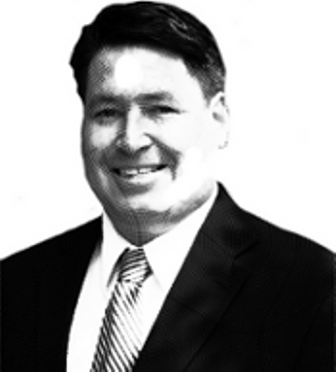
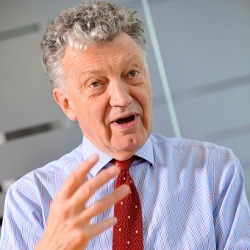
William Shawcross, the chairman of the Charity Commission, said the regulatory body was trying to take action against charities “sending cash to extremist groups in Syria”, in an interview with  Major News paper Times in UK.

The regional Hawala,  the unregulated and traditional Somali transfer that works with a network of agents is allegedly funding the transfer of fire arms from Somali to Kenya, according to the Security Minister of Kenya .

William Shawcross, the chairman of the Charity Commission also said it was “ludicrous” that people with terror or money laundering convictions are not automatically disqualified from setting up charities or becoming charity trustees.  Shawcross has written to Prime Minister David Cameron urging a change in the law.

He said the commission was taking tough measures against any charity found to be “sending cash to extremist groups in Syria” or “dispatching young Britons for training in Syria or other extremist groups, such as Al-Shabaab of Somalia”.

“Hawala money is getting into the pockets of Al-Shabaab, we need an immediate crackdown on hawala brokers and we need to use Somalis who are against terrorists to smoke out this network of traders.”  said Yusuf Muhamed, a high-ranking Kenyan police officer

Ibrahim Ahmed from local NGO Northern Kenya Caucus said that weapons are shipped from Russia and Ukraine to Somalia and find there way to East Africa through the porous border between Southern Somalia which holds the Al-Shabaab.


“The problem of Islamist extremism and charities through Hawala and Regional Financial firms are not the most widespread problem we face in terms of abuse of charities, but is potentially the most deadly. And it is, alas, growing,” said the chairman of the Charity Commission.

“I’m sure that in places like Syria, Afghanistan, Iraq, Yemen  and Somalia it is very, very difficult for Intelligence communities and Hawala agencies always to know what the end use of their aid is, but they’ve got to be particularly vigilant.”

The Current British Intelligence Agencies for charities are being investigated for raising funds for Syria, Somalia and Yemen while seven others are being monitored.

A British financial expert working for the UN to monitor illegal Financial transactions was shot dead last week while investigating systems used to transfer money to African pirates as well as Somalia militants of Al-Shabaab.

Simon Davis, 57, and Clément Gorrissen, a French colleague, were killed by a man wearing an airport security uniform in the immigration hall at the terminal in Galkayo, Central Somalia. Sources: The British  the Charity Commission
william_shawcross
Somalia: Financial charity watchdog warns of Islamist threat
5 10 Google +0
Djibouti (HAN) April 21, 2014 – The Middle East Islamic extremism and the Horn of Africa of Al-Shabaab are the “most deadly” problem faced by British charities, British Intelligence communities and Western Allies, the head of the British sector’s watchdog said through private briefings.

William Shawcross, the chairman of the Charity Commission, said the regulatory body was trying to take action against charities “sending cash to extremist groups in Syria”, in an interview with  Major News paper Times in UK. 
The regional Hawala,  the unregulated and traditional Somali transfer that works with a network of agents is allegedly funding the transfer of fire arms from Somali to Kenya, according to the Security Minister of Kenya .

William Shawcross, the chairman of the Charity Commission also said it was “ludicrous” that people with terror or money laundering convictions are not automatically disqualified from setting up charities or becoming charity trustees.  Shawcross has written to Prime Minister David Cameron urging a change in the law. 

He said the commission was taking tough measures against any charity found to be “sending cash to extremist groups in Syria” or “dispatching young Britons for training in Syria or other extremist groups, such as Al-Shabaab of Somalia”. 
“Hawala money is getting into the pockets of Al-Shabaab, we need an immediate crackdown on hawala brokers and we need to use Somalis who are against terrorists to smoke out this network of traders.”  said Yusuf Muhamed, a high-ranking Kenyan police officer
Ibrahim Ahmed from local NGO Northern Kenya Caucus said that weapons are shipped from Russia and Ukraine to Somalia and find there way to East Africa through the porous border between Southern Somalia which holds the Al-Shabaab.

“The problem of Islamist extremism and charities through Hawala and Regional Financial firms are not the most widespread problem we face in terms of abuse of charities, but is potentially the most deadly. And it is, alas, growing,” said the chairman of the Charity Commission. 

“I’m sure that in places like Syria, Afghanistan, Iraq, Yemen  and Somalia it is very, very difficult for Intelligence communities and Hawala agencies always to know what the end use of their aid is, but they’ve got to be particularly vigilant.” 

The Current British Intelligence Agencies for charities are being investigated for raising funds for Syria, Somalia and Yemen while seven others are being monitored. 

A British financial expert working for the UN to monitor illegal Financial transactions was shot dead last week while investigating systems used to transfer money to African pirates as well as Somalia militants of Al-Shabaab.
Simon Davis, 57, and Clément Gorrissen, a French colleague, were killed by a man wearing an airport security uniform in the immigration hall at the terminal in Galkayo, Central Somalia. Sources: The British  the Charity Commission
- See more at: http://geeskaafrika.com/somalia-financial-charity-watchdog-warns-islamist-threat/2551/#sthash.ZhcSWb0a.dpuf
william_shawcross
Somalia: Financial charity watchdog warns of Islamist threat
5 10 Google +0
Djibouti (HAN) April 21, 2014 – The Middle East Islamic extremism and the Horn of Africa of Al-Shabaab are the “most deadly” problem faced by British charities, British Intelligence communities and Western Allies, the head of the British sector’s watchdog said through private briefings.

William Shawcross, the chairman of the Charity Commission, said the regulatory body was trying to take action against charities “sending cash to extremist groups in Syria”, in an interview with  Major News paper Times in UK. 
The regional Hawala,  the unregulated and traditional Somali transfer that works with a network of agents is allegedly funding the transfer of fire arms from Somali to Kenya, according to the Security Minister of Kenya .

William Shawcross, the chairman of the Charity Commission also said it was “ludicrous” that people with terror or money laundering convictions are not automatically disqualified from setting up charities or becoming charity trustees.  Shawcross has written to Prime Minister David Cameron urging a change in the law. 

He said the commission was taking tough measures against any charity found to be “sending cash to extremist groups in Syria” or “dispatching young Britons for training in Syria or other extremist groups, such as Al-Shabaab of Somalia”. 
“Hawala money is getting into the pockets of Al-Shabaab, we need an immediate crackdown on hawala brokers and we need to use Somalis who are against terrorists to smoke out this network of traders.”  said Yusuf Muhamed, a high-ranking Kenyan police officer
Ibrahim Ahmed from local NGO Northern Kenya Caucus said that weapons are shipped from Russia and Ukraine to Somalia and find there way to East Africa through the porous border between Southern Somalia which holds the Al-Shabaab.

“The problem of Islamist extremism and charities through Hawala and Regional Financial firms are not the most widespread problem we face in terms of abuse of charities, but is potentially the most deadly. And it is, alas, growing,” said the chairman of the Charity Commission. 

“I’m sure that in places like Syria, Afghanistan, Iraq, Yemen  and Somalia it is very, very difficult for Intelligence communities and Hawala agencies always to know what the end use of their aid is, but they’ve got to be particularly vigilant.” 

The Current British Intelligence Agencies for charities are being investigated for raising funds for Syria, Somalia and Yemen while seven others are being monitored. 

A British financial expert working for the UN to monitor illegal Financial transactions was shot dead last week while investigating systems used to transfer money to African pirates as well as Somalia militants of Al-Shabaab.
Simon Davis, 57, and Clément Gorrissen, a French colleague, were killed by a man wearing an airport security uniform in the immigration hall at the terminal in Galkayo, Central Somalia. Sources: The British  the Charity Commission
- See more at: http://geeskaafrika.com/somalia-financial-charity-watchdog-warns-islamist-threat/2551/#sthash.ZhcSWb0a.dpuf

April 22nd Earth Day Celebration: Download a Free PDF on Environmental Funding


April 22nd is officially declared Earth Day. It is enthusiastically celebrated by environmental supporters by performing activities such as tree planting, cleaning the road side trash, recycling and conservation programs, creating awareness about reusing the recyclable material.
Various petitions are signed by different government, non-government or voluntary bodies for stopping global warming and related environmental destructions.
Background
Founded by Senator Gaylord Nelson, the April 22 Earth Day was organised during 1970 for the first time with the aim to promote ecology and recognizing the value of life that exist on planet Earth. Also, the first Earth Day was aimed to encourage awareness about the problems associated with water, soil and air pollution.
Earth Day 2014 Highlights
The world population today is facing various environmental challenges. Global warming is one of the major causes of worry among environmentally aware citizen who care enough to take steps for creating sustainable communities.
As European cities are preparing for the Earth Day, let’s take a look at some of the major cities which are planning something big to offer to the mother Earth on this event.
Multiple Events at Chisinau
The Gutta-Club, Chisinau, Moldova will cover about 30 villages to organize different events ranging from tree plantation to building nesting boxes for the birds. Chisinau’s central square will conduct workshops, concerts and contests for voluntary participants.
ECO-Explorer Camp in Dublin
Dublin will report an ECO-Explorer camp for kids which will be organised by Earth Day Network partner ECO-UNESCO and it will be held from April 22nd to April 25th at the Greenhouse, Dublin City Center. This is an annual camp and it will let children from 5-12 years of age, an opportunity to discover green spaces, wildlife, local ecology and much more for creating awareness in this upcoming generation. Drawing and 3D art will be an attraction for these tiny Eco-Explorers.
Green Sale in Geneva
The International School of Geneva, Switzerland is hosting a unique Green Sale and sale for organic food which will together help in raising funds for planting trees in the school premises. Participatory activities will include games associated with recycling and other arts and crafts based on environment.
This is indeed overwhelming! However, apart from just European countries, the world population is taking active participation in supporting the mission of Earth Day by offering maximum support for environmental causes. It feels great to be a part of a society that is not aware but also proactive in delivering acts of service to the mother Earth. However, the biggest challenge yet to be met is the deteriorating environmental health which can only be preserved by the human population that co-exists on this planet.
So, on this Earth Day (2014), let’s join hands to create sustainable communities around us for preserving the planet Earth from further environmental destructions.
Open Grant Opportunities for Environmental Issues
Following is a list of grants currently open for addressing various environmental issues:
Download our Free PDF on “Funding for Climate Change and Environment”
To celebrate the Earth Day, FundsforNGOs is offering a free resource guide on “Funding for Climate Change and Environment” for its readers. The guide offers information about the relevance of climate change for NGOs and how and where NGOs can find funding for these issues including a quick list of donor agencies offering grants on climate change and environmental issues. Click here to download your copy now!

Monday, April 21, 2014

Somali Ethiopian Expatriates Vowed Support Nile Dam Construction Financially


Addis Ababa – The Extra Ordinary Ambassador and Plenipotentiary of the federal Democratic Republic of Ethiopia to Sweden, Her Excellence Woinshet Tadesse and other Nordic countries with Consul Hussein Ahmed Omer at the meeting.

Ethiopians abroad can help reduce poverty in Ethiopia by investing back home development projects to alliviate hunger and droughts in Somali region, Afar Region, Oromia and the other Nation and nationalies of Ethiopia. 

When Dr. Mohamad Abdullahi left Harar, Ethiopia as a young man to study electrical engineering at Oxford University, Dr.Abdullahi planned to return home (HARAR) upon graduation. Thirty two years later Dr.Abdullahi is still in Europe and now bridges two worlds as an African and European. Holding dual nationality, Dr.Abdullahi is a diaspora communty leader, a proffesional banker and an active figure in encouraging members of Ethiopia’s large diaspora to invest in their homeland.

“The money and ideas are in Europe. Ethiopian professionals like me, there are thousands of them,” Dr.Abdullahi says of the shared desire among his fellow expatriate countrymen to spur progress in their Ethiopian motherland. “If we could sit down and talk seriously about getting the diaspora involved then I believe that Ethiopian Somali region, Harar and Oromia could become a developed regions very soon,” he added.

In Sweden, The Ethiopian-Somali community leaders, elders, businessmen, investors and professionals promise support and vowed to mobilize more resource to see the completion of the Ethiopian Grand renaissance Dam in a meeting organized by the Ethiopian-Somali Community in Sweden on 16 April 2014 at the Embassy of the federal Democratic Republic of Ethiopia, Stockholm.

In London, United Kingdom Members of the Ethiopian Somali Community in the UK have raised £183,850 (5.1million birr) in cash by buying Renaissance Dam bonds. Her Excellence Mrs Woinshet Tadesse, Ambassador Extra Ordinary and Plenipotentiary of the federal Democratic Republic of Ethiopia to Sweden and other Nordic countries with Consul Hussein Ahmed Omer addressed to the participants on various issues by emphasizing on issues of country’s Growth and Transformation Plan (GTP); Business and Investment opportunities; the current construction status of the dam and its benefits to the Ethiopians and other neighbouring countries as implemented; the role of the Ethiopian Diaspora on the implementation of this mega project; and importance of Ethiopian diaspora in terms of their engagement in investment, technology transfer and seeking markets for Ethiopian products in their residing countries.

Ambassador Woinshet points out the consular services provided to the applicants and improvements made by the embassy in the provision of services through increments of the embassy staff, expansion of visiting and telephone hours to enhance efficiency and effectiveness of the services and getting service both in mornings and afternoons of the working days. Mrs Woinshet explains the issue of the provision of the Ethiopian origin ID card and housing programs which are a part of the incentives that Ethiopian government intends to benefit for Ethiopians and Ethiopian in origin living abroad. During the session different questions were raised and given detailed answer to the participants.

On the occasion, members of the community appreciated and welcomed the useful information they received from the discussion and progress made by the Ethiopian government on rapid and equitable economic growth, expansion of infrastructure, social sector, and good governance. Participants of the meeting pledged to contribute the implementation of the Ethiopian grand Renaissance Dam either by buying bond or giving donation on 24 May 2014 planned events at Stockholm.

Meanwhile: Financial Remittances (hawala) are not the only way of contributing to development back home. A lot of Ethiopian-Americans live in the US but keep ties to their country through their relatives who still live there, says Melaku Nagussie, an Ethiopian-American engineer. “And they have a need to go back to help their country in some fashion.”

Mr Nagussie’s Ethiopia is one country that has succeeded in maintaining ties with émigrés through specific policies and dialogue. The east African government established its Diaspora Directorate in 2002 and now has an online portal where Ethiopian expatriates can find information about investing, tax and customs procedures. They can also apply for the “yellow card”, which entitles foreign-born Ethiopians to enter the country without a visa, work without a permit and own residential property.

In addition, several Ethiopian ministries house diaspora affairs units. For example, the health ministry partnered with exiled physicians in March 2009 to set up the country’s first emergency room training school, which has trained 4,000 first responders, basic trauma providers and technicians. The 170 members of the Ethio-American Doctors Group are working with the government to build, train and staff the country’s first internationally-accredited tertiary hospital with services that will include surgery and psychiatry. Construction of the 300-bed hospital is scheduled to start in June and should be completed by the end of 2016.


\

Zuriel Meets Assistant Secretary of State for Africa in Washington DC


Zuriel Oduwole,

Eleven year old Nigerian – Mauritian girl; Zuriel Oduwole, who was listed in New Africa Magazine last December as one of Africa’s 100 Most Influential people of 2013, last week held her maiden First Lady’s Colloquy on Girls Education at the newly opened Eko Signature Hotel in Lagos. Among her invited guest speakers were the First Lady of Lagos State, the First Lady of Tanzania and the First Lady of Osun State
In recognition of her incredible and highly remarkable accomplishments and unparalleled achievements at the age of 11, she was invited to visit the State Department by the Assistant Secretary of State for African Affairs – Ambassador Linda Thomas-Greenfield. All 54 US Ambassadors in Africa, report to the Assistant Secretary of State for Africa.
Yesterday, Zuriel honored the invitation on her way from the First Lady’s event she hosted in Lagos. She was welcomed by the Deputy Director for Public Affairs – Naomi Fellows, who commended her efforts in keeping the issues of Girl Education in Africa on the front burner. She was later received by the Assistant Secretary State For African Affairs herself – Ambassador Thomas-Greenfield, who was thrilled to meet this young lady in person for the first time.
She was full of praise for Zuriel, her remarkable vision and various projects to benefit Africas Girls, and suggested she might want to visit Rwanda and Burundi in the future to use her platform to help with the healing process of those two conflict bruised countries, who were involved in a deadly genocide encounter 20 years ago.
Ambassador Thomas-Greenfield then mentioned to Zuriel that she might want to consider a career in the State Department since she once headed its HR department , though she believed Zuriel was already too far ahead in her accomplishments that most new entrants into the foreign service, especially since she had on her own met and interviewed more than a dozen current World leaders, and also interviewed 1 in 6 African heads of government.
Zuriel was then presented with an autographed picture of the Secretary, which she confessed was the first one she was ever giving out, an indication of how much she admired the young lady’s accomplishments.


Saturday, April 19, 2014

Pentagon quietly expanding AFRICOM missions


Marines jump out of an MV-22B Osprey while conducting parachute operations over Djibouti last year. At least 5,000 U.S. troops are operating on the African continent. (Sgt. Christopher Q. Stone / Marine Corps)

By Andrew Tilghman = Staff writer

Just five years ago, the Pentagon considered Africa such a strategic backwater that the global map of combatant commands carved the massive continent into two chunks and placed most of it under control of the chief of U.S. European Command in Belgium.

Yet since the 2008 creation of U.S. Africa Command, the military has conducted a quiet buildup there and today has at least 5,000 troops operating on the ground across the continent.

AFRICOM’s focus is the vast regions surrounding the Sahara desert, the Maghreb to the north and the Sahel to the south. Much of it is essentially ungoverned and has become a sanctuary for some of the most virulent strains of today’s radical Islamic movements.

Many of those groups have sent weapons and manpower into the 3-year-old Syrian civil war, temporarily diverting their attention away from Africa. But the governments in the region are bracing for a potential surge in violence if and when the Syrian conflict winds down.

“A significant number [of insurgents] throughout the region have headed to Syria, and not many have come back yet. ... All the governments are concerned about that, because they’ll come back ... with experience and better trained from the jihadis’ perspective,” Army Gen. David Rodriguez, chief of U.S. Africa Command, told reporters at the Pentagon on April 8.

Those threats in the region have helped transform the U.S. military’s Camp Lemonnier along the East African coast of Djibouti from a ramshackle outpost of a few hundred troops a decade ago into a hub of operations for AFRICOM and home to several thousand U.S. troops. And beyond the gates of Lemonnier, “throughout the rest of the area, there are small pockets of temporarily placed organizations and people,” Rodriguez said.

Those troops are providing support and conducting direct operations against the al-Shabaab militant group based in Somalia, which experts say is among the most sophisticated extremist groups to emerge in Africa in recent years. Al-Shabaab claimed responsibility for last November’s attack on a shopping mall in an affluent section of Nairobi, Kenya.

Rodriguez said those efforts, coordinating with several African militaries, have successfully diminished the groups’ reach and limited its outright control over cities and rural regions.

Camp Lemonnier also reportedly conducts extensive drone operations, which provide key intelligence about extremist activities in the region, as well as direct strikes like one in late January targeting an al-Shabaab leader.

In early April, the Pentagon announced the expansion of the Marine Corps task force at Moron Air Base in southern Spain, which primarily focuses on supporting AFRICOM. That air-ground task force will grow from 600 to 775 personnel, defense officials said.

The Marines in Spain will help improve the U.S. military’s response time for crises in the western part of Africa.

“We are looking hard at trying to improve our posture in West Africa, which is really the toughest challenge for security,” Rodriquez said.

Marine Commandant Gen. James Amos recently said he would like to see some Marines based permanently along the West African coastline in the Gulf of Guinea.

“This is where we hope to be,” Amos told hundreds of officers at the annual Sea Air Space Exposition in Maryland on April 7.

The U.S. conducted operations in western Africa last year in a French-led mission against extremists who, aligned with local desert tribesmen, ousted the democratically elected president of Mali. Over several months, the U.S. provided the French military with airlift, air refueling and intelligence along with a small team of U.S. personnel on the ground.

Low-profile and often classified special operations missions dominate the current AFRICOM strategy, including some direct counterterrorism missions and also training missions with local security forces.


“They’re a big part,” Rodriguez said of the special operations teams. “The small teams and the right places that have a tailored approach to what our partners need most. And the foreign internal defense and the training of small units is at the head of that list.”

Grand Ethiopian Renaissance Dam to generate electricity by 2015


The Grand Ethiopian Renaissance Dam (GERD) will start generating electricity in 18 months time with two of its sixteen turbines generating 375MW each, the Ethiopian Embassy in London has said.
The Deputy Director General of the GERD National Coordination Office, Mr Zadig Abraha, said that over the past three years, the sale of bonds to domestic investors had provided 7.1 billion birr ($367 million) towards the 27 billion birr spent so far. The total project will cost 75.5 billion birr.
Funding of the 6000MW hydropower project represents "the golden age of our history as far as economic development and public participation is concerned", said Abraha.

Any increase in Ethiopia's current generating capacity of 2000MW will allow the country to reduce its trade deficit by selling excess electricity - Ethiopia is already exporting power to Sudan and Djibouti, constructing a transmission line to Kenya and is in discussions with Yemen and South Sudan as well.
Once the GERD is finished and other hydropower projects, including the 1870MW Gibe III are online, Ethiopia could earn up to $2 billion a year from the export of power.
Ethiopia this month celebrated the third anniversary of GERD, which was launched in 2011 by the late Prime Minister Meles Zenawi. The project is so far 33% complete with work on schedule.
Image: Plan view of the Grand Ethiopian Renaissance Dam.

Somalia: why orthodox aid policy must give way to battlefield reality


Jens Mjaugedal, Special Envoy of Norway to Somalia, is frustrated… which is hardly surprising given his mission to try to turn Somalia, which has officially been the world’s most failed state for many years, into a success. The biggest problem in Somalia is how to keep the deadly al-Qaeda-affiliated, Islamist militant group al-Shabaab at bay.

The African Union’s robust peacekeeping mission in Somalia (AMISOM) expelled al-Shabaab from Mogadishu two years ago, and is now engaged in a major offensive to try to rid the country of the scourge altogether. AMISOM claims to have liberated 10 strategic towns so far, though the war is very far from won.

Norway has had a long engagement in the country (partly because of the 30 000 Somalis living in Norway), and Mjaugedal warns that war alone cannot save Somalia. It will not be very helpful to clear al-Shabaab from the territories it holds, unless the Somali government replaces al-Shabaab’s administration in those areas with its own administration – rather than just military barracks.

And that raises Somalia’s second-biggest problem. The state has virtually no capacity, nor money, to run anything. It cannot even issue birth and death certificates because all records have been destroyed by over two decades of war. There are five public schools and virtually no other services. And the skill levels of the public service are pathetically low.

“The biggest problem in Somalia is keeping deadly militant group, al-Shabaab, at bay”
‘This is one of the most privatised countries in the world,’ Mjaugedal says, in a wry reference to the state’s incapacity. He was visiting South Africa this week to compare notes and discuss possible cooperation with the government in tackling the Somali crisis.

Last October, the international community pledged US$2,3 billion to help Somalia. ‘This was fantastic,’ says Mjaugedal, ‘but until today, not a single dollar has come in.’

This is partly because the Somali government lacks the capacity to receive and to properly spend the money. So, Norway created a financial pipeline into the government last year and has pumped US$30 million of its own money through to the government in Mogadishu.

‘When the World Bank does something like that, it takes years. We did it in six months,’ he says. Oslo’s US$30 million was supposed to prime the pump, but still the dollars did not flow in from the international community. Evidently, other countries are still too concerned that corruption in President Hassan Sheikh Mohamud’s government would siphon off their aid.

Some money is still coming in – to fund the work of agencies like the United Nations Development Programme (UNDP). But Mjaugedal says this is doing nothing to help perform the vital function of establishing the capacity and credibility of the government.

For that to happen, the government, not the UN, must be seen by ordinary Somalis to be governing; to be delivering services. And so even if some aid is lost to corruption, it is still worth paying it to the government, he says, as the necessary price of getting it up and running. ‘Even if people then complain to the government about poor service, it is better than them saying nothing because now there are no government services at all, even to complain about.’

“Is the international community simply not grasping the reality of Somalia?”
If the government does not attain some credibility, it will be thrown out in the next elections in 2016 – if it is not thrown out by al-Shabaab before then, he fears. Mjaugedal complains that by refusing to channel money to the Somali government through Norway’s financial pipeline, the international community is reneging on the 2011 New Deal for Engagement in Fragile States, to which it had re-committed last year. The New Deal acknowledged that ‘current ways of working in fragile states need serious improvement... Transitioning out of fragility is long, political work that requires country leadership and ownership.’

Mjaugedal fears the international community is simply not grasping the reality of Somalia. Because Hassan Sheikh was credibly elected and is not a clan leader like his predecessor, Somalia is now being portrayed in the UN and the international community at large as a completely different country. Yet, very little has changed on the ground for ordinary Somalis.

Mjaugedal, who clearly sees things pretty much as they are, is bemused to observe how many others see the world through the prism of the orthodox view instead. Three days after senior government officials were killed in an al-Shabaab suicide bomb and guerrilla attack on the presidential villa, he participated in a conference on how to address the country’s problems.

‘Everyone was talking as if nothing had happened. They were discussing the importance of the role of women and of civil society,’ this while sitting in the middle of a warzone, he marvels. Before the international community can embark on state-building, it has to do something in between, something which he agrees could be called triage.

From mid-year, the World Bank is going to take over Norway’s financial pipeline and perhaps then at least some of the US$2,3 billion pledged will start to flow in. ‘But we have lost a year,’ he adds. The idea will be to create ‘a kind of temporary government’ to receive and spend the funds. One of the main priorities will be to pay the salaries of the core six to eight thousand civil servants so they can start working on delivering state services.

‘They are all we have,’ he says. ‘The key thing is to find ways to support the national government so it can become credible and relevant. What everyone is looking for is political stabilisation. If things continue as they are, we run the risk of this government being replaced by an extreme form of Islamism,’ he warns.

Clearly, orthodox aid policy, which dictates that direct budget support should only be provided to governments who can demonstrate the ability to spend it efficiently, transparently and honestly, must give way to battlefield reality in this case.

Peter Fabricius, Foreign Editor, Independent Newspapers, South Africa

Source: issafrica.org

Tuesday, April 15, 2014

Somalia: The Africa’s next Angola


Africa’s next Angola oil fields will be in Somalia’s Oil and Gas in Indian Ocean Exploration. British oil giant British Petroleum signed concessions with the Petrolatum Department for the Federal Government of Somalia to explore oil and gas in the war raven East African nation, including International waters of Indian Ocean and Red Seas of Somaliland and Puntland Zones.

Canadian oil and gas exploration firm, Africa Oil  announced two additional oil discoveries in northern Somali Kenyan zones as search for commercial oil intensifies in the East African nation. The company said that Amosing-1 and Ewoi-1 exploration wells in Block 10BB, onshore northern Kenya, have resulted in the discovery of two new large oil fields.

“These two wells continue the 100 percent success rate in the South Lokichar Basin with seven out of seven discoveries to date,” it said in a statement released in Nairobi.

Another offshore well in Kenyan waters has been declared a failure, according to Intelligence sources. Although oil was found, the rock was too dense to allow production to continue under Malaysia’s giant state-owned oil company Petronas and  other firms. Kenya, still considered a “frontier exploration” field, by its lack of proven oil deposits except the Turkana find, has witnessed a series oil-based transactions.

The well drilled showed “the existence of an active oil system,” but the “rocks are very compacted and don’t have the capacity to deliver significant quantities of oil and gas,” meaning it “cannot be qualified as a commercial discovery,” according to the Granma newspaper. (Picture, the Ngamia rig site in northern Kenya)

But, intelligence reports existence of significantly large oil deposits in Somalia which could change global prices if tapped 2015. The Somali shores of Indian Ocean could be having some of the world’s largest oil deposits. Experts geographical assessments point out billions of oil barrels are reserved untapped in Somalia.

Intelligence collected by Strategic Intelligence shows Somaliland, Puntland and Central Somalia province has billions barrels of oil reserves, making one of the top 20 countries holding oil fields.


A company that drilled wells in Puntland region estimates 4bn barrels (about $500bn worth at today’s prices) in its two discoveries in Somalia; while Somaliland has 5bn barrels.

If drilled, Somali oil would flood the market beating countries like Nigeria and Kuwait to make Somalia the 7th largest oil producer in the world; according to the Intelligence reports.

Historical Oil and Gas Archives of Somalia
UK’s Secret Oil Deal with  Somalia

christian_dehaemer
By Christian DeHaemer (www.wealthdaily 2012)
Baltimore, MD – Investment Director, Crisis and Opportunity
Last week, I told you there were massive oil finds in the Indian Ocean, and that the United States is in a covert war to get them.

This is important.

Just look at the takeover battle with Cove Energy (COVE)…
Cove was up another 20% on Friday as Thai PTT raised the ante on Shell to $1.8 billion.
Bloomberg reports: “Cove’s assets are world class and have high potential for discovering a large amount of gas.”
But it’s not just Cove who is a player here. Tullow Energy (TLW) found “$30 billion worth of oil in Uganda and French Guiana.”
Eni SpA (ENI) and Anadarko Petroleum Corp (APC) “led exploration off Africa’s east coast that yielded the biggest gas finds in a decade.”


Very Oily Area

There is a lot of oil in East Africa and just off the coast in the Indian Ocean. A few years ago, the U.S. Geological Survey conducted their own analysis…

Their conclusion: Over 71 billion barrels of crude lay untouched in shallow pockets dotting the East Africa region. These deposits, it turns out, are a mirror image of the Middle Eastern fossil fuel super-system.
More specifically, they are a southwestern extension of the Marib-Shabwa and Sayun-Masila Basins that created the Saudi Oil Empire — and gave rise to the world’s first and only trillionaire family.

The Americans and the French have large numbers of special forces soldiers in Djibouti right next to Somalia. On the surface, they are there to halt piracy. But they’re really after the extension of Saudi oil fields which run into Africa.

There was a major international meeting in London last week
Hillary Clinton, David Cameron, and forty other high-level diplomats met to talk about bringing peace to Somalia and destroying the al-Qaeda-backed force of al-Shabaab.
A few days before the meeting, the UN raised the African Union force that’s on the ground in Somalia from 12,000 to 18,000.
Some local websites are reporting al-Shabaab leadership has fled to Yemen, but it’s too soon to know for sure…
The summit followed a surprise visit by British Foreign Secretary William Hague to Somalia’s capital, Mogadishu, where he discussed “the beginnings of an opportunity” to rebuild the country. Britain also appointed an ambassador to the country.
Turkey went so far as to set up an embassy.

Getting Serious

The battle for Mogadishu and the Black Hawk down story happened 18 years ago.
So why are the U.S. and its allies getting serious now?
Simple. The world needs oil.
Brent Sea Crude is above $125 a barrel and Europe is facing a severe depression.
In a back room over cooling tea and crumpets, Britain proposed giving Somalia humanitarian and security aid in exchange for drilling rights.
According to the Guardian:
Abdulkadir Abdi Hashi, minister for international cooperation in Puntland, north-east Somalia, said, “We have spoken to a number of UK officials, some have offered to help us with the future management of oil revenues. They will help us build our capacity to maximise (sic) future earnings from the oil industry.”
Hashi said, “Somalia would talk to BP at the right time about technology needed to explore Somalia’s oil reserves.”
The Next Phase
Last month, a small Canadian company started drilling for oil in Somalia. This is the first new well in 21 years. Oil is expected to be extracted within 20 to 30 days.
In response, al-Qaeda groups went to Twitter and declared all oil and gas licenses were nullified. But these cutthroat thugs are losing…
This isn’t 1993. The world is no longer afraid of taking out terrorists.
Attack drones are quietly destroying al-Qaeda militants.
African Union troops are nearing Mogadishu.
At the same time, Kenyan and Ethiopian forces are taking control of southern and central Somalia.
Oil has a way of galvanizing will and focusing motivation.

Since 1995, Christian DeHaemer has specialized in frontier market opportunities. He has traveled extensively and invested in places as varied as Cuba, Mongolia, and Kenya. Chris believes the best way to make money is to get there first with the most. Christian is the founder of Crisis & Opportunity and Managing Director of Wealth Daily. He is also a contributor for Energy & Capital. For more on Christian, see his editor’s page.

For More Articles Read (Academic Papers page – Geeska Afrika Online):  Somalia: Potential Frontier for Oil and Gas Exploration in 2013

The best books on Somalia: start your reading here


The best books on Somalia include The World's Most Dangerous Place; The Orchard of Lost Souls; and Crossbones. Each one explores the human cost of civil war

Crossbones by Nuruddin Farah

Nuruddin Farah
Set in Somalia around the 2006 US-backed Ethiopian invasion, the final volume in Farah's Past Imperfect trilogy can be read as a standalone novel. This absorbing story puts a human face to the tragedy of a failed state.

Three members of a Somali-American family return to find their homeland imploding under an Islamist regime in control of the capital, Mogadishu, as war nears and piracy proliferates off the coast of breakaway Puntland. 
Foreign correspondent Malik has come to write about political conflict and piracy; his father-in-law, Jeebleh, is re-establishing contact with old friends who he hopes will protect Malik and ease his path; and Malik's elder brother, Ahl, is searching for a stepson thought to have joined the Islamist militia on advice from an imam in his Minnesota hometown. 
Farah skilfully evokes the paranoia and desperation that stalks the fragmented country, where trust is in short supply and good people find themselves unable to steer it away from self-destruction.
This is an impassioned insider's portrayal of present-day Somalia, and of lives blighted by relentless violence and civil war.
Somalia's most famous novelist went into exile in the 1970s, during the rule of the dictator Siad Barre. He now lives in the US and South Africa, but has vowed "to keep my country alive by writing about it".
On the eve of the civil war in the late 1980s, two women and a girl in Hargeisa, north-western Somalia, find themselves caught up in the turbulence as their lives intersect. 
In this story of conflict and survival, events unfold through the eyes of Deqo, a nine-year-old orphan born and raised in a refugee camp, who ran away and is now cared for by prostitutes; Kawsar, an elderly, grieving widow bedridden after being beaten at a police station; and Filsan, a zealous young soldier from Mogadishu, here to help suppress the growing rebellion against the dictatorship. All three are wrestling with memories of lost loved ones.
In a chapter on each revealing their past, Mohamed sensitively builds her cast of strong, self-empowered female characters.
As the revolt grows and the army moves "not just to black out the city but to silence it", the civil war's first "orgy of violence [is] enacted". But amid the harrowing events taking place, the author inserts a ray of hope.
Mohamed succeeds in achieving her stated goal of "[elucidating] Somali history for a wider audience". The author, born in Hargeisa (now in Somaliland), came to Britain with her family aged five – a temporary move made permanent by the civil war.

James Fergusson
Under the attention-seeking title is a perceptive and engaging account of Somalia's descent into violence and lawlessness. The country has not had a properly functioning central government since the overthrow of the dictator Siad Barre in 1991. Meanwhile, it has seen seemingly endlessclan warfare, a brutal Islamist insurgencyforeign military interventions,faminepervasive corruption, piracy and – unsurprisingly – the flight of about 2 million people abroad.

The civil war is known locally as "the destruction", and one source tells the author that wherever the four horsemen of the apocalypse ride out to in the world, they return nightly to stable in Somalia.
Fergusson travels within Somalia and beyond, also visiting the peaceful but unrecognised Republic of Somaliland; the breakaway region of Puntland, home to a lucrative piracy industry; and Somali diaspora in the US and UK.
He explores the backstory essential to understanding how the country gained its unenviable reputation as "the world's most failed state", and why peace and security in Somalia matter far beyond its borders.

Fergusson detects reasons for optimism, with the al-Qaida-affiliated al-Shabaab Islamists in retreatpiracy reduced, bustling markets, Somalis returning from abroad, and politics and law and order slowly re-emerging.

The author is a veteran British journalist and foreign correspondent.
Source: theguardian.com